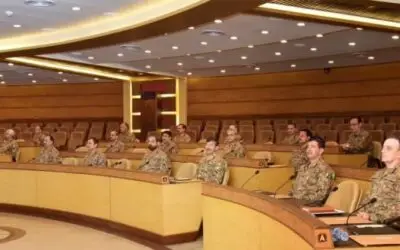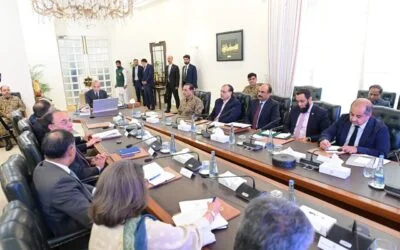
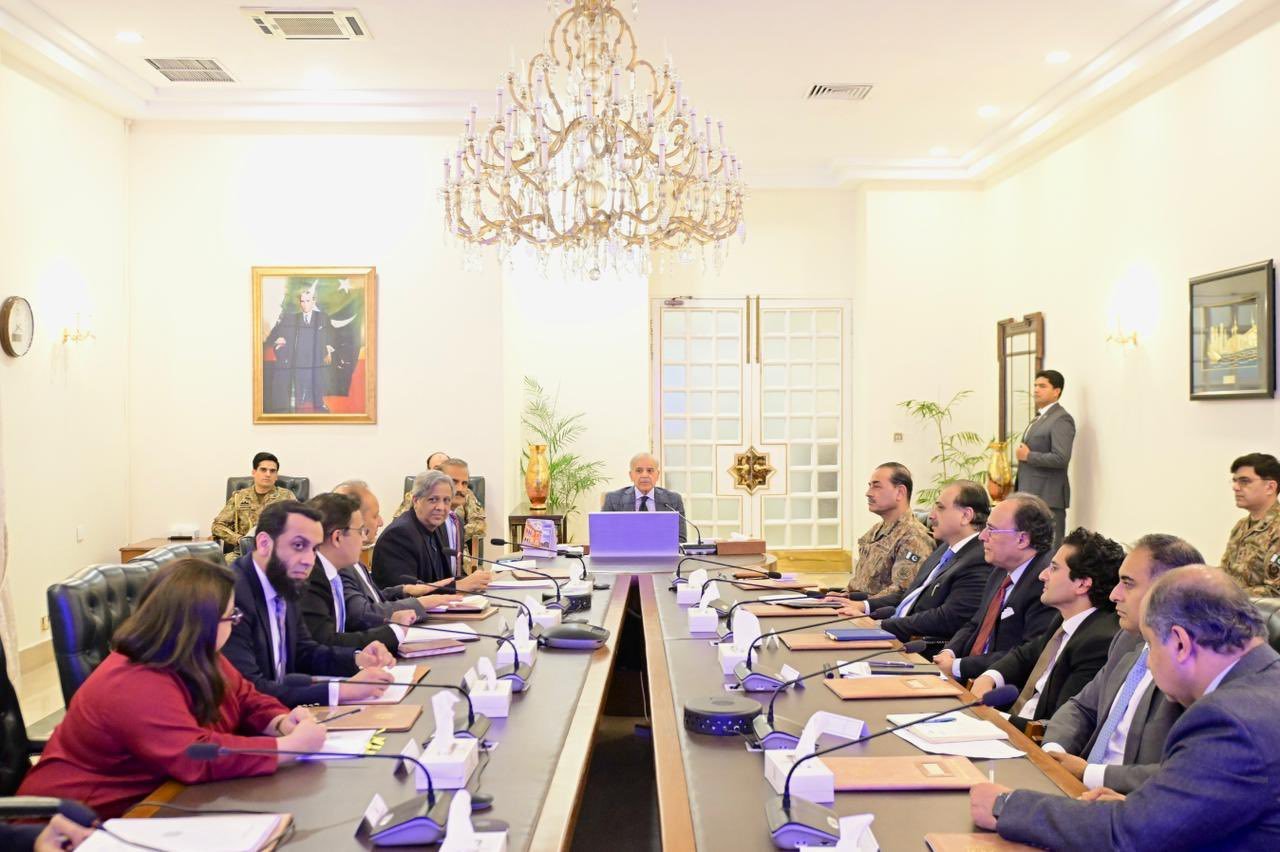
Prime Minister Shehbaz Sharif convened a high-level emergency meeting on Thursday to review Pakistan’s economic stability and the availability of petroleum products amidst the rapidly deteriorating security situation in the Gulf. The session focused on securing the national supply chain as the US-Israel-Iran war threatens global energy corridors and pushes crude prices to two-year highs.
The meeting was marked by the prominent presence of Field Marshal Asim Munir, NI (M), HJ, Chief of Defence Forces (CDF) and Chief of the Army Staff (COAS), signaling the integration of military and economic strategy in addressing the regional crisis.
Prime Minister Muhammad Shehbaz Sharif chaired a high level meeting in Islamabad to assess the economic situation and availability of petroleum products in #Pakistan due to situation in the Gulf
Field Marshal Syed Asim Munir, NI (M), HJ, #COAS & CDF and Lt. Gen Asim Malik, Pak’s… pic.twitter.com/oWr321dPeM
— Pakistan Armed Forces News 🇵🇰 (@PakistanFauj) March 19, 2026
Military-Civilian Coordination: The Field Marshal’s Presence
In a significant demonstration of national unity, Field Marshal Asim Munir participated in the deliberations alongside senior civilian leadership.
-
Strategic Oversight: The Field Marshal’s presence underscored the security dimension of energy transit, particularly as Iranian strikes on regional gas facilities and restrictions in the Strait of Hormuz impact Pakistan’s import logistics.
-
National Security Team: The meeting also included Lt. Gen. Asim Malik, Pakistan’s National Security Advisor (NSA) and DG ISI, ensuring that intelligence assessments were central to the economic planning process.
Energy Stocks and “Emergency Measures”
The Prime Minister was briefed on the current status of the country’s fuel reserves and the scheduled arrival of petroleum cargoes.
-
Adequate Reserves: Officials informed the Prime Minister that Pakistan currently holds adequate stocks of petroleum products to meet immediate national requirements.
-
Fuel-Saving Mandate: Despite sufficient stocks, PM Shehbaz issued directives for a “comprehensive strategy” to implement aggressive conservation. “All relevant departments must remain prepared for emergency measures until the situation improves,” the Premier stated.
-
Austerity Implementation: The government recently announced a four-day work week and a 50% cut in fuel allowances for official vehicles to mitigate the impact of $110-per-barrel oil prices.
Monitoring and Accountability
To prevent market irregularities and hoarding, the Prime Minister tasked the Intelligence Bureau (IB) and relevant agencies with a rigorous audit of the energy supply chain.
-
Supply Chain Audit: The IB will monitor the implementation of austerity measures and report directly to the PMO to identify any irregularities in distribution.
-
Relief Efforts: PM Shehbaz emphasized that the policy of austerity is the primary tool allowing the government to provide relative relief to the public during the global price surge.
Addressing the Gulf Volatility
The meeting acknowledged that the “unstable situation in the Middle East” could severely disrupt fuel supplies in the coming days. Consequently, further conservation measures—including potential limits on non-essential travel and enhanced carpooling initiatives—are being finalized in consultation with provincial governments.