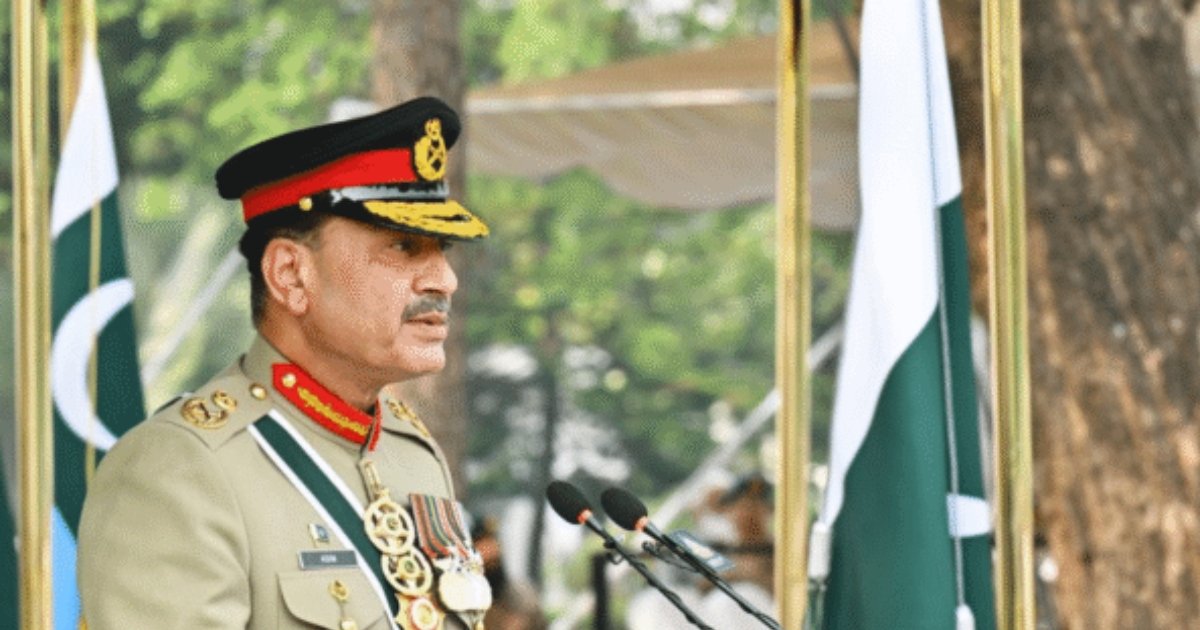
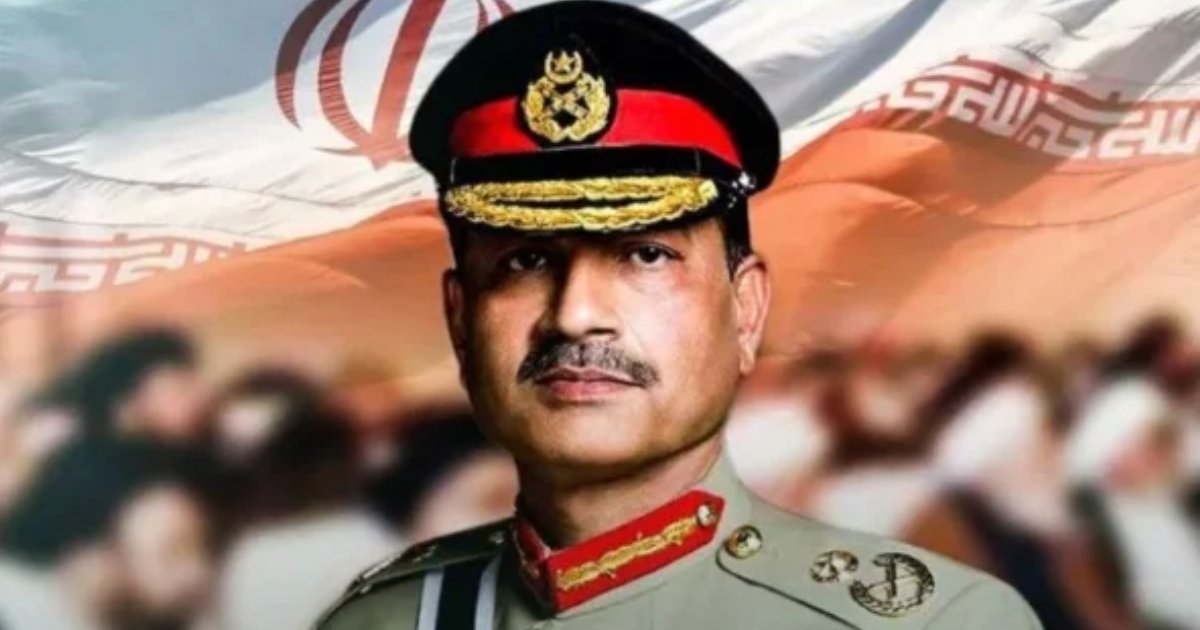
RAWALPINDI (April 22, 2026) — In a significant victory for Pakistani “military diplomacy,” Chief of Defense Forces (CDF) Field Marshal Asim Munir has successfully negotiated a high-stakes ceasefire extension between the United States and Iran. The move, announced by the White House late Wednesday, averts a massive regional escalation as the “Islamabad Peace Dialogue” enters a decisive second round.
The Strategic Truce
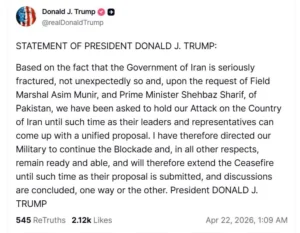
- President Donald Trump extended the ceasefire indefinitely at the explicit request of Field Marshal Asim Munir and PM Shehbaz Sharif.
- U.S. offensive strikes are paused; however, the U.S. Navy’s blockade of the Strait of Hormuz remains operational to maintain leverage.
- The ceasefire, originally set to expire on April 21, was extended just hours before the clock ran out, preventing the launch of “Operation Iron Justice.”
Field Marshal’s Role in “Active Mediation”
Field Marshal Asim Munir’s direct communication with Washington and Tehran has been credited as the stabilizing force in the current crisis. Following a series of high-level meetings with U.S. CENTCOM leadership and Iranian military attaches, the CDF successfully argued that a “unified proposal” from the newly transitioned leadership in Tehran required a broader diplomatic window.
Military analysts suggest that the CDF’s role goes beyond traditional mediation. By leveraging Pakistan’s unique strategic position and its history as a “partner in peace,” Munir has positioned the Pakistan Armed Forces as a credible guarantor of regional stability. This “Rawalpindi-Washington-Tehran” channel proved vital when civilian diplomatic efforts hit a stalemate over the terms of the naval blockade.
On the request of Prime Minister Muhammad Shehbaz Sharif and Field Marshal Syed Asim Munir, NI (M), HJ, #COAS & CDF of #Pakistan — US President Donald Trump extends the ceasefire#AsimMunir #Iran #ISPR pic.twitter.com/bsMlb6onsk
— Pakistan Armed Forces News 🇵🇰 (@PakistanFauj) April 21, 2026
The Military-Security Paradigm
While the ceasefire provides a reprieve, the General Headquarters (GHQ) remains on high alert. The CDF has emphasized that the extension is a “diplomatic maneuver” to allow the Iranian leadership—now under Mojtaba Khamenei—to present a cohesive 10-point peace plan.
The successful mediation has significantly boosted Pakistan’s defense profile globally, demonstrating that the country’s military leadership is a key architect of the “Islamabad Talks 2.0.” For the defense community, the extension is seen as a tactical win that prevents a spillover of the conflict into Pakistani territory while safeguarding the country’s western borders.
You May Like To Read:CDF FM Asim Munir met Iranian FM Abbas Araghchi in Islamabad
Check out our latest video: