The fall of Kabul in August 2021 initially sparked cautious optimism in Islamabad that a friendly dispensation in Afghanistan would secure Pakistan’s western flank and dismantle the sanctuaries of the Tehrik-i-Taliban Pakistan (TTP). Instead, those expectations rapidly dissolved into profound institutional frustration. Despite years of passive diplomacy, trade incentives, and targeted leverage—including the massive repatriation of illegal Afghan refugees—the Afghan Taliban (TTA) consistently demonstrated a stubborn unwillingness to act against anti-Pakistan militant groups, treating the TTP as a strategic asset rather than a security threat.
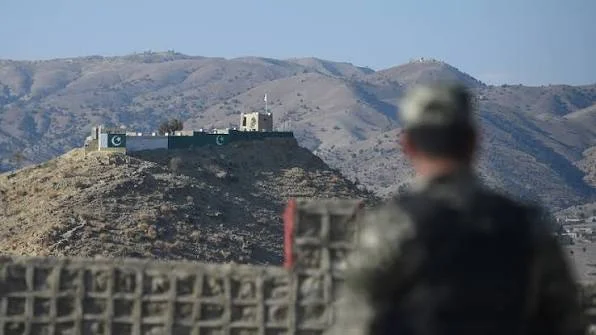
Pakistan says its forces carried out air and ground raids inside Afghanistan near the border, killing 29 TTP fighters. Afghan officials say dozens of civilians were killed, as mediation by China, Qatar and Turkiye stalls and tensions soar.
Al Jazeera’s Kamal Hyder reports. pic.twitter.com/RnefMiZ1QX
— Al Jazeera English (@AJEnglish) June 29, 2026
The turning point came in early 2025. Following a preliminary visit by Ambassador Muhammad Sadiq in March 2025, Deputy Prime Minister and Foreign Minister (FM) Ishaq Dar led a high-level delegation to Kabul in April 2025 to demand a comprehensive, security-first baseline for cooperation. Kabul’s subsequent breach of its commitments, coupled with provocative moves like Afghan FM Amir Khan Muttaqi’s visit to India in October 2025, effectively exhausted Islamabad’s strategic patience. The final catalyst arrived on February 6, 2026, when a devastating Islamic State Khorasan Province (ISKP) suicide attack at the Khadija Tul Kubra Imambargah in Islamabad left over 30 worshippers dead, followed closely by coordinated militant offenses in Bannu and Bajaur. Abandoning the exhausted frameworks of the 2020 Doha Accords, Pakistan has enforced a “new normal”—a punitive, single-agenda strategy that utilizes decisive military power and economic coercion to safeguard its national sovereignty.
The Four Pillars of Pakistan’s Punitive Strategy
Pakistan’s recalibrated strategy moves beyond mere border management and manifests across four distinct axes of coercive power:
1. Escalating Kinetic Operations: Establishing the ‘New Normal’
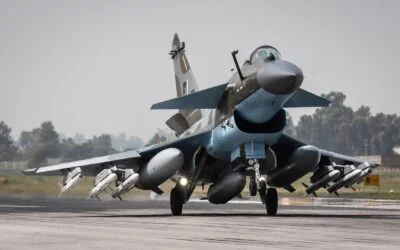
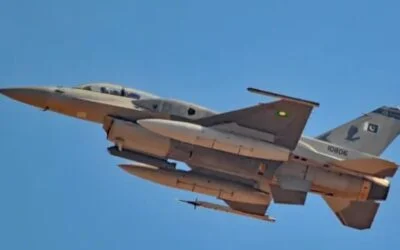
Islamabad’s military response has shifted from localized, plausible-deniability border skirmishes to overt, systematic, and highly destructive aerial campaigns. Following preliminary airstrikes in March 2024, the military significantly increased the tempo with the October 2025 strikes and a heavy wave of retaliatory bombardments on February 21, 2026, hitting seven TTP and ISKP training camps.
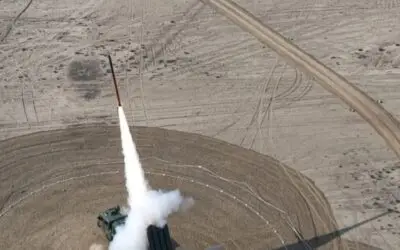
The launch of Operation Ghazab Lil Haq on February 26, 2026, in response to a Taliban border offensive, shattered previous geographical boundaries. On February 27, deep-penetration strikes targeted military infrastructure, air bases, fuel depots, and ammunition dumps near Kabul, Kandahar, Paktia, and Nangarhar. This was followed on March 16, 2026, by precision strikes that demolished technical equipment and ammunition storage hubs in Kabul and Nangarhar, while hitting a specialized military unit in Kandahar directly linked to the Taliban’s Supreme Leader, Hibatullah Akhundzada. These sustained operations have fundamentally rewritten the rules of engagement along the Durand Line.
2. Economic Attrition: The Weaponization of Transit Trade
On October 11, 2025, Pakistan took the drastic step of completely suspending all major border crossings, triggering an unprecedented economic shutdown. Historically, Pakistan has completely severed trade with Afghanistan on only three prior occasions: 1949–1950, 1955, and the prolonged bilateral freeze of 1961–1963.
This disruption strikes at the economic lifeblood of the landlocked Taliban regime. Before the fall of Kabul, Pakistan maintained a strong trade surplus, with exports reaching $1.019 billion in FY2021, fluctuating to $762 million in FY2022, $953 million in FY2023, and peaking at $1.390 billion in FY2024. By maintaining a hard closure despite severe blowback on transit traders, Pakistan’s leadership has signaled that national security entirely supersedes commercial interests. As the Defence Minister explicitly noted, the indefinite trade suspension ensures that terrorism can no longer penetrate Pakistan under the guise of cross-border commerce.
3. Diplomatic Hardening: Retraction to a Singular Agenda
A sharp rhetorical shift in the vocabulary and official declarations of the state reflects a severe narrowing of interests from multi-layered regional cooperation to an unyielding focus on counter-terrorism. Back in April 2025, FM Ishaq Dar publicly advocated for broad-based cooperation across trade, connectivity, and security following his Kabul visit. However, the tone hardened significantly by September 2025, when PM Shehbaz Sharif delivered an address in Bannu issuing a stark ultimatum: Kabul must choose between Pakistan and the TTP.
By October 2025, following a temporary ceasefire, the Prime Minister declared that the “ball is in Afghanistan’s court” to fulfill Pakistan’s baseline demands. The rhetoric reached a tipping point in February 2026 when Defence Minister Khawaja Asif declared that patience had run out, describing the bilateral status as an “open war.” This was echoed days later by PM Shehbaz Sharif at an Islamabad workshop, where he demanded a definitive choice on whether Afghanistan wants to live peacefully or face consequences, leaving no doubt about Pakistan’s stricter, direct approach.
4. Diplomatic Freeze and the Leverage Deficit
Since the pivotal April 2025 visit of Ishaq Dar, Pakistani officialdom has maintained a strict diplomatic quarantine, refusing any high-ranking, face-to-face engagements with Afghan Taliban officials. While embassies remain functionally open, interaction has been reduced to low-level technical matters.
The last brief deployment to Kabul was strictly confined to reviewing biometric controls, visa reforms, and eliminating illegal agents at the Pakistan Embassy. This calculated freeze reflects a sober realization within Islamabad’s policymaking circles: without significant, tangible, and painful leverage applied directly to the Taliban regime, diplomatic dialogue yields zero results.
Strategic Conclusion: Rooting Out the Source
The current crisis highlights a fundamental clash of narratives. The Afghan Taliban continue to disingenuously frame Pakistan’s counter-terrorism challenge as an internal security issue. Conversely, Islamabad’s strategic establishment has reached a firm consensus that domestic security operations are entirely futile if the logistical hubs, safe havens, and command structures of cross-border terrorism remain protected inside Afghanistan.
By utilizing Operation Ghazab Lil Haq and the absolute suspension of trade, Pakistan has fundamentally altered its approach. The era of passive diplomatic accommodation is over; Islamabad is now enforcing its core national security objectives through unyielding kinetic and economic coercion.