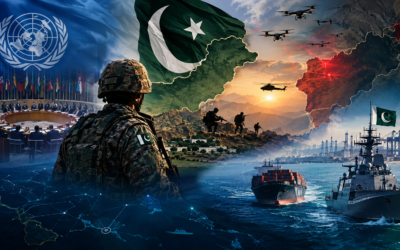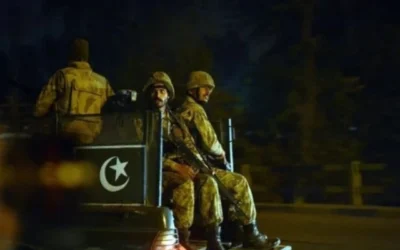
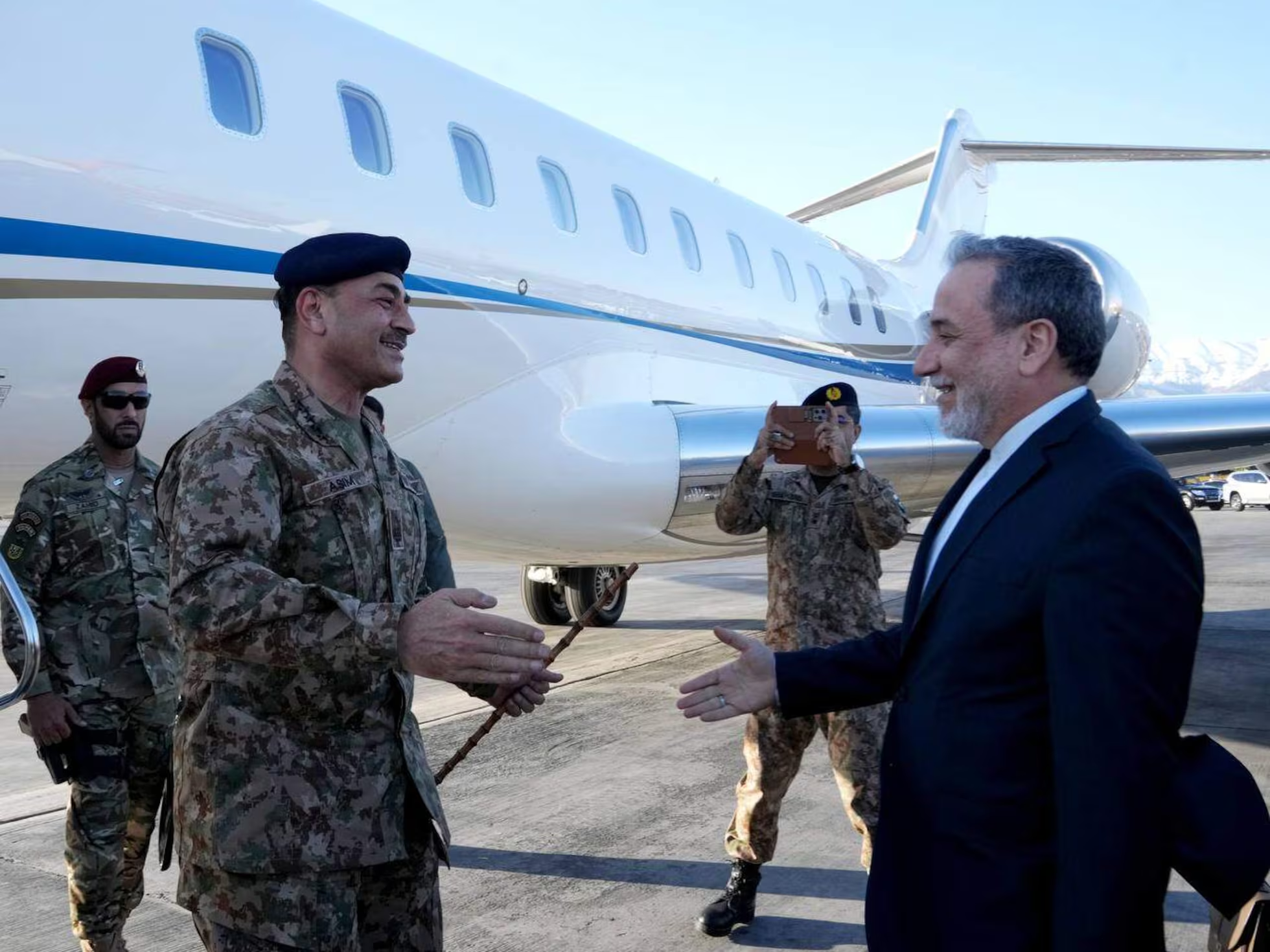
Breaking its institutional silence following Washington’s historic announcement of a Middle East peace accord, Pakistan’s senior military and intelligence apparatus has outlined the complex, backchannel strategy that led to the US-Iran Memorandum of Understanding (MoU).
In an extensive, high-level briefing to senior defense correspondents on Tuesday, top security officials emphasized that Chief of Army Staff and Chief of Defence Forces (COAS/CDF) Field Marshal Syed Asim Munir’s sole interest throughout the 109-day war was achieving absolute regional “peace and stability,” firmly stating that Pakistan operates far above the level of shallow, “headline diplomacy.”
The briefing offered a rare, detailed look at the strategic calculations guiding the state during the crisis, which erupted on February 28 following joint US-Israeli kinetic strikes on Iranian territory.
Beyond the Middle East peace architecture, the military command disclosed critical internal and cross-border data, detailing the elimination of over 1,800 militants under Operation Ghazab lil-Haq, exposing foreign-backed destabilization plays by the banned Joint Awami Action Committee (JAAC) in Azad Jammu and Kashmir (AJK), and addressing the realities of a highly constrained 17% defense budget increase.
1. The Backchannel Architecture: Trust, Neutrality, and Sabotage Risks
Pakistan’s defense high command revealed that navigating the “highly complex matter” of the Washington-Tehran war required a delicate, quiet-diplomacy framework that bypassed traditional Western media channels:
-
The Quadrilateral Pivot: Security sources clarified that Pakistan’s rare ability to maintain distinct, deeply trusted, and independent relationships with Tehran, Riyadh, and Washington simultaneously allowed it to act as an unassailable diplomatic bridge when direct communication channels between the Pentagon and the IRGC completely collapsed.
-
The Shared Credit Matrix: In a deliberate move to project regional unity, senior officials noted that while Pakistan drove the core mediation text, significant diplomatic credit belongs to Qatar, Saudi Arabia, Türkiye, Egypt, and the UAE for their synchronized efforts in de-escalating economic and maritime friction points.
-
The Media Sabotage Warning: Top planners issued a sharp warning regarding active “spoilers” determined to fracture the newly signed MoU. Officials noted that hardline elements, particularly those aligned with Tel Aviv’s security cabinets, heavily dominate international media spaces and are actively using information warfare to disrupt the implementation of the peace deal.
2. Operation Ghazab lil-Haq: The Cross-Border Lethality Index
Turning to immediate border defense, the military leadership released the first official, verified casualty metrics from its high-intensity counter-terrorism campaign along the western frontier:
-
The Afghan Incursions: Confirming Pakistan’s absolute right under international law to neutralize external threats, officials disclosed that 862 high-value militants and foot soldiers were successfully eliminated inside Afghan territory via precision strikes under Operation Ghazab lil-Haq.
-
The Internal Sweep: Simultaneously, integrated intelligence and kinetic operations inside Pakistan’s border regions resulted in the elimination of 999 active terrorists, significantly disrupting the command-and-control networks of hostile actors operating from across the Durand Line.
3. The AJK Gridlock: The Exposure of the Banned JAAC
Addressing internal hybrid warfare and law-and-order challenges, security officials provided a clear assessment of the ongoing stabilization efforts in Azad Jammu and Kashmir (AJK):
-
The Economic Enforcement: The state apparatus has actively engaged with local trade networks, directing shopkeepers and commercial hubs to safely reopen businesses to restore economic normalcy.
-
The Extortion Play: The briefing confirmed that elements belonging to the newly banned Jammu Kashmir Joint Awami Action Committee (JAAC) have resorted to blocking critical transit arteries, intimidating local traders, and threatening merchants who attempt to comply with state directives.
-
The Constitutional Mandate: Defense officials stated bluntly that “every moment the banned JAAC is becoming more exposed” as an anti-state disruptor, affirming that the network’s leadership will be dealt with decisively under the strict provisions of the Constitution of Pakistan.
4. Financial Realities: The 17% Budget Strain
The high command provided a transparent, data-driven look at the newly finalized defense budget, framing it within the context of modern, asymmetric tech warfare:
-
The Mandatory Burden: While the budget includes a Rs300 billion allocation shift, representing a nominal 17% increase, officials disclosed that almost the entirety of this capital is already consumed by mandatory expenditures—including soaring inflation costs, fuel overheads, and fixed institutional costs.
-
The Development Deficit: This leaves extremely limited funds for critical long-term defense development and modernization projects.
-
The Technology Gap: Security sources emphasized that terrorism remains a complex internal challenge, and that modern warfare is increasingly dependent on high-end, capital-intensive technologies like drone arrays, cyber defenses, and electronic surveillance. “In this context, the budget is low, and both military and political leadership are fully aware of this,” officials stated.
Critical Analysis
The comprehensive briefing by Pakistan’s top security officials marks a definitive shift in the state’s strategic messaging. By rejecting “headline diplomacy,” the military leadership is signaling to both domestic and international audiences that Pakistan’s geopolitical value lies in its concrete, real-world utility as a stabilizing force, rather than in public public-relations victories.
Neutralizing Information Warfare and Spoilers
The specific warning regarding media dominance and active “spoilers” highlights Rawalpindi’s acute awareness of the hybrid threat landscape. The military command understands that the electronic signature on the US-Iran MoU is only the first step in a highly volatile process.
By naming Israel’s influence over Western media narratives, Pakistani intelligence is proactively preparing the public for an upcoming wave of negative spin designed to devalue the peace deal. This defensive communication strategy is designed to preserve the diplomatic space needed for Vice President JD Vance and Iranian officials to successfully navigate the upcoming 60-day testing window in Geneva without being derailed by orchestrated media leaks.
The Hard Economics of Asymmetric Warfare
The candid disclosure regarding the Rs300 billion budget increase reveals a stark institutional reality: Pakistan is managing major regional security responsibilities under severe fiscal constraints. A 17% increase in a hyper-inflationary environment is essentially a status-quo budget.
By openly admitting that this allocation is insufficient for long-term technology development, the military leadership is signaling to the political establishment that economic recovery is directly tied to national security. In an era where cross-border counter-terrorism requires expensive, high-tech assets like satellite surveillance and electronic warfare systems to sustain initiatives like Operation Ghazab lil-Haq, the state must find ways to balance fiscal stabilization with the rising costs of modern border defense.
Dismantling Hybrid Threats in AJK
The military’s unyielding stance on the banned JAAC in Azad Jammu and Kashmir demonstrates that the state will no longer tolerate the weaponization of local economic grievances by non-state actors. By framing the JAAC’s actions—such as threatening local shopkeepers and blocking vital roads—as direct violations of constitutional order, the security apparatus is laying the legal and public groundwork for a decisive law-enforcement response.
This approach shows a sophisticated understanding of modern hybrid conflict: the state is allowing the group to politically expose its own disruptive nature to the public before deploying the full weight of constitutional law to restore order.
The Takeaway: The Rawalpindi briefing reveals a state apparatus operating with a high degree of strategic clarity. Whether coordinating a historic multi-national peace deal in the Middle East, neutralizing over 1,800 militants along the western frontier, or managing internal law-and-order challenges in AJK, Pakistan’s leadership is prioritizing quiet, actionable results over media optics. As the country prepares to take the chair of the SCO Council of Heads of State in September, this disciplined focus on real-world stability will remain its greatest asset, turning geographic vulnerabilities into powerful strategic advantages.
Field Marshal Asim Munir US-Iran deal peace stability, Pakistan headline diplomacy senior security officials briefing, Operation Ghazab lil-Haq militants killed Afghanistan Pakistan, banned JAAC exposed Azad Jammu Kashmir AJK, Pakistan defense budget Rs300 billion 17 percent increase, US President Donald Trump Iran MoU mediator, February 28 US Israel strikes Iran conflict, Qatar Saudi Arabia UAE Egypt SCO regional de-escalation, modern warfare technology military political leadership, Rawalpindi defense correspondents briefing June 2026, Federal Investigation Agency border security, Constitution of Pakistan law and order enforcement, Transnational backchannel mediation architecture, asymmetric conflict stabilization metrics, hybrid warfare information containment strategies, sovereign defense capital allocation parameters, constitutional law-and-order optimization, cross-border counter-security synchronization