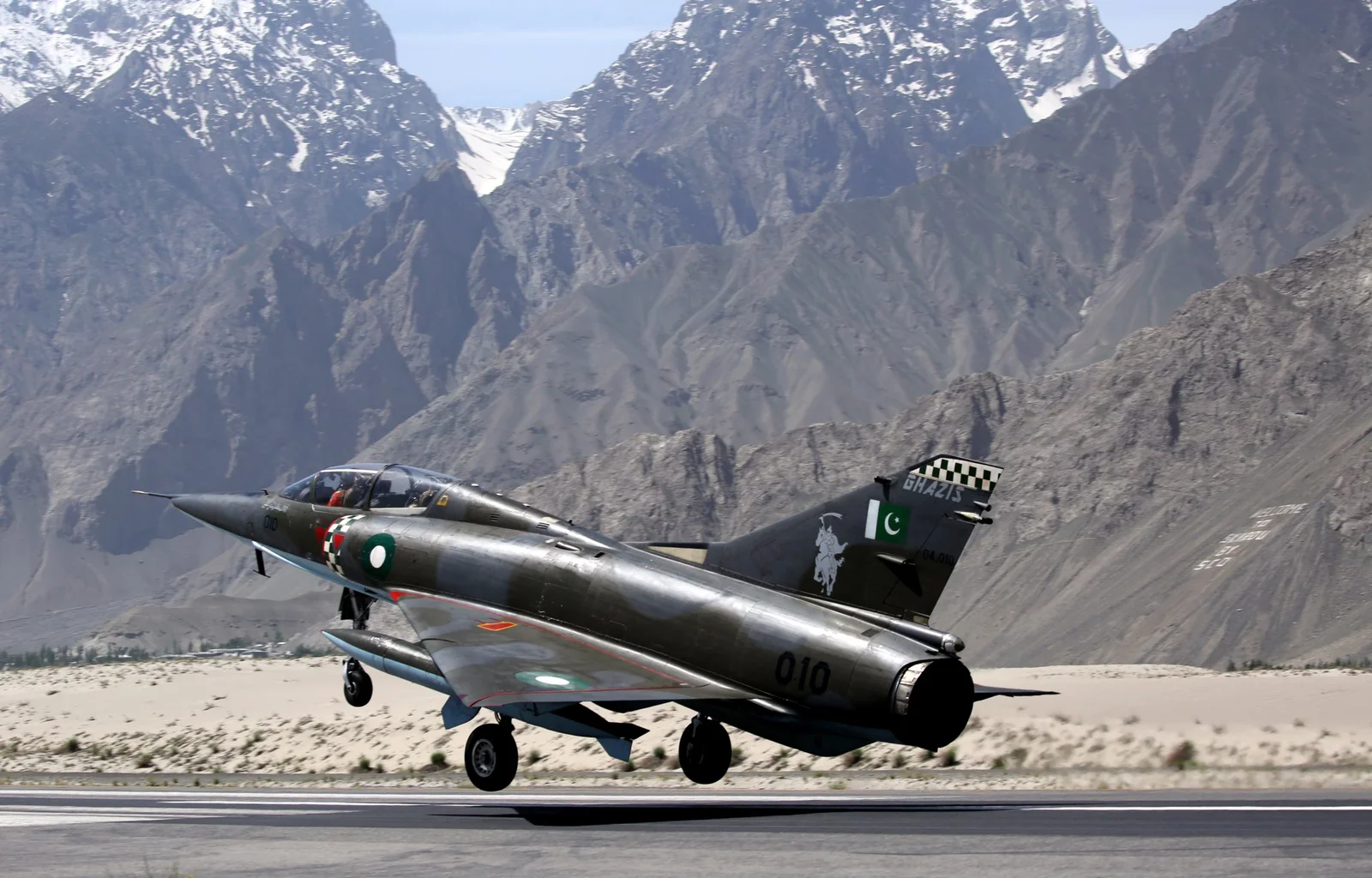
On this day in military aviation history, the Pakistan Air Force (PAF) marks the 42nd anniversary of the establishment of the No. 22 Operational Conversion Unit (OCU). Founded on June 22, 1984, at PAF Base Masroor in Karachi, this purpose-built unit was conceived as the foundational elite training ground designed to shape, refine, and secure the nation’s advanced aerial deep-strike capabilities.
For over four decades, No. 22 OCU has served as a demanding instructional forge, taking newly commissioned, promising military aviators and subjecting them to rigorous tactical training. Under strict operational discipline, these pilots are transformed into combat-ready warriors. They are uniquely qualified to command the Mirage weapon system and are entrusted with defending Pakistan’s territorial sovereignty through high-intensity precision strike profiles.
Today in History
On 22 June 1984, Pakistan Air Force established No 22 Operational Conversion Unit at PAF Base Masroor; a purpose-built crucible designed to shape the future of Pakistan’s aerial strike capability. Conceived as the forge of Mirage excellence, the unit has, for… pic.twitter.com/NoCtJB5fE3
— DGPR (AIR FORCE) (@DGPR_PAF) June 22, 2026
The Vanguard of Mirage Variant Mastery
Throughout its highly distinguished operational history, No. 22 OCU has successfully managed, maintained, and operated nearly every significant variant of the delta-wing Mirage platform inducted into PAF service. This extensive instructional scope underscores the unit’s technical versatility and deep tactical expertise:
Key Instructional Platforms Operated by the Unit:
-
Mirage-III DF & DL: Dual-seat trainers and tactical platforms optimized for advanced instrument navigation, high-G maneuvering, and foundational supersonic conversion.
-
Mirage-V DD: Purpose-configured conversion trainers designed to simulate heavy payload delivery and low-altitude ingress/egress navigation.
-
Mirage-III EL: Highly specialized strike and interception fighters equipped to train aircrew in advanced electronic warfare environments and precision-guided munitions deployment.
The Tactical Mandate: The unit’s primary mission has remained unchanged since its first taxi run: to bridge the gap between basic fighter conversion and advanced deep-strike operational readiness. By pushing both machine and pilot to their absolute structural limits, the unit ensures the PAF maintains a lethal, survivable, and highly credible striking arm capable of penetrating hostile airspace under any weather condition.
Spiritual Anchoring and the Legacy of the Ghazis
The identity of No. 22 OCU is defined by a unique fusion of advanced tactical mastery and a powerful spiritual heritage. The unit’s official emblem—depicting a mounted Ghazi (holy warrior) clad in iconic PAF green—serves as a constant visual reminder of their core values: victory, faith, and selfless service to the nation.
This warrior ethos is deeply rooted in the philosophical verse of Iqbal:
“جنہیں تُو نے بخشا ہے ذوقِ خدائی”
(Those whom You have blessed with a longing for divinity/higher pursuits)
As the unit commemorates 42 years of operational excellence, the Ghazis of No. 22 OCU continue to stand at the absolute cutting edge of Pakistan’s air power. The true measure of the unit’s success lies not just in thousands of documented flying hours or operational milestones, but in the combat culture passed down to each new generation of Shaheens (falcons). This continuous legacy ensures that the striking arm of the Pakistan Air Force remains perpetually poised, highly trained, and ready to defend the nation’s skies against any threat.