ISLAMABAD — As Pakistan and China advance their all-weather strategic cooperation, Beijing’s military thinking — spanning doctrine, training, advanced platforms, and cyber capabilities — is steadily shaping Pakistan’s evolving defense outlook. This convergence stems from shared security interests, expanding bilateral exercises, technology partnerships, and China’s commitment to safeguard Belt and Road projects and regional stability. The result is a Pakistan that pragmatically adapts tested concepts from the People’s Liberation Army (PLA), aligns them with its own operational requirements, and further strengthens the regional balance of power.
From Platforms to Posture: Modern Systems with Doctrinal Value
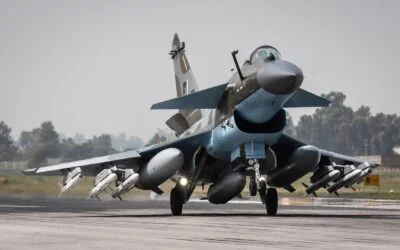
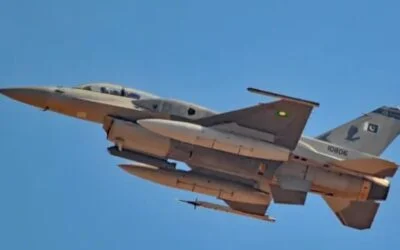
China has remained Pakistan’s most reliable defense partner for over two decades, steadily transitioning from basic supplies to high-end systems that represent cutting-edge operational concepts. Reports of Pakistan’s prospective induction of the new J-35 fifth-generation fighter underscore not only capability enhancement but also doctrinal sophistication — as advanced platforms are delivered with training, tactics, and operational frameworks derived from the PLA’s own experience. Negotiations and deliveries of such systems in 2025 signify a qualitative leap, enhancing Pakistan’s deterrent strength.
Exercises and Training: Foundations of Doctrinal Synergy
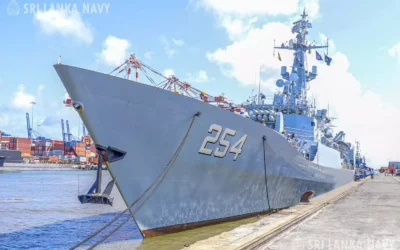
The most effective channel of doctrinal exchange lies in joint training. Pakistan and China have consistently expanded the scope of their exercises — naval drills in the Arabian Sea, counter-terror operations, and combined-arms maneuvers. These are not symbolic displays; they build real interoperability, acquaint Pakistani officers with PLA planning and command structures, and integrate Chinese best practices in mission command, air–land integration, and missile employment. Exercises such as “Warrior” counter-terror drills and expanded naval cooperation demonstrate how shared learning is deepening across all services.
Urban Warfare and Integrated Combat Concepts
A key area of doctrinal convergence is urban and large-scale combat operations. The PLA’s emphasis on integrated, precision-enabled operations in contested terrain — informed by its “informatized local wars” doctrine — strongly resonates with Pakistan’s own operational needs. Pakistan, faced with both external challenges and urban contingencies, has shown interest in ISR integration, electronic warfare, and precision strike capabilities suited to dense terrain. Training reforms and force-structure priorities increasingly reflect this adaptation, ensuring readiness for modern battlefields.
Cyber, AI and Emerging Domains
Beyond conventional warfare, Pakistan–China cooperation has extended to artificial intelligence, robotics, autonomous systems, and cyber defense. Recent agreements and joint research initiatives highlight the shared goal of securing critical infrastructure and enhancing digital resilience. Pakistan’s active role in Chinese-led capacity-building programs indicates not only technological gains but also access to operational approaches for countering advanced cyber threats. This collaboration equips Pakistan to face 21st-century challenges while reinforcing strategic trust.
Mapping, Geospatial Systems, and Situational Awareness
Technical cooperation in mapping and geospatial modernization is providing Pakistan with enhanced battlefield awareness and precision targeting capabilities. Improvements in navigation systems and sensor-to-shooter integration, supported by Chinese expertise, carry both civilian and military benefits. These advancements align with PLA doctrine that prioritizes accurate, networked awareness — capabilities now becoming central to Pakistan’s defense posture.
Strategic Impact for South Asia
This doctrinal alignment has significant regional implications. Pakistan’s conventional deterrence is strengthened through modern systems, integrated training, and advanced digital capabilities, narrowing gaps with adversaries. Cooperative approaches in cyber and AI domains provide new layers of resilience and operational flexibility. Pakistan’s reliance on Beijing’s high-end systems, rather than constraining autonomy, embeds it more firmly within a trusted partnership that supports its national security priorities and contributes to regional balance.
Limits and Adaptation
Pakistan does not adopt foreign models wholesale; it integrates them selectively, shaped by local geography, resources, and operational experience. While benefiting from Chinese practices, Pakistan blends them with lessons from its own campaigns and from other partners. This pragmatic adaptation ensures doctrine remains responsive to evolving realities and national objectives.
Conclusion
China’s influence on Pakistan’s defense evolution is visible across weapons systems, training, technical cooperation, and emerging domains like cyber and AI. Beyond hardware, Beijing has shared operational ideas on urban warfare, integrated fires, and digital resilience that Pakistan is refining and operationalizing. The outcome is a Pakistan that is more capable, strategically confident, and aligned with its most trusted partner. These developments not only bolster national defense but also contribute to a stable and balanced security environment in South Asia.