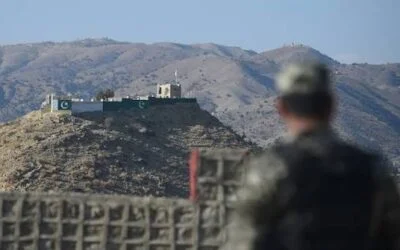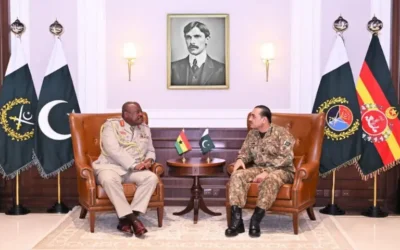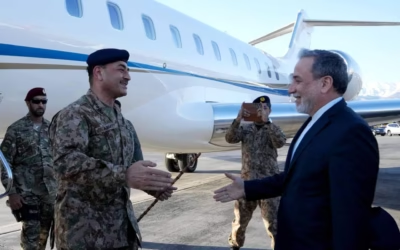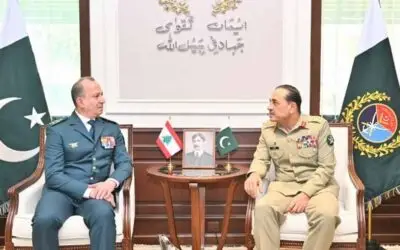
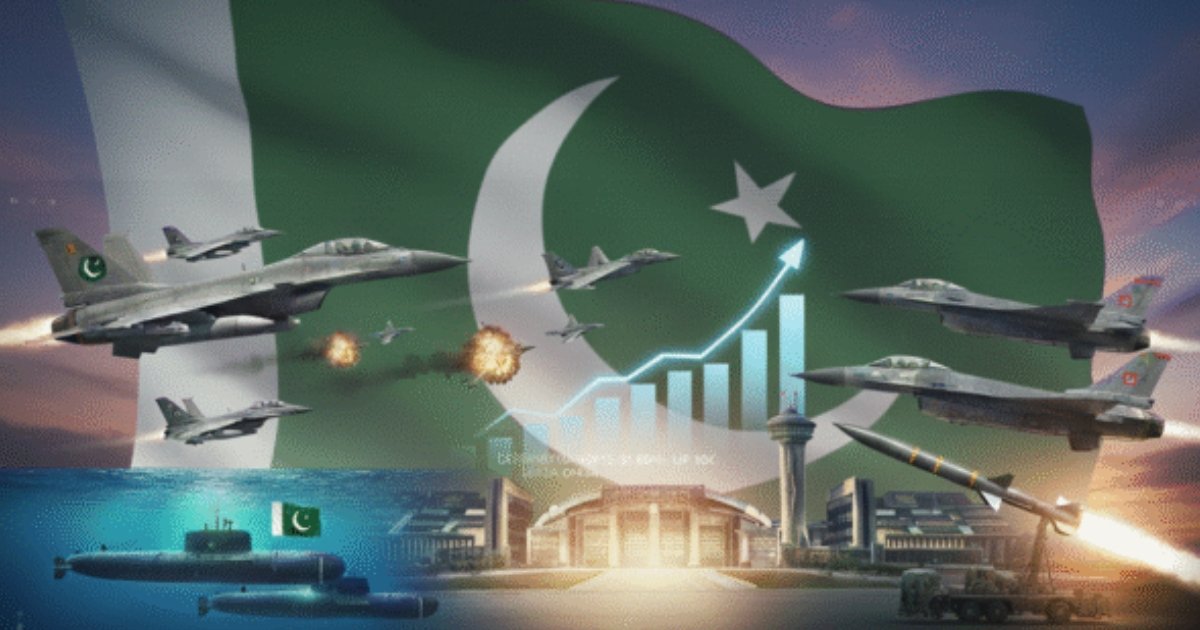
The year 2025 has culminated in the most significant constitutional and structural transformation of Pakistan’s defense architecture since the 1970s. Through the 27th Constitutional Amendment, the state has moved to centralize its military authority under a unified command, elevating Field Marshal Syed Asim Munir to a position of unprecedented institutional power. This “Garrison Pivot” is designed to synchronize tri-service operations and project Pakistan’s military-diplomatic influence as an emerging “Middle Power” on the global stage.
Marka-e-Haq: The 88-Hour War, and the Fall of the “Invincible” Rafale
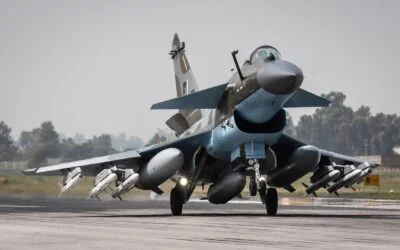
The strategic shift of 2025 cannot be understood without acknowledging Marka-e-Haq (The Battle of Truth), famously known as the 88-Hour War. Triggered by India’s Operation Sindoor on May 7, the conflict saw the largest beyond-visual-range (BVR) aerial engagement in the history of the subcontinent. In a decisive display of technological integration, the Pakistan Air Force (PAF) utilized its “SPOT” (Strategic Persuasion-Oriented Targeting) doctrine to dismantle the myth of Indian qualitative superiority. The turning point occurred in the early hours of the engagement when PAF J-10C “Vigorous Dragon” fighters, supported by sophisticated electronic warfare nodes, engaged a formation of Indian Rafales. Utilizing the PL-15 long-range missile, the PAF achieved the historic feat of downing at least three Dassault Rafales, alongside a MiG-29 and a Su-30MKI. This marked the first time the French-made 4.5-generation jet was defeated in active combat, a victory that sent shockwaves through global defense circles and forced a total recalibration of Indian air doctrine.
🇵🇰7-0
The #Pakistan Armed Forces will never disappoint the nation against #India In’Shaa’Allah250 million Pakistanis have placed their trust in us, by the will of Allah, we will NEVER let you down!
Marka e Haq-Operation Bunyan-um-Marsoos #AsiaCup2025 #PAKvsIND #ISPR
Victory… pic.twitter.com/mdtcQDJIfD
— Pakistan Armed Forces News 🇵🇰 (@PakistanFauj) September 29, 2025
The war concluded on May 10 with the launch of Operation Bunyan-um-Marsoos, where Pakistan’s unified command demonstrated its “reach” by neutralizing high-value Indian military targets, including S-400 batteries and BrahMos missile depots. The 88-hour duration proved that the “Garrison Pivot” could deliver a high-intensity, decisive blow while avoiding the nuclear threshold—a feat that has since become a textbook case of Constructivist Realism in modern warfare.
Structural Overhaul: The Dawn of the CDF Era
In November 2025, the Parliament of Pakistan passed the historic 27th Constitutional Amendment, fundamentally altering Article 243. This legislative overhaul abolished the 49-year-old office of the Chairman Joint Chiefs of Staff Committee (CJCSC) and replaced it with the more powerful Chief of Defence Forces (CDF).
The Appointment of the First CDF
On December 4, President Zardari officially appointed Field Marshal Syed Asim Munir as the inaugural Chief of Defence Forces. This appointment formalizes a “dual-hatted” command structure:
- Unity of Command: Munir serves as both the Army Chief and the CDF, granting him supreme command over the Army, Navy, and Air Force to ensure rapid decision-making during crises.
- Five-Year Tenure: The new law stipulates the CDF will remain in uniform for a reset 5-year term.
- Constitutional Immunity: Officers attaining five-star ranks (Field Marshal) now enjoy lifelong rank, privileges, and constitutional immunity similar to the President, protectable from political targeting and removable only through a parliamentary process akin to impeachment.
Federal Cabinet approves the promotion of Army Chief to the rank of Field Marshal ⭐️⭐️⭐️⭐️⭐️
General Syed Asim Munir,NI (M), Chief of Army Staff (COAS),#PakistanArmy #Pakistan #COAS #ISPR pic.twitter.com/G0YZl2qHQN
— Pakistan Armed Forces News 🇵🇰 (@PakistanFauj) May 20, 2025
The Army Rocket Force Command (ARFC)
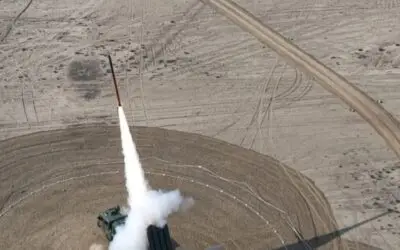
Recognizing the pivotal role of stand-off precision strikes during the May 2025 conflict, PM Shehbaz Sharif inaugurated the Army Rocket Force Command (ARFC) on August 13. This command centralizes conventional long-range missile systems like the Fatah-I, Fatah-II, and the newly tested Fatah-4 cruise missile (750 km range). By separating conventional strikes from nuclear assets, the ARFC allows for a “layered deterrent” that can respond to threats without immediately escalating to a nuclear threshold.
Pakistan just announced the creation of a new ‘Army Rocket Force Command.’
This isn’t just about bigger rockets. It’s a fundamental shift in South Asian military doctrine that could change the rules of the next conflict. Here’s why it matters. 🧵#Pakistan #ARFC #Military pic.twitter.com/kprmllj8w8
— Quwa (@QuwaGroup) August 14, 2025
Internal Stability: Operation Azm-e-Istehkam
While external threats loomed, the internal landscape was defined by Operation Azm-e-Istehkam (Resolve for Stability). Launched in June 2024 and reaching its peak intensity in 2025, this “re-energized” campaign utilizes surgical Intelligence-Based Operations (IBOs) to dismantle militant networks in KP and Balochistan without the mass displacements seen in previous decades.
- Key Successes: The neutralization of high-value TTP and BLA targets and the implementation of the “Sino-Pak Joint Security” framework to safeguard CPEC projects.
- Multidimensional Approach: The operation combines military pressure with socio-economic uplift and legal reforms to target the financial roots of extremism.
Good Night 🇵🇰
🎥: #Pakistan Armed Forces launch major joint counterterrorism offensive named “Operation Azm-e-Istehkam”. pic.twitter.com/jb3JDaxaz5
— The STRATCOM Bureau (@OSPSF) June 24, 2024
Arsenal of the South: Global Defense Exports
Under the Field Marshal’s command, Pakistan’s defense industry achieved record-breaking export success, positioning the country as a major player in the international arms market.
The $1.6 Billion Azerbaijan Deal
On November 25, Pakistan finalized its largest-ever defense export deal with Azerbaijan. Valued at $1.6 billion (with long-term estimates up to $4.6 billion), the agreement provides a fleet of JF-17 Block III fighters equipped with advanced AESA radars. This deal cements a strategic partnership and proves the JF-17 is a “battle-proven” alternative to Western platforms.
#News: Azerbaijan has taken delivery of its first JF-17 Block III fighters from Pakistan. With plans to acquire 40 JF-17s under a $4.6 billion deal, Baku is now the largest export customer of the Sino-Pak jet. The JF-17 is steadily expanding its global footprint, already flying… pic.twitter.com/mSqpJ9TXOi
— Air Power (@RealAirPower1) November 16, 2025
The Libyan LNA Agreement
In late December, a massive $4.6 billion defense agreement was signed with the Libyan National Army (LNA) under Field Marshal Khalifa Haftar. The deal reportedly includes:
- 16 JF-17 Thunder fighter jets.
- 12 Super Mushshak trainer aircraft.
- 44 Haider main battle tanks and various naval assets.
🚨 Pakistan and Libyan National Army have reportedly signed $4.6B defence deal: The deal reportedly includes:
🔹 16 JF-17 Thunder fighter jets
🔹 12 Super Mushak trainer aircraft
🔹 44 Haider main battle tanks
🔹 Advanced infantry mortar systems
🔹 1 multi-purpose naval vessel… pic.twitter.com/wx873zDCuW— South Asia Index (@SouthAsiaIndex) December 20, 2025
Modernization, and Induction
2025 saw a quantum leap in the induction of high-tech hardware across all three services.
Undersea Dominance: Hangor-Class Submarines
On December 17, the Pakistan Navy launched PNS Ghazi, the fourth of eight Hangor-class submarines. Part of a $5 billion program, these vessels feature Air-Independent Propulsion (AIP), allowing them to stay submerged for weeks. Once armed with the Babur-3 SLCM, they will provide a credible second-strike capability in the Arabian Sea.
🚨BREAKING: Pakistan launches its fourth nuclear-capable Hangor-class submarine, PNS Ghazi. pic.twitter.com/bXtgF0ooVb
— The Daily CPEC (@TheDailyCPEC) December 17, 2025
Air Superiority: J-10C and KAAN
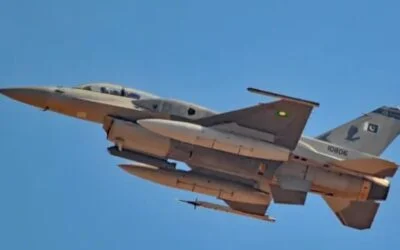
The PAF operationalized at least two frontline squadrons of 4.5-generation J-10C “Vigorous Dragon” fighters. Simultaneously, the US approved a $686 million F-16 upgrade package, ensuring the fleet remains relevant until 2040. Most significantly, Pakistan and Turkiye established a joint factory for the KAAN 5th-generation fighter, granting Pakistan access to stealth and sensor fusion technology.
JUST IN 🇹🇷🇵🇰🔥 #Pakistan produced the world’s first 5th-generation fighter jet ‘KAAN’ with the cooperation of Turkey and US F-35 technology. pic.twitter.com/Cb3CcUhnoz
— RKM (@rkmtimes) December 8, 2025
#BREAKING: United States has approved an upgrade package worth $668 million for Pakistan Air Force’s F-16 fleet. pic.twitter.com/CsPyp9oWH9
— Ironclad (@NavCom24) December 10, 2025
Strategic Alliances & Naval Diplomacy
- Saudi Arabia (SMDA): On September 15, Pakistan and Saudi Arabia signed the Strategic Mutual Defense Agreement. Similar to NATO’s Article 5, it treats an attack on one as an attack on both.
- Naval Exercise AMAN-25: In February, Pakistan hosted 60 countries in the Arabian Sea, demonstrating its unique ability to bridge divides between major powers like the US, China, and Iran.
- Exercise AYYILDIZ 2025: Concluded in December, this elite drill between Turkish SAT commandos and Pakistan Navy SSGNs focused on maritime counter-terrorism and VBSS operations.
From Importer to Exporter: Metamorphosis of Pakistan’s Defense Industry
The year 2025 marked a historic tipping point for Pakistan’s economic narrative, as the nation successfully transitioned from being a major defense importer to a globally recognized exporter of high-end military technology. Under the centralized command of the Chief of Defence Forces (CDF) and the rigorous oversight of the Special Investment Facilitation Council (SIFC), Pakistan’s defense exports experienced an unprecedented surge, eclipsing previous decades of modest output.
For much of the 2010s and early 2020s, Pakistan’s defense exports were primarily limited to small arms, ammunition, and basic trainer aircraft like the Super Mushshak, with annual revenues rarely crossing the $100 million mark. However, the 2025 fiscal year saw this figure skyrocket into the billions. This leap was driven by the “battle-proven” status of Pakistani hardware during the 88-Hour War, which served as a live global demonstration of the JF-17 Block III’s air dominance and the precision of the Fatah rocket series.
The contrast with the 2020-2023 period is stark. While those years were defined by reliance on foreign aid and a heavy import burden—peaking with a 61% growth in arms imports—2025 saw a pivot toward industrial sovereignty. The landmark $1.6 billion deal with Azerbaijan and the staggering $4.6 billion agreement with the Libyan National Army represent a more than tenfold increase in export volume compared to the historical average. By late 2025, defense exports had become a primary source of foreign exchange, contributing significantly to the national effort to stabilize the rupee and reduce the current account deficit.
This metamorphosis was not accidental but the result of a deliberate move toward “South-South” military-industrial channels. By offering 4.5-generation technology like the JF-17 Block III and AIP-equipped naval assets at a fraction of Western costs—and without the restrictive political conditionality of US or EU export controls—Pakistan carved out a unique niche. As 2025 concludes, the defense sector has emerged as the most resilient and profitable segment of the national economy, transforming the “Garrison” from a financial burden into a primary engine of national wealth.
Analytical Conclusion: The Birth of a Geoeconomic Sentinel
The year 2025 will be remembered as the moment Pakistan successfully reconciled its security imperatives with its economic survival, effectively birthing the “Geoeconomic Sentinel” model. The structural transformation witnessed through the 27th Amendment and the elevation of Field Marshal Syed Asim Munir to the role of Chief of Defence Forces (CDF) represents more than a mere centralization of power; it signifies the formal integration of military precision into the national economic recovery engine.
The Dividend of Credibility
The transition from a chronic defense importer to a multi-billion dollar exporter—exemplified by the landmark deals with Azerbaijan and the Libyan National Army—is the direct “dividend” of operational credibility. By validating indigenous hardware like the JF-17 Block III and the Fatah rocket series in the crucible of high-intensity conflict, Pakistan has circumvented traditional marketing, allowing its technology to speak for itself. This shift has successfully decoupled Pakistan’s defense procurement from Western political conditionalities, providing the state with a level of Strategic Autonomy unseen since the late 20th century.
Diplomacy through Deterrence
Furthermore, the “Garrison Pivot” has redefined Pakistan’s role within the global hierarchy. The Strategic Mutual Defense Agreement with Saudi Arabia and the co-development of the KAAN 5th-generation fighter with Turkiye have moved Pakistan beyond the status of a regional player into the realm of a “Middle Power” with global reach. Pakistan is no longer merely a participant in the security architecture of the Global South; it has become a primary architect and supplier of it.
The Path to 2030
As the nation enters 2026, the “Garrison” has successfully transformed from a fiscal strain into a primary engine of national wealth. The challenge for the next five years under the CDF’s unified command will be to ensure that this military-industrial boom trickles down to stabilize the broader civilian economy. However, with a battle-tested fleet, an unprecedented undersea deterrent, and a record-breaking export ledger, Pakistan closes the chapter of 2025 not just as a survivor of regional instability, but as a proactive, high-tech, and economically assertive leader of the 21st-century Islamic world.
Check out our latest video: