
General Syed Aamer Raza formally assumed charge as the inaugural Commander of the National Strategic Command (CNSC) on Monday, holding his first official meeting at General Headquarters (GHQ) with Chief of Defence Forces (CDF) and Chief of the Army Staff Field Marshal Syed Asim Munir.
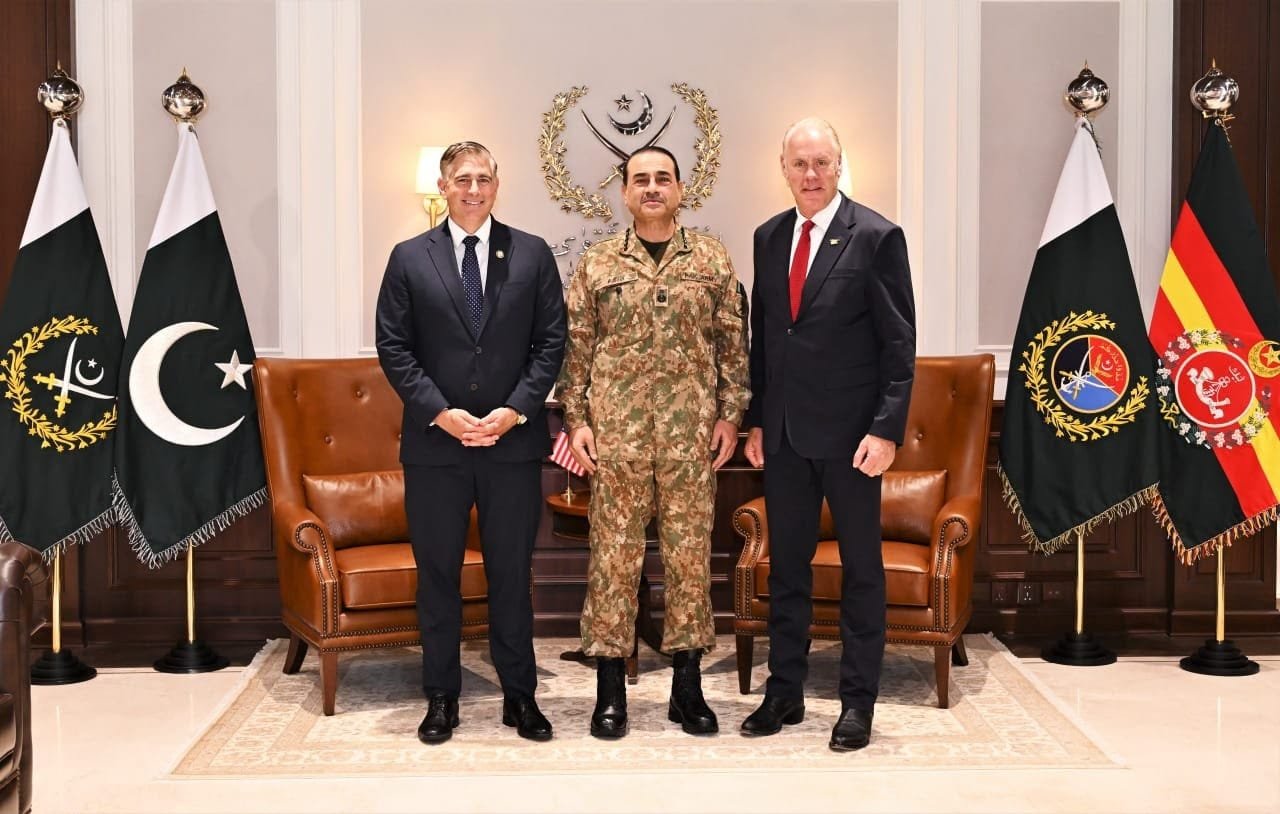
The leadership transition follows Prime Minister Shehbaz Sharif’s formal announcement promoting General Raza to four-star rank and appointing him to lead the country’s restructured strategic command. Concurrently, CDF Munir hosted a visiting US Congressional delegation in Rawalpindi to review bilateral security, economic cooperation, and regional stability.
US Congressional Delegation Visits GHQ, Meets Field Marshal Asim Munir
RAWALPINDI: A high-level delegation of the United States Congress visited General Headquarters (GHQ), where it met with Pakistan’s Chief of Army Staff Field Marshal Asim Munir. According to the Inter-Services… pic.twitter.com/aNpgKR5lYI— Voice of Germany (@NewsVOG) July 27, 2026
High-Level Transition: Command Architecture at GHQ
The ceremonial assumption of office and subsequent high-level exchanges highlight ongoing updates within the military command structure:
-
Guard of Honour & Memorial Homage: Upon arrival at GHQ, General Raza was presented with a formal guard of honour, after which he laid a floral wreath at the Yadgar-e-Shuhada (Martyrs’ Monument) to honor fallen service personnel.
-
Formal Reception by CDF: Field Marshal Asim Munir congratulated General Raza on his four-star promotion and assumption of the CNSC portfolio, expressing confidence in his leadership over the nation’s strategic assets and deterrence posture.
-
US Congressional Engagement: In a separate meeting at GHQ, US Representatives Ryan Keith Zinke and Michael James Baumgartner conferred with CDF Munir. Discussions centered on bilateral defense ties, counter-terrorism alignment, trade collaboration, and regional security dynamics, with the visiting lawmakers acknowledging Pakistan’s critical role in regional stabilization.
Strategic Analysis: Restructuring Command Architecture and Institutional Alignment
The formal takeover of the National Strategic Command alongside parallel US defense talks carries significant structural and geopolitical implications:
Operationalizing the Strategic Command Architecture
The appointment of General Syed Aamer Raza as the first Commander of the National Strategic Command operationalizes structural reforms established under recent military governance legislation and constitutional amendments. By replacing legacy joint command structures—such as the former Chairman Joint Chiefs of Staff Committee (CJCSC) framework—with a streamlined CNSC portfolio, the state is consolidating centralized oversight over strategic forces, nuclear deterrence protocols, and tri-services coordination.
Centralized Higher Defense Command Under the CDF
The formal meeting between General Raza and Field Marshal Asim Munir highlights the updated hierarchy established under the Chief of Defence Forces (CDF) framework. With the CDF position unifying overall military direction, the dedicated CNSC role allows for specialized focus on strategic readiness, doctrine, and nuclear containment capabilities while maintaining seamless operational alignment with the central defense leadership.
Institutionalizing Parallel Diplomatic and Defense Channels
The concurrent meeting between CDF Munir and US lawmakers demonstrates how Pakistan’s military leadership continues to conduct diplomatic engagement across dual tracks—defense security and commercial partnership. By linking military-to-military dialogue with trade, SIFC investment opportunities, and regional counter-terrorism cooperation, Islamabad aims to ensure that its strategic deterrence posture remains complemented by stable international and economic partnerships.