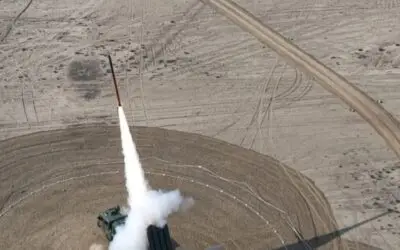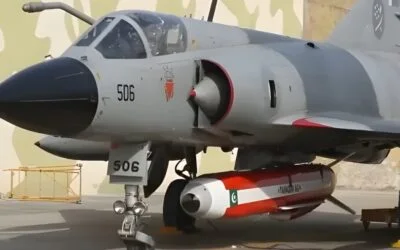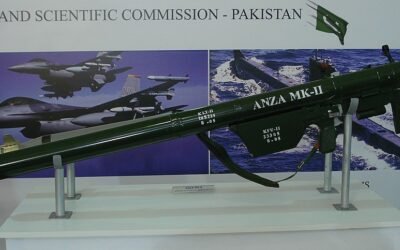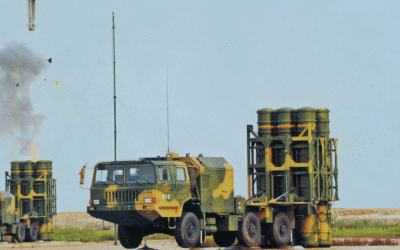
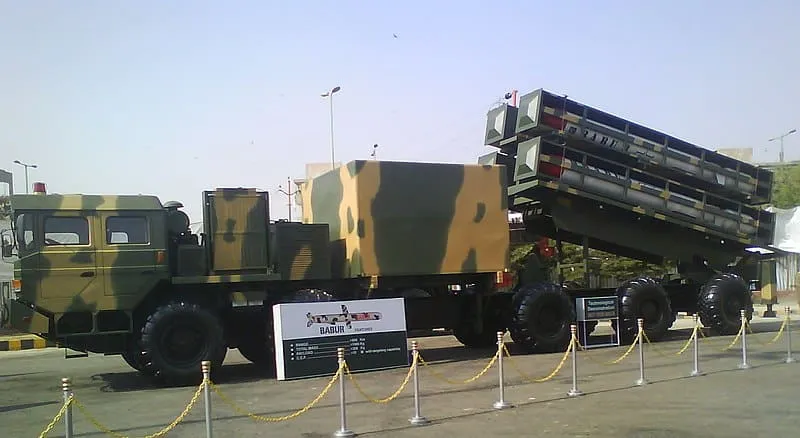
The Babur-1 is Pakistan’s first land-attack cruise missile, representing a significant technological leap in its strategic capabilities. Developed by NESCOM, the missile is a subsonic, all-weather cruise missile that is highly difficult to detect and intercept due to its low-altitude, terrain-hugging flight profile. The Babur-1 has a reported range of up to 700 kilometers. It is powered by a turbofan engine and uses a vertical launch system with a solid-propellant booster to propel it into the air before its wings and tail fins unfold for cruise flight. Its guidance system is a highly sophisticated combination of an Inertial Navigation System (INS), a Terrain Contour Matching (TERCOM) system, and a Digital Scene Matching Area Correlation (DSMAC) system. This triple-layered guidance allows it to navigate with pinpoint accuracy, even in the absence of a GPS signal. The Babur-1 is capable of carrying a nuclear or conventional warhead, with a payload of 450-500 kg. Its deployment provided Pakistan with a flexible and highly accurate strategic strike option against a wide range of targets, including command and control centers, airfields, and other critical infrastructure.
- Type: Ground-Launched Cruise Missile (GLCM)
- Propulsion: Turbofan engine with a solid-fuel booster
- Range: Up to 700 km
- Payload: 450-500 kg, conventional or nuclear warhead
- Guidance: INS, TERCOM, and DSMAC
- Launch Platform: Road-mobile Transporter Erector Launcher (TEL)
- Length: 6.2 m
- Weight: 1,500 kg