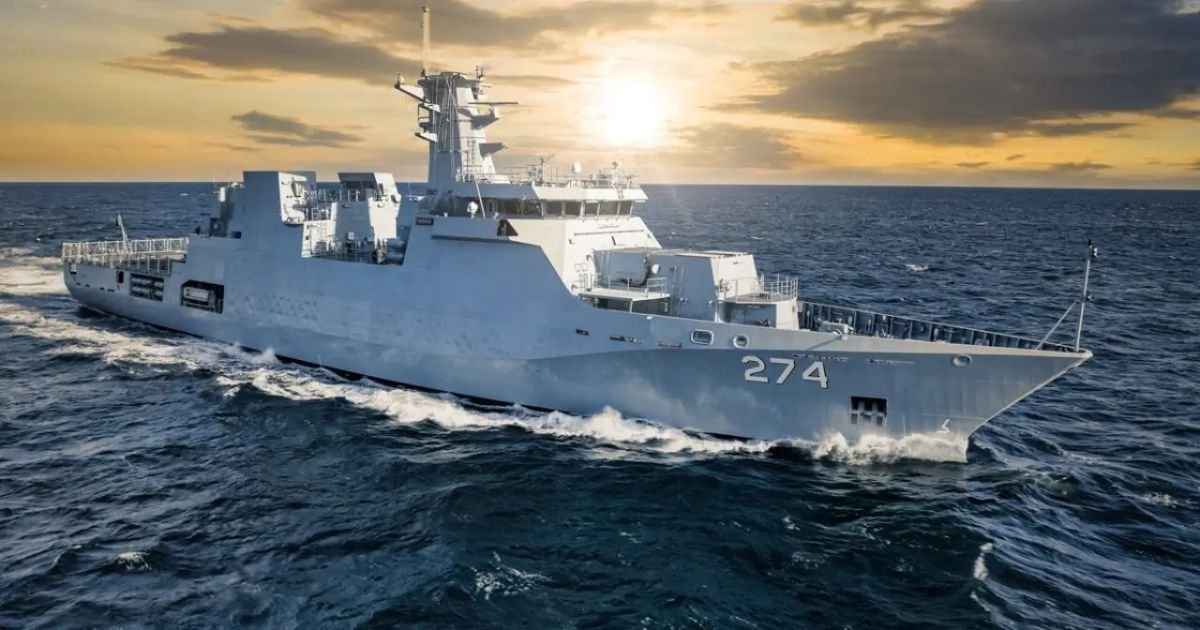
Pakistan Navy (PN) has struck a historic blow against transnational crime. In October 2025, PN ship PNS Yarmook intercepted two dhow sailing boats in the Arabian Sea and seized narcotics valued at over $972 million. Pakistan has taken a major step in expanding its maritime security efforts, and this large haul signals a shift; blue-water patrols and defense readiness are giving way to law enforcement and maritime governance.
PNS YARMOOK, operating under the Saudi-led Combined Task Force 150, executed a successful counter-narcotics operation in the North Arabian Sea, seizing narcotics worth USD 972 million, reflecting Pakistan Navy’s enduring resolve against illicit trafficking at sea. pic.twitter.com/EdCZybApNo
— DGPR (Navy) (@dgprPaknavy) October 22, 2025
This operation was carried out under the multinational Combined Maritime Forces (CMF), the Saudi-led Combined Task Force 150 (CTF-150), as part of Focused Operation Al Masmak. The boarding of two stateless vessels by the PN within 48 hours, one loaded with more than 2 tons of crystal methamphetamine (estimated at US $822.4 million) and the other with 350 kg of ice (US $140 million) and 50 kg of cocaine (US $10 million), demonstrates operational reach and precision.
Pakistan Navy Ship YARMOOK, while operating under the Saudi-led Combined Task Force 150 (CTF-150) of the Combined Maritime Forces (CMF), successfully executed a major counter-narcotics operation in the North Arabian Sea, resulting in the seizure of narcotics valued at… pic.twitter.com/UJAmDNcMAQ
— PTV News (@PTVNewsOfficial) October 22, 2025
This major bust is more than just a win against illicit drugs. It signals an expanded mandate for the PN in the Arabian Sea and Indian Ocean. Over recent years, PN deployments near Karachi have evolved from coastal patrols to broader maritime presence. In early 2024, the PN publicly announced deploying warships in the Arabian Sea to respond to maritime security incidents, aiming to protect Pakistan’s trade routes and establish a permanent presence. The PN also assumed command roles: in April 2025, CTF-151, under PN command, was patrolling off the east coast of Somalia and the Gulf of Aden with CMF in charge.
Growing Maritime Role and Joint Operational Outlook
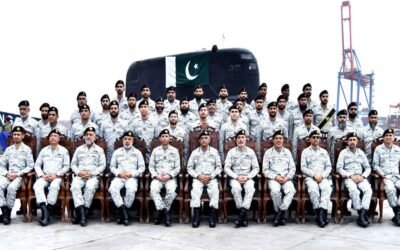
Pakistan’s maritime security role is shifting from a doctrinal perspective. At the 2025 multinational exercise, then Defense Minister Khawaja Muhammad Asif emphasized that the importance of maritime security has increased in today’s globalized world. Hosting the massive AMAN-2025 exercise, with participation from over 60 nations, allows Pakistan to showcase its maritime diplomacy, interoperability, and regional leadership.
Pakistan Navy, a force to reckon with ⚓ 🇵🇰
Gearing up for #Aman2025 pic.twitter.com/qJ6YDG1IqF
— Pakistan Strategic Forum (@ForumStrategic) January 12, 2025
The drug seizure serves multiple strategic purposes: it disrupts a multi-billion-dollar drug smuggling network, proves Pakistan’s ability to conduct complex boarding operations, and boosts Islamabad’s reputation as a capable maritime security force. For Pakistan’s economic and security interests, such as protecting vital trade routes, enhancing Gwadar-CPEC connectivity, and maintaining stable sea lanes, this reflects a proactive military posture rather than passive defense.
Meanwhile, the involvement of the Pakistan Army and other services in maritime operations is increasing. Although the bust was a PN achievement, the overall Army presence at AMAN-2025 and the remarks by Army Chief General Asim Munir highlight a joint-force approach, i.e., connecting regions toward a common goal of securing the seas for a prosperous future. This indicates that Pakistan’s maritime security framework is becoming more collaborative, integrating the navy, the army, and maritime law enforcement agencies. It reinforces the idea that sea security is a whole-of-force activity, not just a naval matter.
General Syed Asim Munir, NI(M), Chief of Army Staff (COAS) was the Chief Guest During Exercise AMAN 2025#AMAN2025 #AsimMunir #COAS #Pakistan #AMAN #ISPR pic.twitter.com/ZxIve9yKsY
— Pakistan Armed Forces News 🇵🇰 (@PakistanFauj) February 11, 2025
Pakistan’s participation in multinational exercises, command of CMF task forces, and recent major drug busts all showcase its growing regional capacity. However, ongoing challenges remain. Intelligence, maritime domain awareness (MDA), legal processes, and prosecution can be slow. Seizing narcotics is one step; processing suspects, gathering evidence, and securing convictions are others. The scale of smuggling requires long-term presence, advanced sensors, and cooperation with law enforcement agencies like the Anti-Narcotics Force (ANF). For example, in August 2025 alone, PN and ANF intercepted 1,250 kg of narcotics, including 1,100 kg of hashish, 50 kg of ice, and 100 kg of heroin, off the Pasni coast, valued at US $38 million. That’s a strong start, but only part of the billion-dollar illicit trade.
Strategic Outlook and Policy Recommendations
Pakistan’s increased role in diplomacy also brings regional scrutiny and responsibilities. Operating in multinational task forces means maintaining legal, logistical, and political commitments. Counter-narcotics missions require transparent hand-overs, secure custody chains, and international cooperation.
Looking ahead, two practical steps stand out. First, Pakistan should institutionalize its law enforcement stance by creating a dedicated Maritime Counter-Narcotics Cell within the fleet command. This would include intelligence units, boarding teams, legal experts, and ANF liaison officers to ensure continuous, specialized capabilities. Second, Pakistan should strengthen bilateral and regional maritime policing agreements, such as with Gulf littoral states or East African allies, to share real-time intelligence, secure rights for hot pursuit, and facilitate boarding operations. Enhanced regional maritime cooperation will help Pakistan build its naval credentials.
Overall, Pakistan Navy’s billion-dollar bust is more than just a headline success. It signals a strategic shift toward a proactive maritime security posture. It broadens the navy’s role, underscores the importance of maritime strategy in national policy, and positions Pakistan as a key regional maritime partner. The challenge now is to sustain this momentum and develop institutional strength, converting tactical wins into lasting strategic advantages at sea.
Check out our latest video: