Introduction
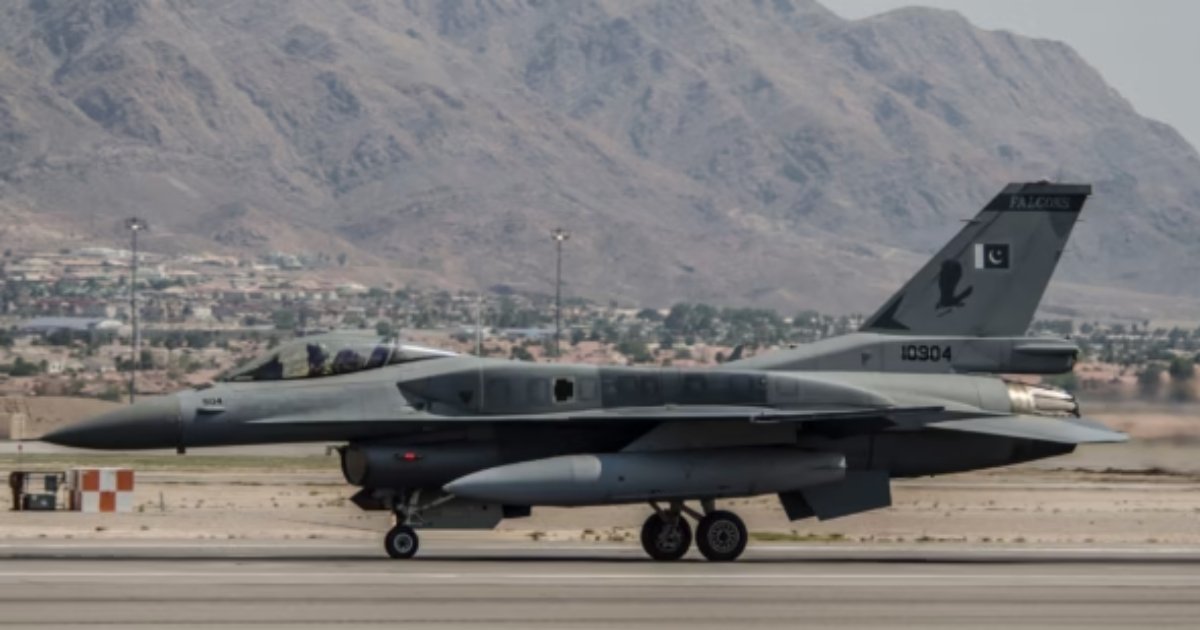
In early December 2025, the U.S. Defense Security Cooperation Agency (DSCA) reported to Congress a sale of advanced technology and support for the F-16 fighter jet fleet in Pakistan, totaling $686 million. The package includes Link-16 tactical datalinks, cryptographic equipment, upgraded avionics, simulators, and comprehensive logistics and training support, all confirmed in official letters to lawmakers. U.S. officials defend the sale as a means to strengthen counterterrorism cooperation and interoperability between U.S. and allied forces, as well as to extend the service life of Pakistan’s Block-52/Mid-Life Upgrade F-16s until 2040. This move comes several months after the U.S. sold arms to India, prompting speculation among observers that Pakistan may be reviving its defense ties with Washington or is being used as a strategic pawn in the U.S.-China balance of power in South Asia.
US President Donald Trump’s administration has approved sales valued at $686 million of technology and equipment for Pakistan’s F-16 fighter jets to modernize its fleet https://t.co/QiMGjsvFH1
— Bloomberg (@business) December 11, 2025
US just greenlit a $686 million upgrade package for Pakistan’s F-16s. Congress has 30 days to review it . .
What’s in the deal : Link-16 datalink, new avionics, crypto gear, training, spares & long-term support.
US line : Helps Pakistan keep its F-16s flying till 2040 & “won’t… https://t.co/W7VsmuZ7XF pic.twitter.com/7F9Il5C20F
— The Lie Lamaa 🏹 (@_TheLieLamaa) December 11, 2025
Strategic Background
Pakistan’s F-16 fleet, first introduced in the 1980s and upgraded over the years, remains the core of its air force. Over the decades, Islamabad has balanced its defense relationships between Western and Eastern allies. During the 1990s and early 2000s, reliance on U.S. and European arms was high, but U.S. embargoes and sanctions (such as the denial of press packages in the 1990s and post-9/11 restrictions) prompted Pakistan to diversify its sources, turning increasingly to China and others. According to Stockholm SIPRI data, over 80 percent of Pakistan’s weapon imports from 2020 to 2024 were of Chinese origin, including J-10 fighters deployed during the May 2025 India-Pakistan aerial conflict. However, Pakistan continues to straddle a fine line between Washington and Beijing, benefiting from ties with both. The International Crisis Group notes that this F-16 package reflects a longstanding relationship, indicating that Pakistan is viewed as a stabilizing partner despite Indian protests. Recent high-level engagements and exercises have reinforced the Pakistan-Turkey alliance and its relations with China. Meanwhile, U.S. policymakers are looking to renew their focus on Islamabad’s role in counterterrorism and regional stability.
🔺🇵🇰🇺🇸❌🇮🇳:
US approved an upgrade package worth $668 million for Pakistan’s F-16 fleet, despite Indian opposition. pic.twitter.com/w4CBOTxWe7— Tactical Tribune (@TacticalTribun) December 10, 2025
Analysis of the F-16 Package
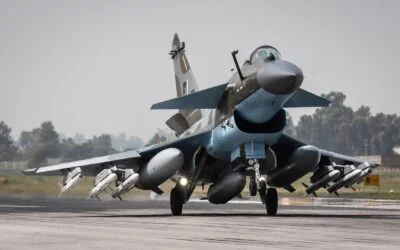
The December 8, 2025, congressional approval letter formalizes the sale, dividing it into approximately $37 million in Major Defense Equipment (MDE) and $649 million in additional support and technology. The MDE mainly includes 92 Link-16 datalink terminals and six live Mk-82 500-lb bombs for training and testing. Link-16 provides a jam-resistant, secure network used by U.S. and NATO forces for real-time targeting, surveillance, and command sharing. The addition of Link-16 will allow Pakistan’s F-16s to communicate with AWACS, ground control, and allied fighters, greatly enhancing situational awareness and joint operations. Besides datalinks, the support package funds extensive avionics modernization, radar and weapons integration, an updated Operational Flight Program (OFP), new IFF (friend/foe) transponders and encryptions, precision navigation systems, mission planning software, and flight simulators. The package also includes spare parts, technical documentation, ground test equipment for pilots and maintainers, and training to ensure operational readiness.
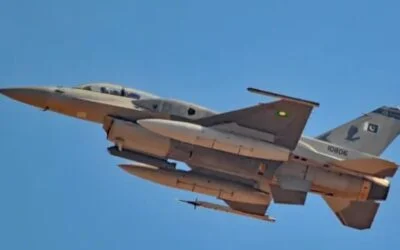
DSCA asserts that these upgrades will help Pakistan address current and future threats by refurbishing its Block-52 and Mid-Life Upgrade F-16 fleet, extending their operational life to 2040, and resolving critical safety issues. Practically, this means the aging F-16s, some with thousands of flight hours, will be capable of integrated, interoperable operations with modern forces for years to come. Interoperability is explicitly mentioned in the package: seamless integration with the U.S. Air Force for combat operations, exercises, and training. U.S. officials emphasize that Pakistan has the capacity to absorb these new technologies and that the sale will not disrupt regional military equilibria. Pakistani analysts have praised the deal’s role in ensuring the survivability of the F-16 fleet, transforming the older aircraft into a modernized force capable of operating efficiently alongside contemporary air forces.
Benefits for Pakistan
The F-16 upgrade offers Pakistan numerous advantages. Primarily, it preserves and enhances Pakistan’s multirole airpower at a relatively low cost. Extending the fleet’s life until 2040 will save billions (over $686 million) by avoiding early retirement and procurement of new aircraft. Improved datalinks and avionics will significantly boost pilots’ situational awareness and interoperability. Equipped with Link-16 and advanced IFF, Pakistani jets will gain an edge in networked warfare, coordinating sensors, ground systems, and allies to make missions safer and more effective. Training and logistical support will familiarize Pakistani maintenance crews with Western systems, building local expertise and fostering long-term U.S.-Pakistan military partnerships. According to Michael Kugelman of the Wilson Center, the package’s rationale is rooted in years of U.S. assistance in acquiring American-built aircraft.
Politically, this agreement gives Pakistan leverage and assurances. It signals Washington’s trust in Islamabad as an ally against extremism, potentially opening pathways for broader cooperation, such as on Afghanistan or critical minerals. The timing indicates that Pakistan can re-engage with great powers without heavily relying on a single sponsor. It enables the Pakistan Air Force to address contemporary threats, like counterterrorism along its western border, with modern equipment, alleviating maintenance burdens. Pakistan stands to benefit from a more capable, interoperable air force while maintaining valuable diplomatic ties with Washington, further strengthening its long-term military independence and deterrence. Afghanistan or critical minerals. The timing indicates that Pakistan can re-engage with great powers without heavily relying on a single sponsor. It enables the Pakistan Air Force to address contemporary threats, like counterterrorism along its western border, with modern equipment, alleviating maintenance burdens. In sum, Pakistan stands to benefit from a more capable, interoperable air force while maintaining valuable diplomatic ties with Washington, further strengthening its long-term military independence and deterrence.
Risks and Limitations
However, the upgrade has its conditions. Regional tension is a risk. India is publicly not happy with U.S. aid to Pakistan, and this package has already caused New Delhi to protest. In Islamabad, the analysts will be required to deal with Indian responses and keep the balance of terror stable. Another problem might be overreliance on U.S. support: as the sale claims that there will be no negative effect on U.S. defense readiness, it is feared that some parts and maintenance will be supplied by the U.S. in the future. Pakistan has countered this through fleet diversification (e.g., Chinese J-10s, Russian MiGs), although reliance on American systems might be dangerous in the future in the event that U.S.-Pak relations are again strained. Delays during implementation may also occur: the DSCA submitted the package to a 30-day congressional review. Despite historical evidence indicating that the package will probably pass, partisan politics or bureaucracy may delay its delivery. Lastly, there are asymmetric threats: modernized F-16s are powerful, but Pakistan has been experiencing land and counterinsurgency issues that demand a wider capability. Accordingly, this package, though valuable, will not provide all the security requirements.
Conclusion and Policy Recommendations
The $686 million F-16 modernization can be best described as a pragmatic enhancement of the defense arsenal of Pakistan and not a complete realignment. It demonstrates that even as it enhances its ties with China, Islamabad can continue to access American military assistance. Pakistan needs to make the most of this deal policy-wise: bring the new systems into combined training (with China-friendly services where possible), and leverage interoperability to do more multilateral training. Islamabad must go on to diversify its arsenal (investing in local projects and other partners) to ensure that no one supplier has control over its military. Diplomatically, Pakistan must use this collaboration to seek prolonged technology transfer (e.g., co-production of spares or simulators) to establish domestic maintenance capacity.
Simultaneously, Pakistan must address regional stability. It must openly engage with its neighbors (possibly through Track 2 dialogue) to prevent any confusion and underscore that the upgrades are defensive and counterterrorism-based. Lastly, Islamabad should formalize a middle ground policy: collaborating with the U.S on issues of common concern (terrorism, strategic minerals) but keeping its so-called sacred alliances in other areas. Such a package would make the F-16 package an opportunity, a message that Washington and Beijing could end up benefiting Pakistan without losing strategic freedom.
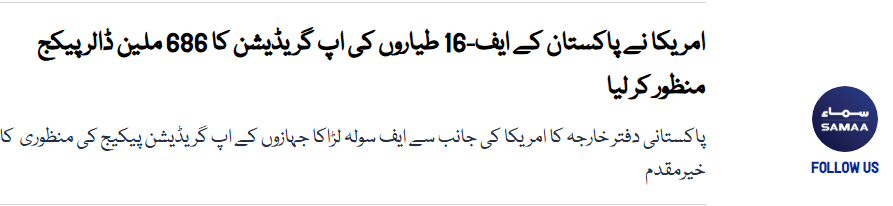
Source: SAMAA TV
Alt Text: Pakistan welcomed the sale and called it part of ongoing defense cooperation.
Check out our latest video: https://youtu.be/f2HwQR6L96Y?si=2b7vUjWzFj4OpotF