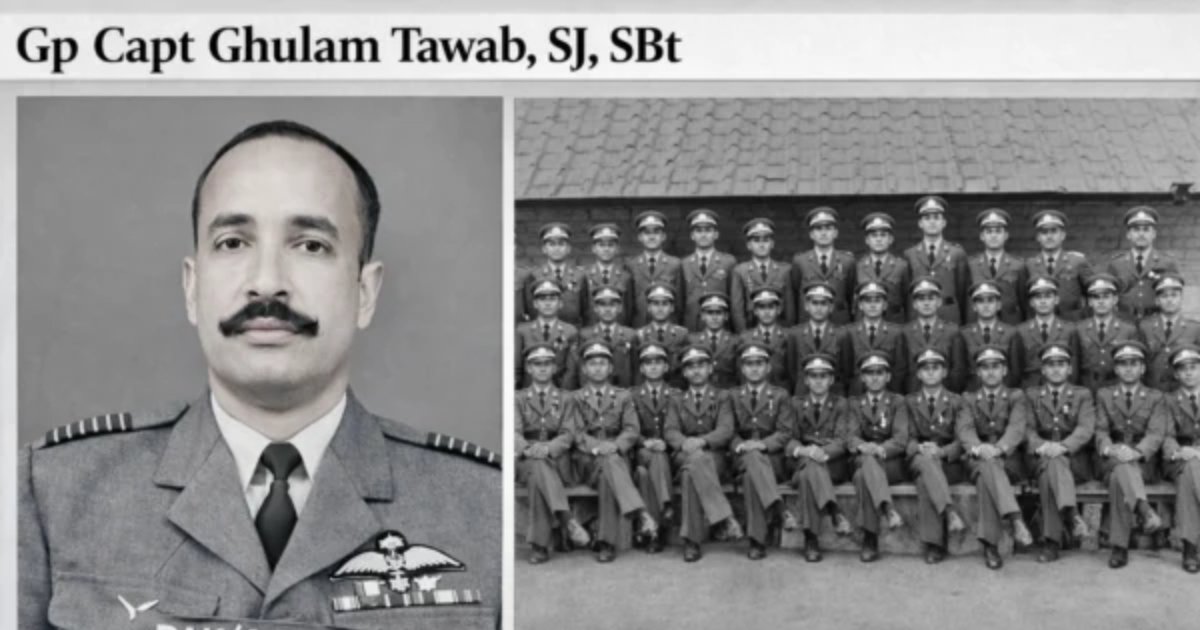
The Pakistan Air Force (PAF) today observed the death anniversary of Group Captain Ghulam Tawab, SJ, SBt, a distinguished fighter pilot and war hero whose tactical brilliance and nerves of steel significantly altered the course of the 1965 Indo-Pakistan War. A master of the F-86 Sabre, Gp Capt Tawab is remembered as a commander who combined lethal precision in the air with strategic foresight that saved critical ground formations.
Today in History
On this day, 23 February, we honour the death anniversary of Gp Capt Ghulam Tawab, SJ, SBt — a fighter ace of rare calibre, a commander of instinctive brilliance and a professional whose courage under fire became legend within Pakistan Air Force. In the crucible… pic.twitter.com/lSAwLlrpx8
— DGPR (AIR FORCE) (@DGPR_PAF) February 23, 2026
Air Superiority at Pathankot and Srinagar
During the 1965 conflict, then-Wing Commander Tawab served with the elite No. 19 Squadron at Peshawar, flying 24 grueling combat missions.
-
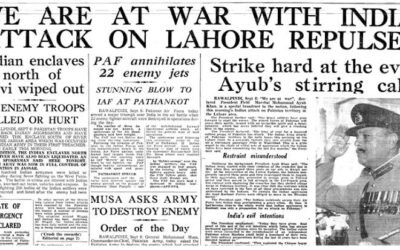
The Pathankot Assault: On September 6, 1965, Tawab was airborne over Pathankot, providing high-altitude cover during one of the most successful strikes in aviation history, where enemy aircraft were decimated on the ground.
-
Shielding the Strike: He provided vital top cover during historic raids on the Srinagar airfield and the Jammu radar installation, ensuring that strike elements could complete their missions while he held off potential interceptors with “steely composure.”
-
Close Air Support: Over the battlefields of Chamb and Wagah, he personally led ferocious rocket attacks against enemy armor and supply convoys, turning the tide of localized engagements through sheer audacity.
The Chawinda Reconnaissance: A Decisive Turn
Beyond his dogfighting prowess, Gp Capt Tawab is credited with a singular act of reconnaissance that arguably saved the Sialkot sector.
-
The Discovery: During a high-risk reconnaissance sortie, Tawab spotted a massive concentration of Indian armor stealthily advancing toward Chawinda.
-
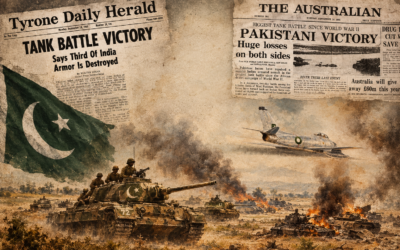
Operational Impact: His immediate and precise intelligence report allowed the Pakistan Army to reposition its heavy artillery and tank formations just in time to meet the enemy. This led to the Battle of Chawinda, the largest tank battle since World War II, where the enemy offensive was ultimately blunted.
You May Like To Read: Pakistan Army Responds to Unprovoked Indian Ceasefire Violation in Neelum Valley
Decorations and Lasting Legacy
For his “conspicuous gallantry and resolute command,” Gp Capt Tawab was awarded the Sitara-e-Jurat (SJ).
-
Command Excellence: He later commanded the illustrious No. 14 Squadron (“The Tail Choppers”), where his emphasis on discipline and professional mastery earned him the Sitara-e-Basalat (SBt).
-
An Instinctive Leader: To the men who flew under him, Tawab was an “instinctive” pilot who led from the cockpit, never asking his formation to undertake a risk he had not already measured himself.
Check out our latest video: