
The Indian Ocean has become a flashpoint of global tension. Following the dramatic sinking of the Iranian frigate IRIS Dena by a US submarine within Sri Lanka’s Exclusive Economic Zone (EEZ) on March 4, 2026, the region is grappling with the fallout of the US-Israeli-Iranian conflict. As trade routes face unprecedented disruption, Pakistan has launched “Operation Muhafiz-ul-Bahr” to shield its energy supplies.
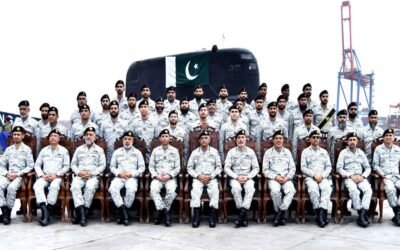
In this exclusive dialogue, Admiral Naveed Ashraf, Chief of the Naval Staff of the Pakistan Navy, sits down with Daily Mirror to discuss modernizing for deterrence, the “bloc politics” of the Indo-Pacific, and the vital role of neutral littoral states like Sri Lanka.
– Sri Lanka’s neutral role lauded post IRIS Dena incident
– Inclusive regional balance key to “free & open” Indo-PacificRead more: (2/2)https://t.co/d9UZoVeneT
— DGPR (Navy) (@dgprPaknavy) March 30, 2026
On Deterrence and Undersea Warfare
Daily Mirror: Pakistan has significantly enhanced its undersea warfare capabilities in recent years. How does your expanding submarine fleet alter the maritime balance in the Northern Indian Ocean?
Admiral Naveed Ashraf: The complex maritime security situation in the Indian Ocean Region necessitates a balanced and capable naval force to maintain deterrence. Pakistan Navy continues to upgrade its capabilities according to the security dynamics in the region. We believe that enhancement of our submarine fleet—specifically with the HANGOR Class—is an important element in strengthening deterrence and maintaining the regional balance of power.
Daily Mirror: With the induction of new platforms, what doctrinal shift has the Pakistan Navy adopted in terms of deterrence and sea denial?
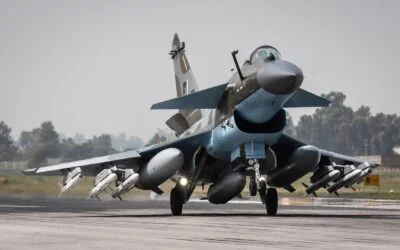
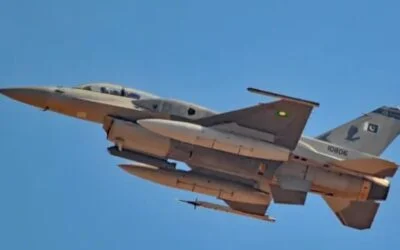
Admiral Naveed Ashraf: In the last few years, we have undertaken major modernization. We’ve inducted Type-054 A/P Frigates from China and MILGEM Class Corvettes from Türkiye, which are the most technologically advanced platforms in our surface fleet. In the underwater dimension, the HANGOR Class SMs are equipped with state-of-the-art sensors.
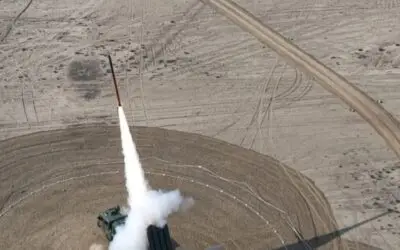
Furthermore, we are integrating emerging technologies like unmanned systems and AI-supported decision-making. This has necessitated a shift toward Multi-Domain Operations (MDOs). We are moving to generate an integrated response to evolving threats across the entire conflict spectrum.
On the “Free and Open” Indo-Pacific
Daily Mirror: How does Pakistan view the growing strategic competition in the Indo-Pacific, particularly between the US, China, and India?
Admiral Naveed Ashraf: We deem this growing competition as primarily a maritime security issue intertwined with a rapidly transforming environment. The ongoing conflict between the US, Israel, and Iran has seriously affected security close to our shores and disrupted vital energy supplies from the Strait of Hormuz, impacting economies worldwide. We believe in peaceful co-existence and negotiated settlements as the best way forward.
Daily Mirror: There is increasing global emphasis on a “Free and Open Indo-Pacific.” What does that mean from Pakistan’s perspective?
Admiral Naveed Ashraf: Pakistan supports open sea lanes and adherence to international maritime law. However, a truly “free and open” Indo-Pacific should not evolve into bloc politics or military alliances that marginalize certain states or disrupt regional balance. We favor an inclusive maritime order over an exclusionary framework that poses risks of polarization.
The Sinking of IRIS Dena and Sri Lanka’s Role
Daily Mirror: Given Sri Lanka’s location, how does Pakistan assess its strategic importance, especially after the IRIS Dena incident?
Admiral Naveed Ashraf: Sri Lanka is strategically vital, overlooking critical Sea Lines of Communication (SLOCs). The recent events off Galle, where the IRIS Dena was torpedoed and the IRIS Bushehr faced issues, highlighted this.
The Sri Lankan Navy and Air Force rescued 32 survivors and recovered 87 bodies from the Dena. By providing medical care and facilitating repatriation based on international law, Sri Lanka demonstrated its role as a responsible, proactive, and neutral littoral nation. No single country has the wherewithal to tackle these challenges alone; collaborative security is now an imperative.
Economic Security and Operation Muhafiz-ul-Bahr
Daily Mirror: How vital is freedom of navigation for Pakistan’s own economic security?
Admiral Naveed Ashraf: It is vital. Nearly 90% of our trade is sea-borne. In the backdrop of the current conflict, we launched “Operation Muhafiz-ul-Bahr” (Protector of the Sea) to ensure the flow of national energy supplies. We are conducting escort operations for merchant vessels in coordination with the Pakistan National Shipping Corporation to ensure safe transit through the Arabian Sea and the Gulf.
Daily Mirror: Finally, what role does Pakistan envision for itself in shaping a stable maritime order?
Admiral Naveed Ashraf: Pakistan envisions itself as a responsible stakeholder. We continue to lead in initiatives like CTF-150 and 151. In February 2025, we hosted the AMAN-25 exercise with 60 participating countries under the motto “Together for Peace.” Our goal remains promoting a rules-based order that favors collective good over individual state interests.