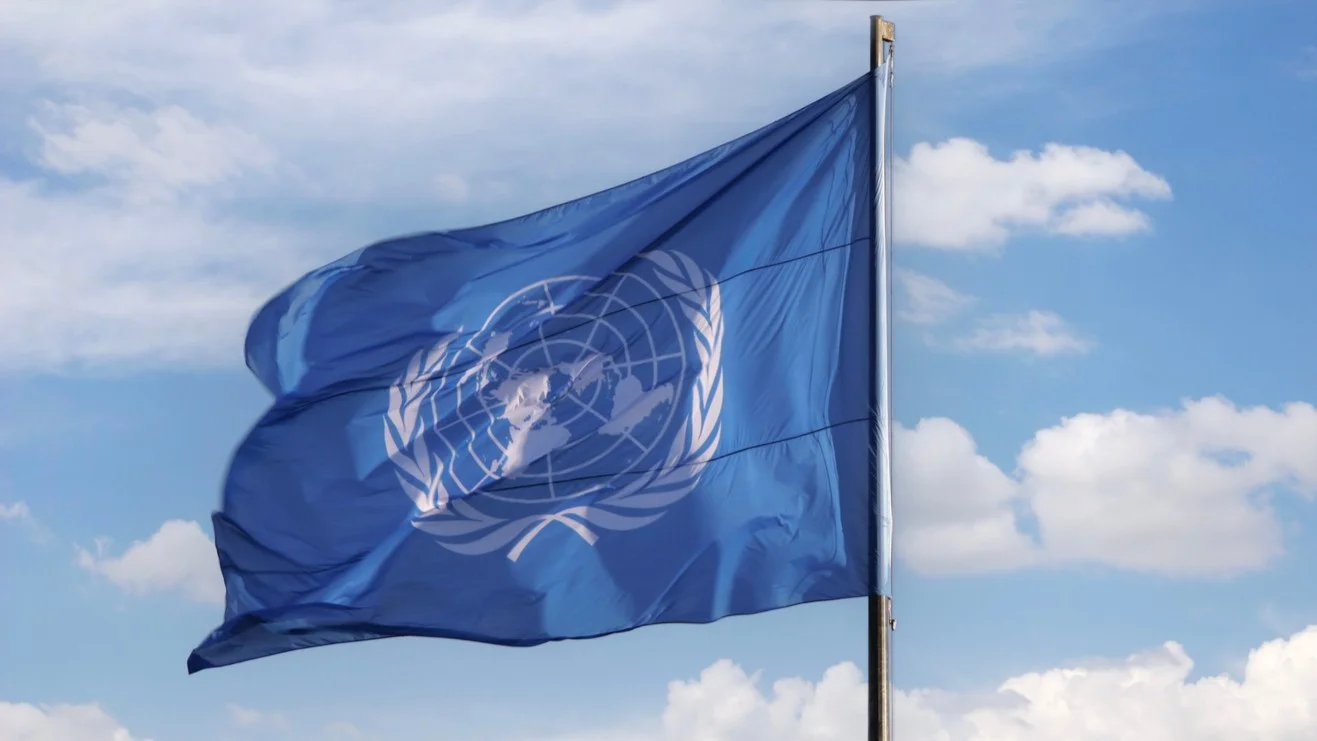
A fierce diplomatic rift has erupted inside the United Nations Security Council (UNSC) after the United States, the United Kingdom, and France teamed up to block a joint, high-priority proposal submitted by Pakistan and China.
The blocked resolution sought to formally designate and blacklist the Balochistan Liberation Army (BLA) and its lethal suicide squad, the Majeed Brigade, under the global UN sanctions regime.
The Western blocking maneuver has drawn sharp criticism from international security experts and state planners in Islamabad, exposing a massive gap in international counter-terrorism standards.
The rejection is highly controversial because Washington itself has already unilaterally classified the BLA as a Specially Designated Global Terrorist (SDGT) organization, yet it used legalistic loopholes to shield the group from a binding, worldwide UN embargo.
امریکا کو اقوام متحدہ میں بی ایل اے کی بلیک لسٹنگ کیلئے پاکستان کی حمایت کرنی چاہیے، دی ڈپلومیٹ کا آرٹیکل#Pakistan #USA #UN #BLA #TheDiplomat #Diplomacy #Terrorism pic.twitter.com/kJfsIinxU5
— APP (@appcsocialmedia) June 17, 2026
1. The UNSC Technical Blockade: Behind the Western Veto
The diplomatic clash centered on the strict rules of the UN 1267 Sanctions Committee, which Pakistan and China attempted to activate to permanently disable the BLA’s cross-border financial and logistical lifelines:
-
The Strategic Links: Making a direct, evidence-based case to the council, Pakistan’s UN Envoy Asim Iftikhar explicitly tied the BLA to broader regional threat networks. He noted that the BLA and Majeed Brigade operate directly out of extensive Afghan sanctuaries, where over 60 active terrorist camps facilitate cross-border infiltration alongside global jihadist outfits like ISIL-K, Al-Qaeda, and the Tehreek-e-Taliban Pakistan (TTP).
-
The Technical Excuse: In their formal objection, the three Western permanent members (US, UK, and France) argued that the 1267 Committee’s mandate is legally restricted to Al-Qaeda, Islamic State, and their direct affiliates. They asserted that localized militant groups do not automatically qualify for the global list, regardless of the severity of their actions or the threat they pose to regional stability.
-
The Double Standard: This defense has been roundly criticized as hypocritical. Unilaterally, the US State Department designated the BLA as an SDGT in July 2019, and actively upgraded that stance in August 2025 by adding the Majeed Brigade as an official alias under the Trump administration’s counter-terrorism framework.
2. The Sino-Pak Security Matrix: Protecting CPEC & Infrastructure
For Islamabad and Beijing, securing a comprehensive UN listing is not an academic debate—it is an absolute security necessity tied to billions of dollars in critical infrastructure:
-
The Belt and Road Target: The BLA has increasingly focused its violence on infrastructure, mining projects, and Chinese personnel within Pakistan’s Balochistan province, attempting to directly disrupt and sabotage the China-Pakistan Economic Corridor (CPEC).
-
The Global Freeze: A successful UN designation would have legally forced every single UN member state to freeze the BLA’s assets, choke off funding from diaspora networks, enforce strict international travel bans, and criminalize any supply of technical or military assistance to the group.
CRITICAL ANALYSIS: THE STRATEGIC MYOPIA OF WASHINGTON’S UN POLICY
The decision by the United States and its Western allies to block the global blacklisting of the BLA represents a short-sighted approach to regional security. It risks undermining vital counter-terrorism partnerships at a time when the region is transitioning through delicate peace processes.
Damaging the Intelligence Sharing Network
By shielding a group that poses a major, direct internal security threat to Pakistan behind technicalities, Washington is putting a serious strain on its bilateral relationship with Islamabad. American security policy in South Asia depends heavily on sustained intelligence sharing and counter-terrorism cooperation with Pakistan.
By dismissing Islamabad’s urgent security priorities at the UN, the US directly reduces Pakistan’s incentives to collaborate on transnational threats that matter most to Western capitals—such as monitoring Islamic State-Khorasan (ISIL-K) or neutralizing lingering Al-Qaeda elements in the region. In a fluid security environment, alienating a frontline partner carries very real, tangible costs.
The Threat to Future American Investments
Furthermore, confining the response against the BLA to regional or unilateral measures, rather than a UN-mandated global regime, leaves dangerous enforcement loopholes that could eventually backfire on Western interests. The United States has shown growing strategic interest in Balochistan’s vast, untapped critical mineral reserves.
As American investments and personnel eventually deploy to tap into these resources, they will enter the exact geographic footprint where the BLA operates. By refusing to deploy the full weight of the UN’s financial and travel restrictions against the group today, the US is inadvertently limiting the international tools available to contain a militant outfit that could easily expand its target list to include American corporate assets tomorrow.
The Takeaway: The BLA has evolved from a geographically contained insurgent group into a sophisticated militant network capable of regional destabilization. Technical committee mandates are important, but they should never blind global powers to the ground realities of terrorism. If Washington wants to maintain a credible, consistent stand against global terror, its international actions must align with its domestic designations. Continuing to block a global UN embargo on the BLA simply because it targets Chinese and Pakistani infrastructure is a dangerous game—one that leaves transnational financial loopholes open and undermines the collective security of the region.
US blocks Pakistan BLA UN blacklisting June 2026, Balochistan Liberation Army Majeed Brigade UNSC sanctions, US UK France block Pakistan China BLA proposal, Envoy Asim Iftikhar BLA Afghan sanctuaries ISIL-K, Specially Designated Global Terrorist BLA State Department, UN 1267 Sanctions Committee BLA technical block, The Diplomat article BLA Pakistan US relations, China Pakistan Economic Corridor CPEC infrastructure attack, foreign terrorist organization FTO Trump administration sanctions, cross border militancy Balochistan mineral reserves, diaspora funding channels freeze travel ban, global counterterrorism uniform standards, Multilateral diplomatic governance frameworks, sovereign counter-security integration synchronization, transnational illicit asset containment, infrastructure protection strategic defense, regional security asymmetry arbitration, international jurisprudence sanctions enforcement,