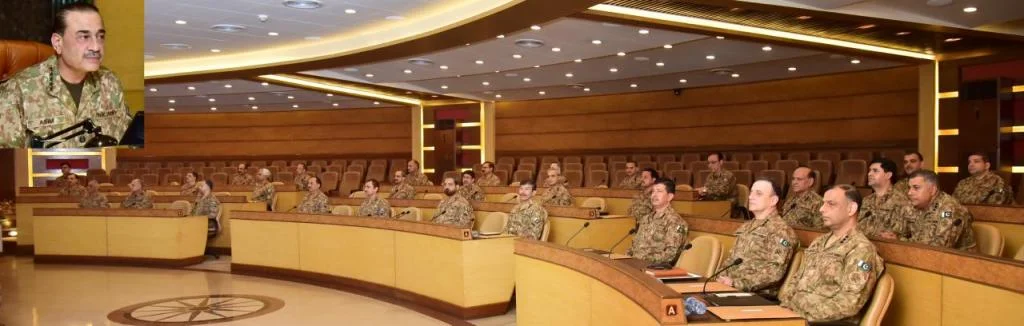
The top military brass of the Pakistan Armed Forces has expressed an unshakeable, resolute commitment to undertake all necessary multi-domain measures to guarantee the availability of Pakistan’s “rightful share of water,” warning that any external attempts to weaponize transboundary water systems will face a crushing national response.
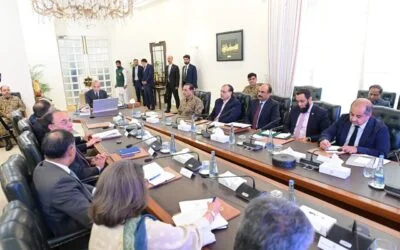
The declaration was issued during the high-level 276th Corps Commanders’ Conference (CCC), presided over by Chief of Defence Forces (CDF) and Chief of Army Staff (COAS) Field Marshal Asim Munir at the General Headquarters (GHQ) in Rawalpindi.
The extensive strategic session specifically addressed India’s recent illegal, unilateral claims surrounding the historic 1960 Indus Waters Treaty (IWT), while simultaneously mapping out advanced kinetic actions against cross-border state-sponsored terrorism originating from Afghan territory.
#ISPR
Rawalpindi, 6 July, 2026Field Marshal Syed Asim Munir, NI (M), HJ, Chief of Army Staff (COAS) & Chief of Defence Forces (CDF) of Pakistan, presided over the 276th Corps Commanders’ Conference (CCC) at General Headquarters (GHQ), Rawalpindi.
The Forum offered fateha for… pic.twitter.com/HeYW8OErn5
— Pakistan Armed Forces News 🇵🇰 (@PakistanFauj) July 6, 2026
Direct Defense of the Indus Waters Treaty
The Corps Commanders’ Conference took serious note of provocative Indian political rhetoric regarding the transboundary water-sharing agreement. Following India’s unilateral attempt to suspend the treaty under political pretexts, the military high command fully aligned its operational posture with the strict statutory guidance issued by Pakistan’s National Security Committee (NSC).
The military leadership reaffirmed that Pakistan will fiercely defend its geographic and ecological rights using all available legal, diplomatic, and military means. This defensive stance is strongly backed by international law; the Permanent Court of Arbitration (PCA) in The Hague recently issued a landmark ruling upholding the absolute, continued validity of the IWT. The international tribunal explicitly rejected New Delhi’s arguments, confirming that India cannot unilaterally suspend or withdraw from the treaty without mutual bilateral consent, and reaffirmed Pakistan’s “unrestricted use” of the western rivers (Indus, Jhelum, and Chenab).
The forum warned that any physical attempt to disrupt or alter these vital water flows would carry profound, irreversible consequences for regional peace and security.
Confronting the Terror-Crime Nexus: Operation Ghazab lil-Haq
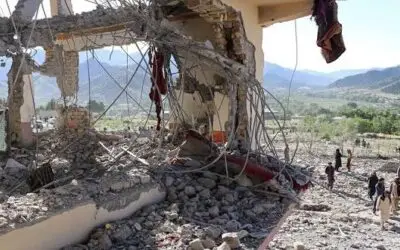
Turning to western border security, the military brass voiced severe concerns over the continuous, unchecked utilization of Afghan soil by hostile intelligence networks to finance and orchestrate asymmetric warfare inside Pakistan. The forum identified a dangerous, evolving pattern of hybrid warfare being funneled through foreign-backed proxy syndicates:
-
Fitna-al Khawarij and Fitna-al Hindustan: The state has officially designated these terms to classify the proscribed Tehreek-e-Taliban Pakistan (TTP) and hostile sub-nationalist insurgent groups in Balochistan, exposing them as direct terrorist proxies operating under external patronage.
-
Operation Ghazab lil-Haq: In response to these cross-border incursions, the Armed Forces reaffirmed their unequivocal right to self-defense, pledging to accelerate high-intensity Intelligence-Based Operations (IBOs) under the ongoing ambit of Operation Ghazab lil-Haq. The military command made it clear that the interim Afghan regime bears direct responsibility for failing to secure its perimeter.
-
Institutional Governance: To permanently dismantle the lucrative terror-crime nexus, Field Marshal Asim Munir underscored the immediate need to establish robust, welfare-oriented state governance structures across restive border districts, completely breaking the cycle of illicit funding lines operating under vested political patronage.
Defeating Hybrid Warfare and the Kashmir Cause
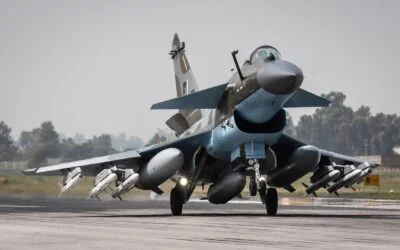
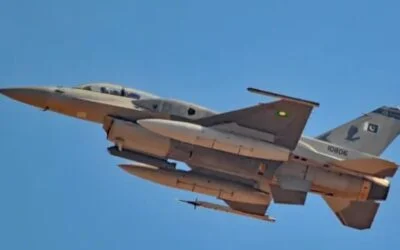
The Corps Commanders noted that following the comprehensive defeat inflicted upon adversary forces during Marka-e-Haq—the sharp military conflict that concluded with a successful ceasefire under Operation Bunyan-un-Marsoos—hostile actors have increasingly relied on massive disinformation campaigns to trigger internal unrest. The military leadership stated with absolute strategic clarity that all forms of state-supported hybrid warfare will be neutralized through integrated conventional and sub-conventional counter-measures.
Simultaneously, the conference strongly condemned the ongoing human rights violations and unilateral demographic engineering being executed by occupation forces in Indian Illegally Occupied Jammu and Kashmir (IIOJK). Reaffirming that Kashmir remains the “jugular vein” of Pakistan, the top brass renewed its unyielding diplomatic, political, and moral support for the Kashmiri people, emphasizing that permanent regional stability hinges entirely on granting Kashmiris their inalienable right to self-determination in accordance with United Nations Security Council resolutions.
Concluding the conference, CDF Field Marshal Asim Munir directed all regional commanders to expeditiously execute the military’s multi-domain transformation plan to match the rapidly evolving character of modern warfare, ensuring that the combat readiness of the Pakistan Armed Forces remains unshakeable at all costs.