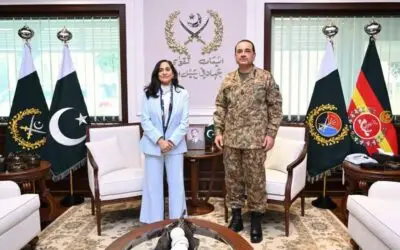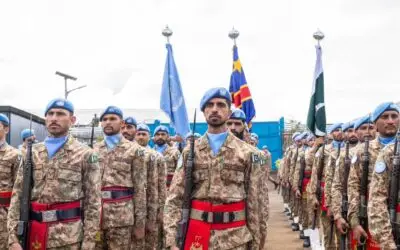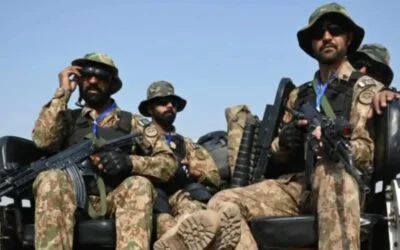
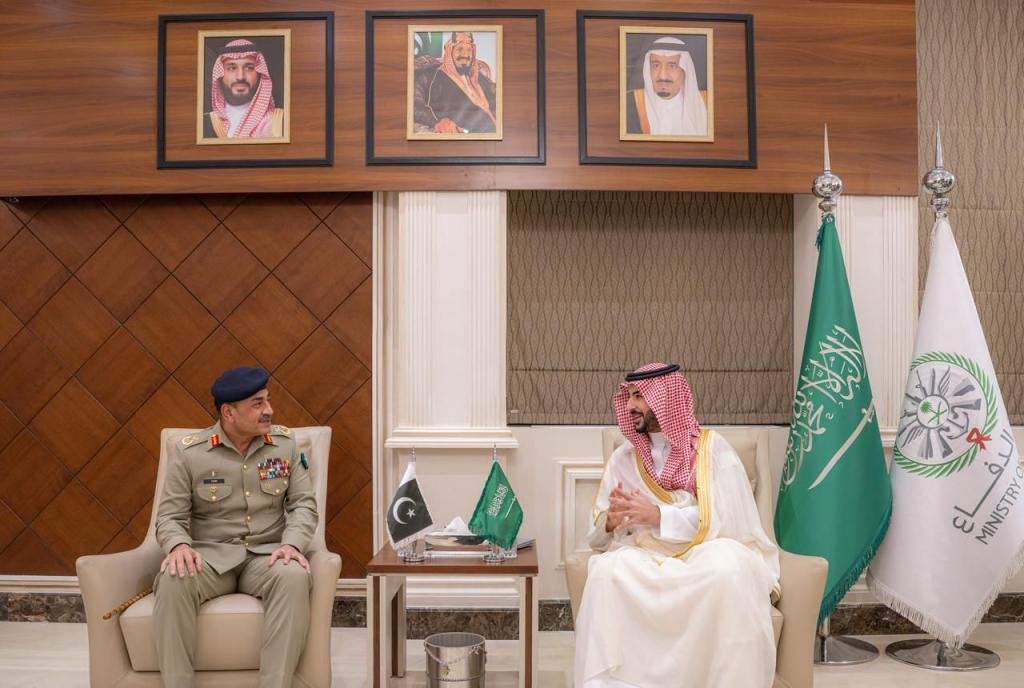
RIYADH | RAWALPINDI — March 7, 2026 — In a high-stakes mission to secure the Arabian Peninsula, Pakistan’s Chief of Defense Forces (CDF) and Chief of the Army Staff (COAS), Field Marshal Syed Asim Munir, met with Saudi Defense Minister Prince Khalid bin Salman Al Saud in Riyadh on Saturday. The meeting marks the formal activation of the Strategic Mutual Defense Agreement (SMDA) signed last year, as the regional war triggered by the assassination of Ayatollah Ali Khamenei spills into the Gulf.
Field Marshal Syed Asim Munir, NI (M), HJ, Chief of Army Staff (#COAS) and Chief of Defence Forces (CDF) of #Pakistan, called on Khalid bin Salman, Minister of Defense, Kingdom of Saudi Arabia (KSA) @kbsalsaud #ISPR
The dignitaries discussed Iranian attacks on the Kingdom and… pic.twitter.com/DZy3iMsgoC
— Pakistan Armed Forces News 🇵🇰 (@PakistanFauj) March 7, 2026
Countering “Unprovoked Aggression”
The two leaders held extensive discussions on the “gravity of the security situation” following a wave of Iranian drone and ballistic missile attacks targeting Saudi industrial zones and air bases.
-
Mutual Defense Clause: Under the SMDA signed in September 2025, Pakistan and Saudi Arabia treat an attack on one as an act of aggression against both. The leaders discussed “joint measures” to halt further incursions, including the potential deployment of Pakistani air defense assets to protect the Kingdom’s sovereignty.
-
The Prince Sultan Air Base Engagement: The briefing highlighted the successful interception of three ballistic missiles targeting Prince Sultan Air Base on Friday, a feat achieved by Saudi air defenses.
-
Call for Sagacity: The ISPR statement emphasized that Iran must manifest “prudence and sagacity” to avoid a total regional miscalculation, urging the “brotherly country” to strengthen the hands of friendly nations seeking a peaceful settlement.
Shuttle Diplomacy and the “Yanbu” Oil Life-Line
The visit follows a series of critical diplomatic and logistical breakthroughs spearheaded by Islamabad:
-
The “Ishaq Dar” Intervention: Deputy PM Ishaq Dar disclosed that Pakistan’s back-channel communication with Tehran successfully limited the scale of initial strikes. Pakistan provided a “guarantee” to Iran that Saudi soil would not be used for U.S.-Israeli offensive operations, a move that momentarily spared the Kingdom from a heavier barrage.
-
The Yanbu Supply Route: Due to the closure of the Strait of Hormuz by Iran, Pakistan has formally requested an alternative oil supply route through the Port of Yanbu on the Red Sea. Saudi Ambassador Nawaf bin Said Al-Malki has assured full support, with one vessel already dispatched from Pakistan to lift crude oil from the Red Sea terminal.
A Pillar of Regional Stability
Field Marshal Asim Munir’s visit underscores Pakistan’s role as the “security guarantor” of the Holy Sites and Saudi infrastructure. Prince Khalid bin Salman took to X (formerly Twitter) to reaffirm the strength of the fraternal bond, noting that “wisdom and the avoidance of miscalculation” are the only ways to preserve regional stability.
“Pakistan’s commitment to the security and territorial integrity of the Kingdom remains unwavering and absolute.” — ISPR Statement
التقيت معالي قائد قوات الدفاع قائد الجيش الباكستاني المشير عاصم منير.
بحثنا الاعتداءات الإيرانية على المملكة في إطار اتفاقية الدفاع الإستراتيجي المشترك بين بلدينا الشقيقين، وسبل وقف هذه الاعتداءات التي لا تصب في مصلحة أمن واستقرار المنطقة، متمنيّن أن يُغلب الجانب الإيراني الحكمة… pic.twitter.com/ex5Qf32lMj— Khalid bin Salman خالد بن سلمان (@kbsalsaud) March 7, 2026