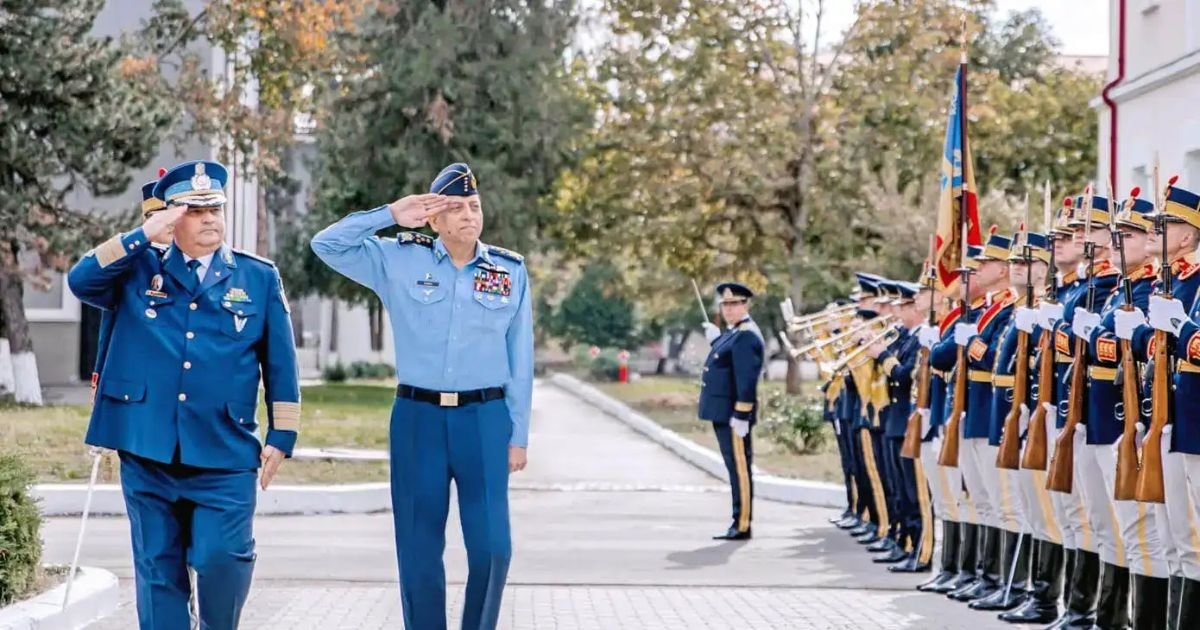
A key event in Pakistan’s defense diplomacy occurred when Air Chief Marshal Zaheer Ahmed Baber Sidhu, Chief of the Air Staff of the Pakistan Air Force (PAF), made an official visit to Romania on October 22, 2025. The visit underscored Pakistan’s interest in expanding its military contacts beyond its traditional regional sphere and highlighted Romania’s willingness to collaborate with a South Asian air force in new and meaningful ways. During his official visit, the Chief of the Air Staff was presented with a ceremonial Guard of Honor.
Air Chief Marshal Zaheer Ahmed Baber Sidhu, Chief of the Air Staff, Pakistan Air Force, during official visit to Romania called on Lieutenant General Leonard-Gabriel Baraboi, Chief of the Romanian Air Force Staff. The visit focused on strengthening bilateral defence ties and… pic.twitter.com/APHu60uvpK
— PTV News (@PTVNewsOfficial) October 22, 2025
Key Highlights of the Visit
Chief of the Air Staff Sidhu held high-level meetings with Lieutenant General Leonard-Gabriel Baraboi, Chief of the Romanian Air Force Staff; Eduard Bachide, Romania’s State Secretary of Defense; and General Gheorgita Vlad, Romania’s Chief of Defense, to emphasize deeper cooperation between the two states.
Chief of the Air Staff Sidhu reiterated Pakistan’s appreciation for its strong diplomatic and defense relations with Romania, based on shared views on regional peace and security. He also expressed Pakistan’s readiness to further develop this relationship through exploring new cooperation areas and operational synergy.
: Chief of the Air Staff, Pakistan Air Force (PAF), Air Chief Marshal Zaheer Ahmed Baber Sidhu, during official visit to Romania, called on Lieutenant General Leonard-Gabriel Baraboi, Chief of the Romanian Air Force Staff.
More Details:https://t.co/XITOjcDtHz pic.twitter.com/jpQL5iT2wb— APP (@appcsocialmedia) October 22, 2025
Lieutenant General Baraboi praised the professionalism, discipline, and innovation of the PAF from the Romanian side, especially its advancements in indigenization under Chief of the Air Staff Sidhu, and indicated that Romania would benefit from the PAF’s operational experience.
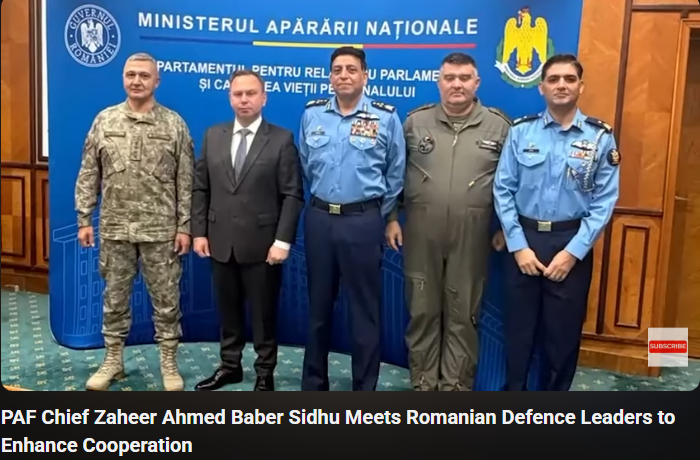
Source: ISPR Official YouTube
Why This Matters
This visit holds significance in several ways:
• Diversification of Defense Diplomacy
Pakistan’s security partnerships have traditionally been with neighboring countries or major conventional allies such as China, the Gulf States, Turkey, and the US. Expanding to Romania, a NATO member with aerospace capabilities, signifies a strategic move toward a more diverse engagement.
• Operational & Institutional Depth
The visit goes beyond diplomacy, encompassing joint exercises, training exchanges, and mechanisms for long-term cooperation. It indicates an intention to establish institutionalized collaboration rather than temporary visits.
• Defense-Industrial and Technology Linkages
Discussions included advanced aerospace technology use, suggesting Pakistan’s interest in not just training or interoperability but also capability partnerships in defense manufacturing, maintenance, and joint research. Romania’s involvement could open access to South African defense markets and operational insights.
• Strategic Messaging
The visit signals Pakistan’s desire to remain relevant globally beyond South Asia amid shifting alliances and technological needs. Romania’s interest in Pakistan’s counter-terrorism and aerial defense operations expands the scope of diplomatic engagement.
• Mutual Benefit
For Pakistan: access to European defense technology, training standards, and cooperation opportunities. For Romania: exposure to South Asian operational experience and increased strategic alliances.
Potential Concrete Outcomes
Proper follow-up on this visit could produce tangible results, such as joint air exercises to improve operational readiness and foster confidence and coordination. Exchange programs for pilots, engineers, and technical personnel could boost interoperability and knowledge. Additionally, institutionalized cooperation through memoranda of understanding (MoUs) on defense industrial collaboration, technology transfer, and joint production could develop, potentially extending beyond defense into broader economic partnerships.
Implications for Pakistan-Romania Relations
The visit carries diplomatic and strategic implications beyond the military sphere. It enhances Pakistan’s reputation as a serious and capable military partner capable of engaging effectively with European nations. Closer ties with Romania could also open doors for trade, industry, aerospace, logistics, and technical training collaborations. For Romania, cooperation with Pakistan offers a South Asian dimension to its defense diplomacy and diversifies its strategic outlook. Such engagements foster long-term stability through trust, shared standards, and collective security efforts.
Challenges & Considerations
The success of these initiatives depends heavily on sustained political and institutional goodwill. These efforts must be backed by concrete actions, such as signed agreements, resource commitments, and measurable outcomes, to avoid remaining symbolic. Pakistan’s complex geopolitical environment, involving relations with India, China, and Afghanistan, requires careful diplomacy as it deepens ties with Europe. Defense-industrial projects also demand significant financial and technical investments, requiring consistent commitment from both sides. Regular follow-up visits, exchanges, and dialogue are essential to turning this promising start into a lasting, fruitful relationship.
Conclusion
Air Chief Marshal Zaheer Ahmed Baber Sidhu’s visit to Romania marks more than a ceremonial gesture; it signifies the beginning of a new chapter in Pakistan-Romania defense relations based on operational cooperation, institutional development, and mutual strategic interests. If both nations turn intentions into actions, through joint exercises, training exchanges, and defense industry collaboration, the partnership could bring substantial benefits. In an era where air power, technology, and strategic alliances are becoming increasingly vital, this initiative offers Pakistan greater international access and provides Romania with a dynamic South Asian partner.
The key question now is how quickly and effectively both countries can translate this visit into long-lasting, institutionalized cooperation, as the foundation has been laid; the next step is to see how well it can grow.