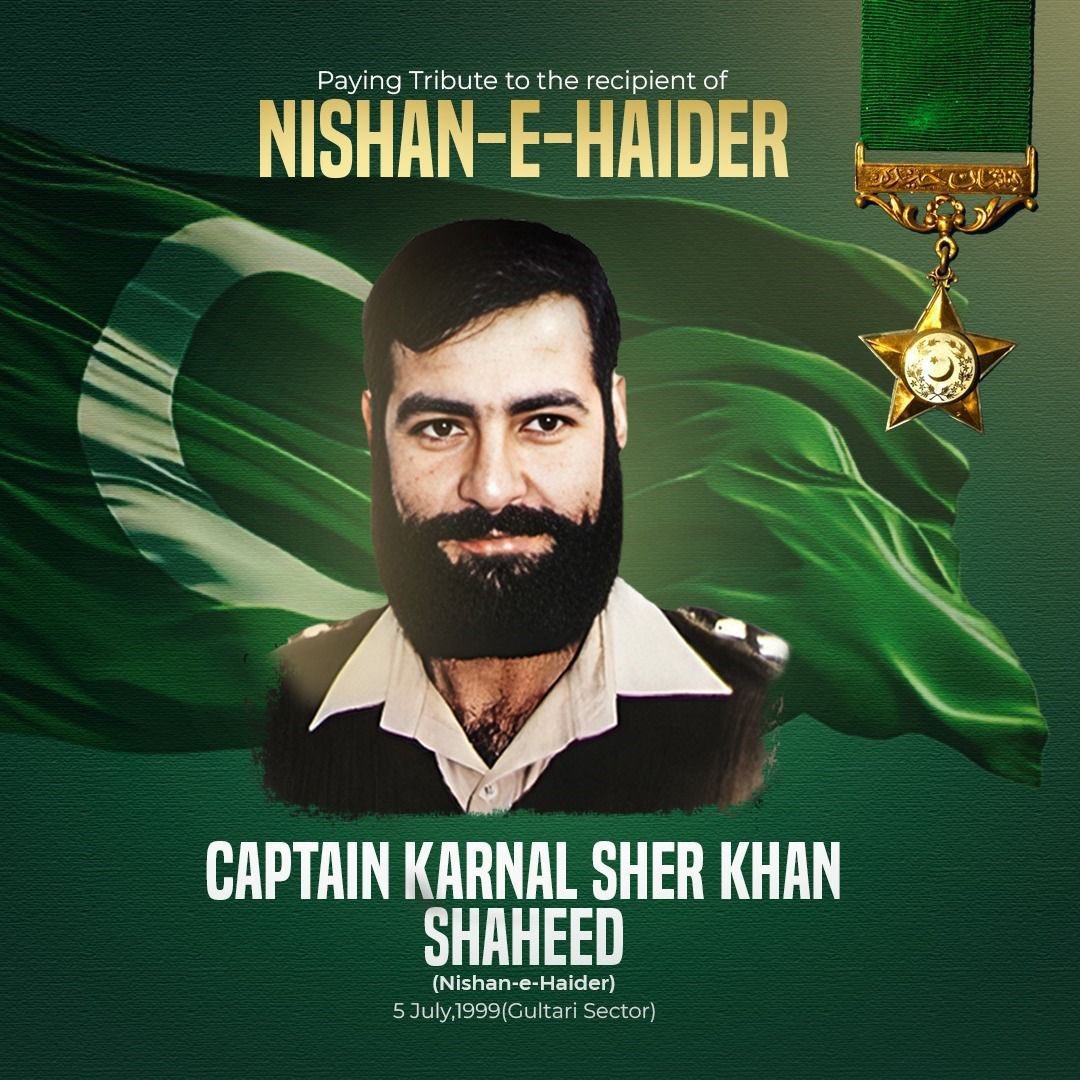
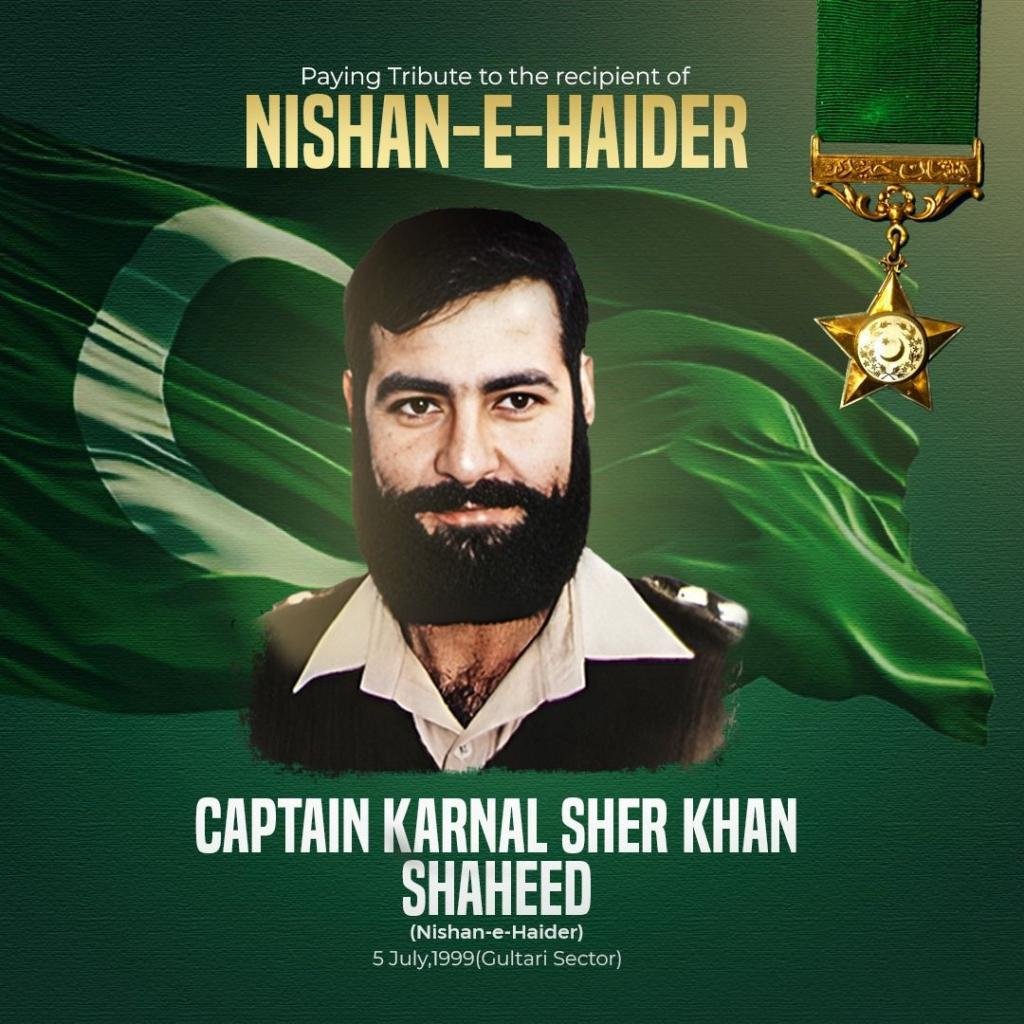
Captain Karnal Sher Khan holds a unique and revered place among Pakistan’s military heroes. His name, a distinctive blend of a title and a rank, foreshadowed a life of exceptional bravery and unwavering duty. Born on January 1, 1970, in the village of Nawa Kaly, Swabi District, in what is now Khyber Pakhtunkhwa, he was the eldest of two brothers. From a young age, he was known for his love of the outdoors, sports, and a strong sense of community. His simple upbringing, rooted in the values of his Pashtun heritage, instilled in him a powerful work ethic and a deep sense of responsibility towards his family and his nation. As a child, he was already displaying a fearless streak, earning him the affectionate nickname “Sher Khan,” or “Lion King,” from his peers—a moniker that would become a fitting testament to his later actions on the battlefield.
He initially enlisted in the Pakistan Air Force as an airman in 1988 before his deep-seated desire for a more direct role in defending the nation led him to apply for a commission in the Pakistan Army. This transition was a clear reflection of his motivation to be at the forefront of combat, a calling he felt was his destiny. In 1992, he joined the Pakistan Military Academy (PMA) and was commissioned into the 27th Sindh Regiment in 1994, later serving with the 12th Northern Light Infantry.
His military career was marked by professionalism and dedication. He quickly earned the respect of his peers and superiors, not just for his skills but for his resolute character. He was known for his calm demeanor under pressure and his ability to motivate his men, traits that would become critical during one of Pakistan’s most challenging conflicts. His service took him to some of the most difficult and isolated terrains, preparing him for the ultimate test of valor that awaited him. The year was 1999, and the stage was set in the high-altitude, treacherous peaks of Kargil.
During the Kargil War, his company was deployed to a forward post known as Tiger Hill, in the Gultari sector. The location was of immense strategic importance as it overlooked a key supply route for the Indian Army, the Srinagar-Leh highway. Captain Sher Khan’s post was at the very forefront, facing the full force of enemy attacks. The unforgiving terrain and extreme weather conditions added to the already perilous situation. On July 5, 1999, the Indian Army launched a massive, coordinated assault with two battalions, aiming to dislodge the Pakistani forces from this critical position. The initial wave of attack succeeded in overrunning one of the Pakistani posts.
Recognizing the dire threat, Captain Sher Khan refused to wait for reinforcements. He personally led a counter-attack, inspiring his small group of soldiers with his fearless resolve. He moved from trench to trench, motivating his men and directing their fire. Under his command, the counter-attack was a swift success, and they managed to recapture the lost post from the enemy. His actions inflicted heavy casualties on the attacking force and bolstered the morale of his own men. The Indian forces, shocked by the ferocity of the counter-attack, were forced to retreat.
However, the enemy did not give up. Over the next several days, the Indian Army launched multiple attacks, each more intense than the last. Captain Sher Khan and his men stood their ground, repelling every assault. On July 7, 1999, the Indian Army launched a final, decisive attack. Captain Sher Khan, realizing his position was about to be overrun, took a daring stand. He moved out of his bunker and engaged the enemy in hand-to-hand combat, killing several soldiers before he was mortally wounded. The sheer audacity of his final moments left a deep impression on the enemy soldiers. An Indian Army Captain, returning the body of Captain Sher Khan to the Pakistani side, reportedly wrote a note of commendation for his bravery, a truly extraordinary testament from the opposing side that spoke volumes about his courage. He stated that Captain Sher Khan had fought with exceptional courage and deserved the highest gallantry award of his country.
For his exemplary courage, unwavering resolve, and supreme sacrifice, Captain Karnal Sher Khan was posthumously awarded the Nishan-e-Haider, Pakistan’s highest military honor. His actions in the face of overwhelming odds not only secured his position but also inspired his comrades. He became a beacon of courage and a national hero, his name forever etched in the annals of military history. His valor at Tiger Hill serves as a powerful reminder of the commitment and selflessness that define the Pakistan Armed Forces. In his honor, the Karnal Sher Khan Cadet College has been established in his hometown of Swabi, and a military base in Rawalpindi has also been named after him, ensuring his legacy continues to inspire generations of soldiers and civilians alike.