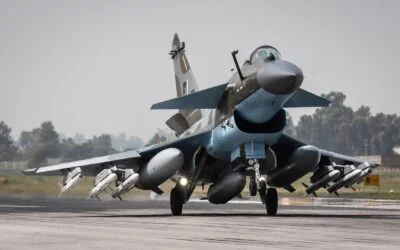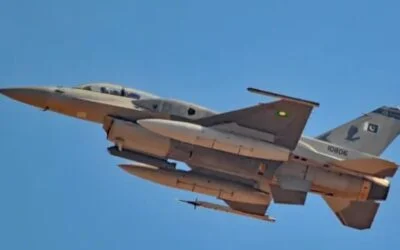
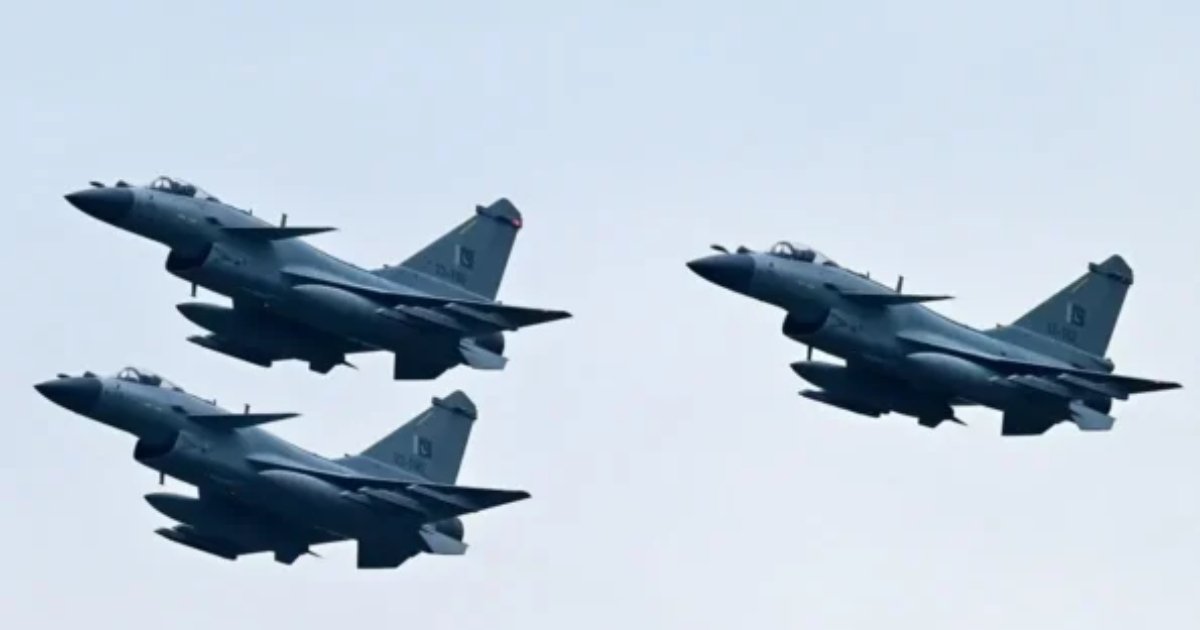
In late 2025, Pakistan announced that it had already received 20 Chinese Chengdu J-10C fighter jets, and another 16 are due (a total of 36). This is a formally declared build-up, the single J-10C export customer, Pakistan, which is a significant qualitative addition to the Pakistan Air Force (PAF). The J-10C is described by PAF leaders as a cutting-edge strategic equalizer, one that will fill the gap between the legacy fleets and the new needs. Notably, these jets are fitted with hi-tech AESA radars and PL-15 long-range air-to-air missiles, which will provide Pakistan with a new beyond-visual-range (BVR) punch. These Chinese-made aircraft assist in balancing a security imbalance in the region. That is, the growing J-10C fleet reinforces deterrence by increasing the expense of any future aggression against Pakistan.
The United States Department of Defense has confirmed that Pakistan placed an order for 36 Chinese-made J-10C fighter jets, with 20 aircraft already delivered to the Pakistan Air Force.
The remaining jets are expected to be delivered in phases. The induction of the J-10C, a… pic.twitter.com/49WdcqqTPG
— Pakistan Narrative (@narrative_pk) December 27, 2025
Combat Effectiveness and Airpower Balance
The J-10C force essentially boosts the combat potential of the PAF. Having 36 of these fourth-generation-plus modern jets, Pakistan now has a viable response to the high-end fighters (Rafales and Su-30s) of India. The J-10C offers capabilities comparable to much more expensive Western fighters, at a relatively low unit cost (widely reported at about $40-50 million each). According to Pakistani air staff, J-10Cs provide them with a qualitative advantage over older but numerically superior opponents. In the real world, every J-10C is a highly networked, long-range combat node: its data links, AESA radar, enable it to share both real-time targeting with other assets, and the PL-15 missile can hit enemy aircraft way out of sight. According to defense analysts, this shortens the decision cycle of an adversary; the pilots of Pakistan can shoot their missiles before Indian fighters even notice them, which negates traditional warning buffers. Even in recent events, the PAF publicly announces that its J-10Cs have already flown armed combat patrols along the Line of Control, exhibiting these new lethal capabilities.
Pakistan has successfully shot down all Indian fighter jets, including the much-hyped Rafales, using Chinese-made J-10C aircraft, according to Foreign Minister Ishaq Dar.
He added, “The Chinese Ambassador was present at the Foreign Office at 4 a.m., where we shared all… pic.twitter.com/vWRZEf6dmR
— International Defence Analysis (@Defence_IDA) May 7, 2025
Strategic Signaling and Sino-Pakistan Defense Synergy
The J-10C purchase by Pakistan is also an indication of the intensifying Sino-Pakistan defense collaboration. The Pentagon report on China (2025) specifically mentions Pakistan being the largest recipient of combat aircraft from China. The position of Islamabad as the only J-10C customer makes it an anchor of the Chinese aviation exports as a flagship operator. The orders (20 delivered, 16 pending) were made since 2020, and China even encouraged Pakistan to use the jets in exercises and media. The collaborative work on previous systems, especially the JF-17 Thunder, has progressed into a complete range of mutual projects: fighters, missiles, UAVs, and now high-tech jets. Politically, making the deal official (through US transparency reports) sends a message to South Asia that Beijing and Islamabad are militarily coordinated.
The main impacts of the J-10C induction on the airpower balance are:
- Qualitative Parity: Fighter fleet Jets with 4th-gen+ avionics and weaponry have now been fitted to the fighter fleet of Pakistan to counter recent acquisitions in India. One J-10C chief noted that the J-10C is bridging the gap in modern Indian aircraft.
- Enhancement of Deterrence: India’s PAF will be able to target enemy aircraft with great range (long-range BVR missiles: PL-15) and more advanced sensors on their aircraft, compelling India to develop a much shorter reaction time to an engagement.
- Network-Centric Operations: The datalink and AESA radar in the J-10C allow it to be integrated in joint kill-chains (with ground radars and AWACS), a fact that allows the air doctrine of Pakistan to be set on the current sensor-fused strategies.
- Defense Cooperation: Being the sole export user of the J-10C, Pakistan enhances its strategic relationship with China. The program supplements the JF-17s co-production and training, which obscures the historic capability gaps between the two air forces.
- Psychological Impact: The apparent rise to 36 modern jets sends a message of preparedness. According to a recent Defense Security Asia analysis, the J-10C deliveries and Pakistani assertions of their combat employment have echoed around the defense circles of Cairo to Jakarta, in underlining the newfound confidence of Pakistan.
Conclusion
Collectively, the development of the J-10C Pakistan fleet greatly changes the air power balance in the region. By 2026, Pakistan will possess its own full J-10C squadrons, equal in strength (36) to the Rafale force of India and way more maneuverable than its old MiG-21. This technological advantage supports Islamabad’s deterrence policy: the ability to retaliate credibly instead of competing solely by quantity. The induction of J-10Cs is a turning point in Indo-Pak air rivalry. The J-10C program supports the fundamental security goal of Pakistan: ensuring stability with a credible, modern, and responsive airpower capability that does not encourage aggression or destabilize the region. The air arm of Pakistan has acquired a platform that is both cost-effective and high-impact, enhancing national defense and making it difficult for any adversary to calculate.