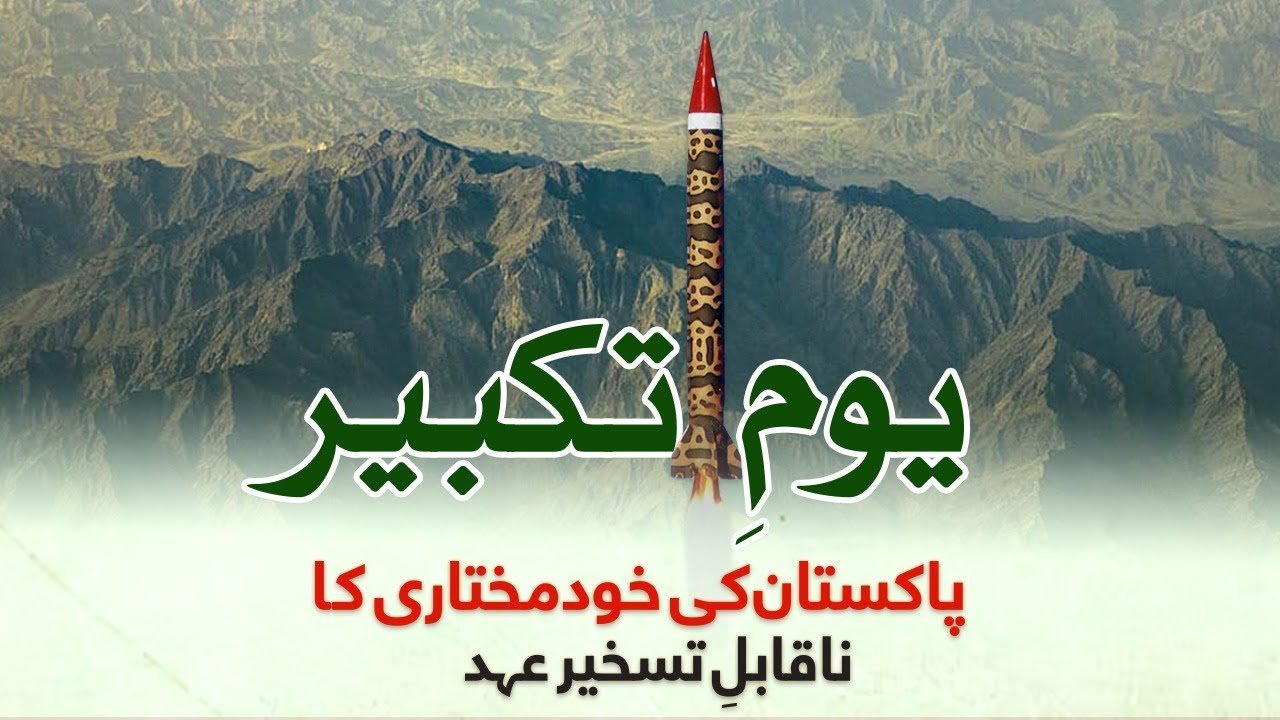
Youm-e-Takbeer, observed annually on May 28th, stands as a monumental day in the history of Pakistan. It commemorates the successful nuclear tests conducted by Pakistan in 1998, a series of detonations that forever altered the geopolitical landscape of South Asia and solidified Pakistan’s defensive capabilities. This day is not merely a remembrance of scientific achievement but a profound testament to national resolve, strategic foresight, and the unwavering determination of the Pakistani state to safeguard its sovereignty and territorial integrity. The events leading up to Youm-e-Takbeer, the global reactions, and its lasting impact underscore its significance as a defining moment for the nation and its armed forces.
The Geopolitical Context, and Genesis of Pakistan’s Nuclear Program
Pakistan’s pursuit of nuclear capability was not an isolated ambition but a direct response to evolving regional security dynamics, particularly the perceived conventional and nuclear threats from its eastern neighbor. From its inception, the nation’s nuclear program was guided by a philosophy of self-reliance and the imperative to maintain a credible deterrent. The origins of this strategic initiative can be traced back to the early 1970s, following the 1971 war, which highlighted the critical need for a robust defense mechanism to ensure national survival.
Under the visionary leadership of Prime Minister Zulfiqar Ali Bhutto and subsequently supported by various governments and military leaderships, Pakistan embarked on a covert yet determined path towards developing its nuclear potential. The scientific community, led by figures such as Dr. Abdul Qadeer Khan, worked tirelessly and with immense dedication, often under challenging circumstances, to acquire the necessary technology and expertise. This journey was characterized by immense personal sacrifice, unwavering commitment, and a profound sense of national duty by countless scientists, engineers, and military personnel who understood the existential importance of this endeavor.
The Events of May 1998: A Response to Regional Realities
The immediate catalyst for Pakistan’s nuclear tests in 1998 was India’s “Operation Shakti” tests conducted earlier that month. These tests dramatically altered the regional strategic balance, creating an undeniable imperative for Pakistan to restore deterrence. The leadership in Islamabad faced immense international pressure not to respond in kind, with stern warnings of severe economic sanctions and diplomatic isolation. However, the national interest, as perceived by the then-Prime Minister Nawaz Sharif and the military establishment, dictated a firm and resolute response.
After intense deliberations and weighing all options, the decision was made to proceed with the tests. On May 28, 1998, Pakistan conducted five underground nuclear tests at Ras Koh Hills in the Chagai District of Balochistan. This monumental achievement was followed by another test on May 30th, cementing Pakistan’s status as a nuclear power. The code name for these tests, “Chagai-I” and “Chagai-II,” became synonymous with national pride and resilience. The announcement of the successful tests was met with widespread jubilation across Pakistan, as citizens viewed it as a decisive step towards safeguarding national security.
Global Reaction, and International Implications
The international community’s reaction to Pakistan’s nuclear tests was swift and largely condemnatory. Major global powers, including the United States, imposed economic sanctions on Pakistan, citing concerns about nuclear proliferation and regional stability. These sanctions aimed to pressure Pakistan into rolling back its nuclear program. However, the Pakistani leadership stood firm, asserting its right to self-defense and emphasizing that its nuclear program was purely for defensive purposes and aimed at maintaining peace through deterrence.
Despite the economic hardships that followed, the nation largely rallied behind the government’s decision, viewing it as a necessary measure for national security. Over time, as Pakistan demonstrated its commitment to responsible nuclear stewardship, including the establishment of robust command and control structures and adherence to international non-proliferation norms, some of the initial international concerns began to subside. Pakistan’s nuclear capability ultimately led to a more stable, albeit tense, strategic environment in South Asia, based on the principle of mutually assured destruction, which has arguably prevented large-scale conflicts in the region.
The Legacy, and Significance of Youm-e-Takbeer
Youm-e-Takbeer represents far more than just the detonation of nuclear devices; it symbolizes the ultimate triumph of national will and scientific prowess in the face of adversity. For the Pakistan Armed Forces, it marked a new era in national defense, providing an indispensable strategic umbrella under which conventional forces could operate with greater confidence. The nuclear deterrent ensured that no external power could contemplate aggression against Pakistan without facing unacceptable consequences, thereby reinforcing the nation’s sovereignty and territorial integrity.
The day is celebrated with national fervor, featuring ceremonies, public gatherings, and educational programs that highlight the importance of the strategic program and the sacrifices made by those involved. It serves as a reminder to the younger generations of the critical decisions and immense efforts that secured the nation’s future. Youm-e-Takbeer is a constant affirmation of Pakistan’s commitment to peace through strength, ensuring that the nation possesses the means to defend itself against any threat. The scientific and technological advancements achieved during this period also had positive spillover effects, fostering indigenous research and development capabilities in various other sectors.
Conclusion
Youm-e-Takbeer is etched into the annals of Pakistan’s history as a day of immense national pride and strategic importance. It underscores the nation’s unwavering resolve to protect its interests and uphold its dignity. The day stands as a powerful symbol of Pakistan’s journey towards self-reliance in defense, a journey undertaken by dedicated scientists, engineers, and a resolute military. As Pakistan continues to navigate complex regional and global challenges, the spirit of Youm-e-Takbeer remains a guiding principle, affirming the nation’s unwavering commitment to maintaining a robust defense posture for the sake of peace and stability in the region and beyond.