Every September, Pakistan commemorates the anniversary of the 1965 war with India, a 17-day conflict that began with a surprise crossing on the international border and ended with soldiers and civilians alike holding the line to defend the country’s heartland. So here is the month, as it happened, day by day.
September 1: Operation Grand Slam Starts
In Jammu, Pakistan launched a major offensive, Operation Grand Slam, to capture Akhnoor . Akhnoor was a critical logistical base for Indian troops, and its fall would have cut off vital supply lines. The operation saw initial territorial success, and culminated in the Battle of Chamb, a brief victory for Pakistani forces, before Indian counterattacks halted the advance.
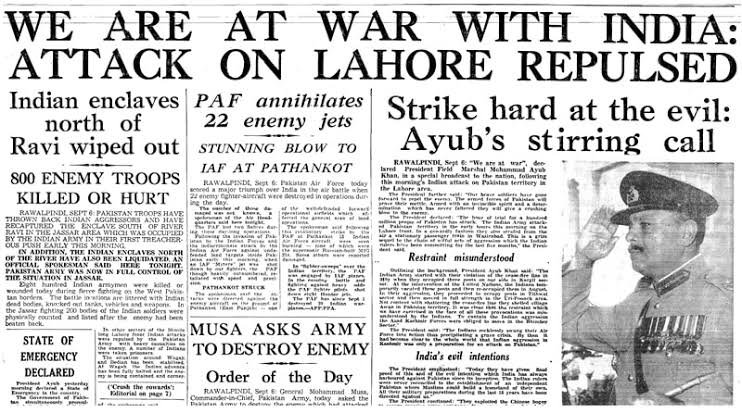
September 6: India breaches the international border
Indian forces crossed the international border before dawn and attacked Lahore in a three-pronged attack on the western front. Here the dispute spread from Kashmir to a full-scale war on the Punjab frontier. The advance was met by resistance from Pakistani soldiers, aided by civilians who joined in the defense. This day is now celebrated as Defense Day every year.
September 7: The Fight for the Skies Heats Up
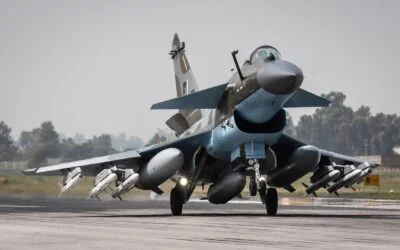
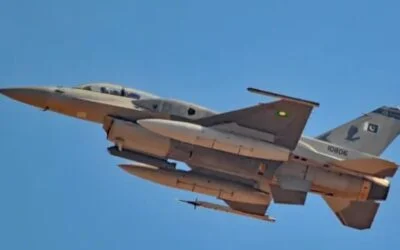
In the days that followed, air combat between the two air forces increased tremendously. Indian Air Force aircraft hit targets in Pakistan, including the Sargodha airbase. Pakistan Air Force pilots carried out night bombing raids inside India. In Pakistan, this day is now celebrated separately as Air Force Day, recognizing the role of the PAF during the conflict.
8–10 September: The Battle of Asal Uttar
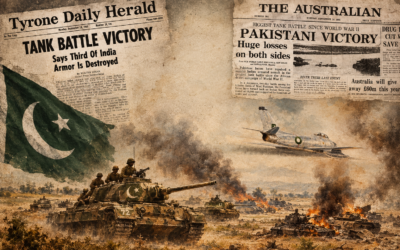
Pakistan made a big armored thrust toward Khem Karan, trying to get deep into Indian Punjab. The Pakistanis, with American-supplied Patton tanks, were expecting a decisive breakthrough. Instead, the engagement turned into one of the largest tank battles fought since the Second World War, with Indian forces holding their ground and inflicting heavy losses on Pakistan’s armored units.
September 10: The Battle of Phillora
In the Sialkot sector, Indian armored divisions fought Pakistani troops at Phillora and destroyed many tanks and made gains in the area. The skirmish set the stage for a bigger clash just days later as the two sides regrouped on the Sialkot front.
PN observed Defence Day to honour Shuhada, Ghazis & heroes of 1965 Indo-Pak War. CNS Adm Naveed Ashraf laid floral wreath at Shuhada Monument, offered Fateha & met Shuhada’s families. Wreath laying & flag hoisting ceremonies held in PN units & illuminated as per naval tradition. pic.twitter.com/lGd4OOl99z
— DGPR (Navy) (@dgprPaknavy) September 6, 2025
September 14–19: The Battle of Chawinda
In the Sialkot sector, the fighting shifted to Chawinda, where Pakistani armored units put up a determined defense against advancing Indian forces. The battle lasted almost a week and is known as one of the biggest tank battles of the entire war. In the end, Pakistani forces held their positions, halting the Indian advance in this sector at a high cost to both sides.
September 21: The Push for Peace Starts
By the third week of the war, both armies were feeling the strain of sustained combat. Pakistan’s armed forces were heavily dependent on American-supplied equipment and, after the U.S. imposed an arms embargo on both countries, suffered severe shortages of ammunition and spare parts. Supplies were running low, and Pakistan was moving toward accepting international calls for a ceasefire.
September 22: The Guns Fall Silent
But after 21 days of fierce fighting, a ceasefire negotiated by the UN went into effect, and the war officially came to an end. Sporadic exchanges of fire continued in isolated pockets for a short while afterward, but the large-scale fighting that had gripped the border regions for three weeks was over. In some respects both sides were able to claim victory, but neither side was able to defeat the other in a military sense.
What happened next
Soviet Premier Alexei Kosygin mediated peace talks between the two countries, which formally ended the war months later. The Tashkent Declaration of January 4, 1966, called for both sides to withdraw their troops to pre-war positions, renew diplomatic and economic relations, and conduct an orderly exchange of prisoners.
Today, Pakistan celebrates September 1965 as a moment when the nation showed its mettle, as the sacrifices of the soldiers and the determination of the common people held the front against a numerically superior and better-equipped foe.