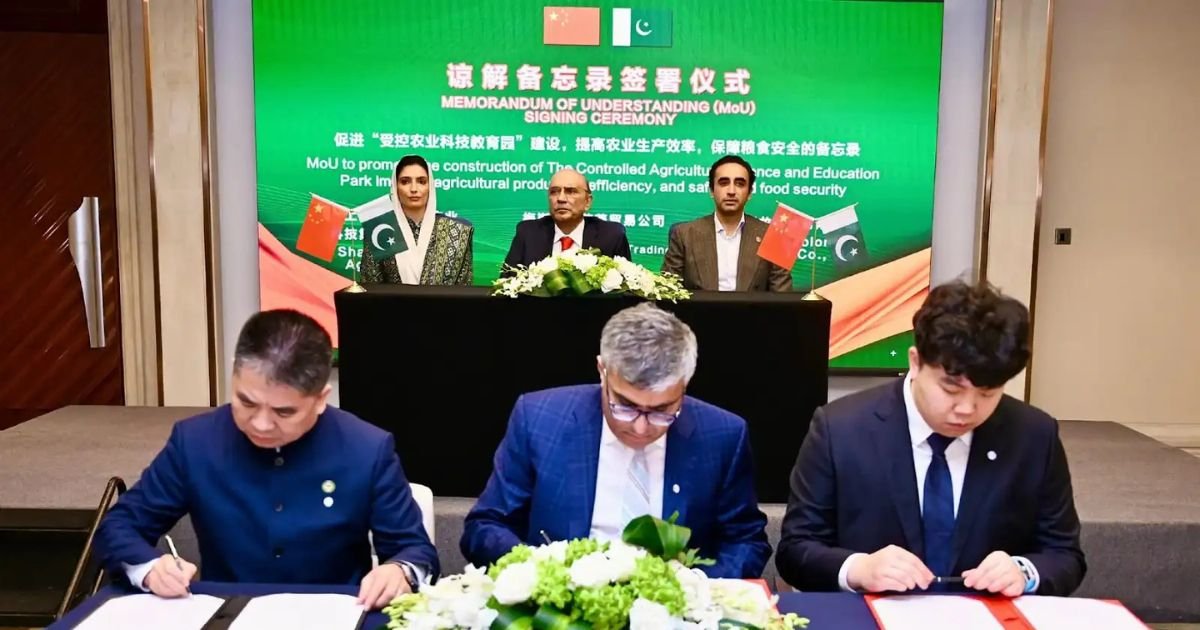
The visit of Pakistan President Asif Ali Zardari to China in September 2025 (1221 Sept) underscored the increasing economic and defense relationship between the two countries, which are considered all-weather allies. The visit was framed by Islamabad as a continuation of the Pakistan-China Strategic Cooperative Partnership. Chengdu, Shanghai, and Xinjiang (Urumqi/Kashgar) were part of Zardari’s itinerary. The agenda was centered on industry visits and the signing of MoUs. He paid a visit to the leading aerospace complex of China AVIC in Chengdu. He also held meetings with regional leaders and supervised agreements in energy, trade, agriculture, transport, and emergency response.
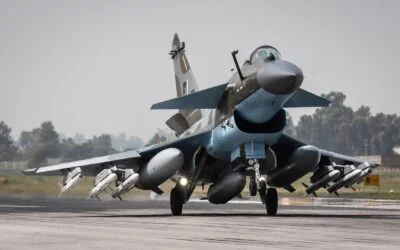
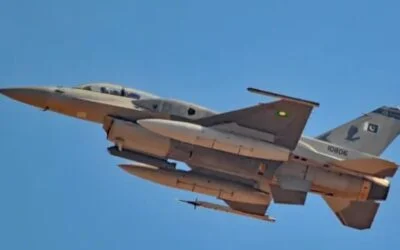
The visit was full of defensive signals. China had demonstrated the J-10C and the co-produced JF-17 fighter jets, both vital during the May 2025 conflict between Pakistan and India. Pakistani officials pledged to increase co-production and technology sharing in the area of defense. The visit enhanced the defense-industrial infrastructure and deterrent posture of Pakistan by obtaining Chinese technology. However, it highlighted the difficulty of maintaining a heightened arms game with India as well as the dangers of overreliance on a single source.
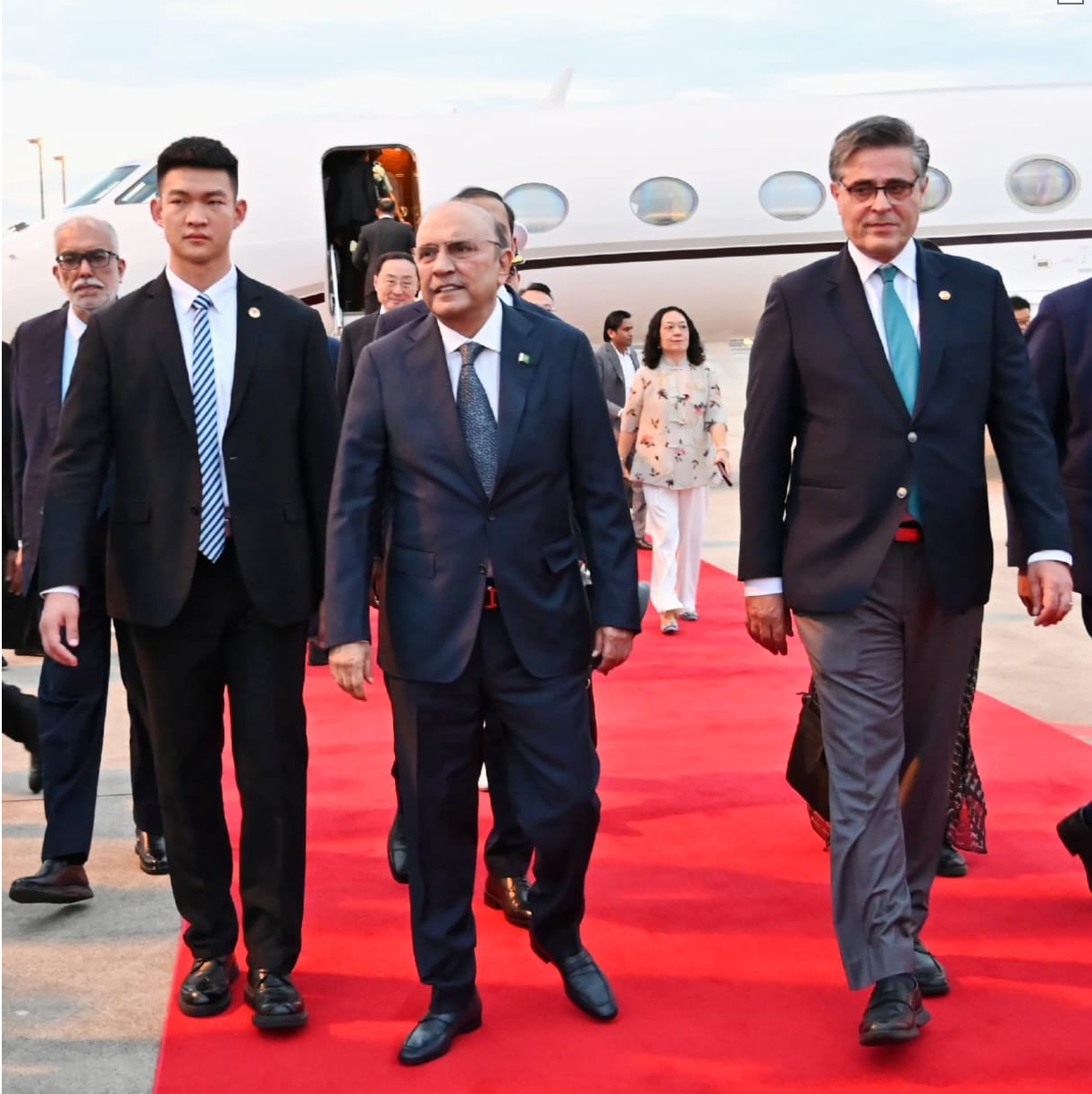
Source: Daily Independent
Itinerary and Major Visits
On September 12, Zardari arrived in Sichuan Province. He also visited the Aviation Industry Corporation of China (AVIC) complex in Chengdu on 14 September. He was briefed about the current aerospace developments in China at the Advanced Aircraft Complex, where the J-10C fighter jet is produced. These were the J-10, the co-production of the JF-17, the J-20 stealth fighter, UAVs, and the integrated C2 systems. This visit was a sign that China was ready to open sensitive military-industrial facilities to Islamabad. The same day, Zardari conducted a test of the high-speed rail in China. It took him about 30 minutes to get to Mianyang in Chengdu. Chinese officials explained to him how the system works and its green benefits.
President Asif Ali Zardari arrived in Shanghai as part of his ongoing visit to China. He was warmly received by Mr. Chen Qun, Vice Chairman of CPPCC Shanghai Committee, and Ms. Ma Yinghui, DG of the Foreign Affairs Office, along with Pakistan’s Consul General & embassy officials. pic.twitter.com/Ykh4j6GLfN
— The President of Pakistan (@PresOfPakistan) September 14, 2025
On 14 September, Zardari visited Shanghai, where he met the top city officials, including CPC Secretary Chen Jining, who declared Pakistan an iron brother. He was present at trade, energy, and green technology events. He had a top-level meeting with the chairman of Shanghai Electric, Wu Lei, that yielded an MoU for a coal gasification and fertilizer plant at Thar, Sindh. The first-of-its-kind project includes MFTC Coal Gasification and Manufacturing (Pvt) Ltd and Sino Sindh Resources/Shanghai Electric.
President Asif Ali Zardari visited Shanghai Electric in Shanghai with First Lady Aseefa Bhutto Zardari & Chairman PPP Bilawal Bhutto Zardari. He witnessed an MoU for Thar’s first coal gasification & fertiliser project to meet energy and agriculture needs. pic.twitter.com/19Tuy7GNx1
— The President of Pakistan (@PresOfPakistan) September 15, 2025
Zardari also held a meeting with the CEO of Chery Automobile to discuss electric car development and negotiated an urban waste-to-energy project with SUS Environment.
Between 16 and 17 September, Zardari remained in Shanghai and observed MoUs in the civilian sectors. Shanghai Huawei Agritech and Meskay/Femtee agreed on a Controlled Agriculture Science and Education Park to increase the productivity of farming. A Shennong Vocational College was launched with Longping High-Tech, Jialong Tech, and ASM Services to educate Pakistani farmers in current agri-tech. A sustainable waste treatment agreement was signed with Maritime Silk Road Holdings and ASM on a Tyre Recycling Project. IT, AI, and investment in the Gwadar SEZ were also discussed. It was concentrated on green cooperation and industrial linkages in solar, EVs, and recycling.
President Asif Ali Zardari met Chery Holding Chairman Yin Tongyue in Shanghai. He welcomed Chery’s plans for electric buses and localisation in Pakistan, assuring policy support and encouraging joint ventures in green transport and energy solutions. pic.twitter.com/xu3iapbe5Z
— The President of Pakistan (@PresOfPakistan) September 16, 2025
On 18 September, Zardari visited Xinjiang and met with Party Secretary Chen Xiaojiang in Urumqi. He emphasized that Pakistan-China friendship is the foundation of Islamabad’s foreign policy.
President Asif Ali Zardari arrived in Kashgar, where he was received at the airport by Nie Zhuang, Party Secretary of Kashgar, Communist Party of China. pic.twitter.com/ck2YwYlejj
— The President of Pakistan (@PresOfPakistan) September 19, 2025
He presided over three MoUs on 19 September in Urumqi. One covered livestock modernization between Loyang Modern Biotechnologies and the Sindh Government. Another initiated a textile industrial park using Beijing Asian Africa Longyue and ASM Services. The third one was between Sichuan Chuanxiao Fire Trucks and ASM regarding emergency vehicles. The objectives of these projects are to increase food security, exports, and disaster response. Later on that day, Zardari visited Chengdu, Mianyang, Urumqi, and Kashgar. He left Xinjiang on 21 September, with the Vice-Governor of Kashi Lining, Nie Zhuang, and the Pakistani Ambassador to Beijing bidding him farewell.
You May Like To Read: Commander Bahrain National Guard Meets PAF Chief, Vows Deeper Defence Cooperation
Defense and Aviation Cooperation: Substance vs Rhetoric
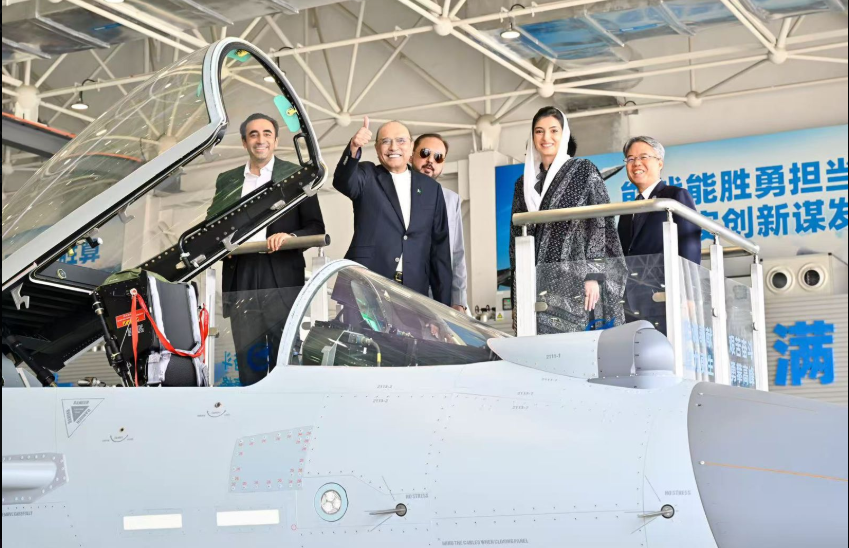
Cooperation between the defense and aviation on this trip was rather declarative. No new arms sales agreement or treaty was signed. Both parties renewed commitments to increase cooperation in defense manufacturing and aviation. In AVIC, Zardari toured the lines of co-production of the JF-17 Thunder and briefed on other platforms such as the J-20 stealth fighter and UAVs.
Source: X
Overall, no new defense contracts were signed. What came out was a statement of mutual intent. Pakistani media presented this as an act of practical support to its military sector, mentioning that the J-10C and JF-17 have significantly empowered the PAF. However, no information on technological transfer plans, common factories, or locations of base rights was published. Pakistan is hoping that future sharing of Chinese jet technology will be favorable.
President Asif Ali Zardari became the first foreign Head of State to visit China’s AVIC aircraft complex in Chengdu. He lauded the J-10 & JF-17’s role in strengthening PAF and hailed AVIC as a symbol of China’s tech progress & Pak-China strategic partnership. pic.twitter.com/J9moet5v2w
— The President of Pakistan (@PresOfPakistan) September 14, 2025
Pakistan already receives nearly 81 percent of its imported weapons, such as fighters, missiles, and radars, supplied by China. Most of these systems are jointly developed with Chinese companies. The AVIC tour and official comments made by Zardari are seen by analysts as indicators of future co-development in training, maintenance, electronics, and perhaps new jet or drone lines. But everything is on the level of rhetoric and personal invitations, not firm contracts. Discussions also covered training and maintenance, though again only general co-operation within the “all-weather strategic partnership” was noted.
In case China, one day, transfers such improvements as J-20, autonomous systems, and command-and-control networks, the benefits to Pakistan would be enormous. The most tangible result, so far, is the open support that was given by Pakistan to China as its principal arms supplier. Zardari attributed the recent success of the air campaign in Pakistan to the Chinese fighters and confirmed his dependence on the technologies offered by Beijing. Islamabad, in turn, assured protection of Chinese personnel and investments, which is made clear in each meeting. The visit thus strengthened this defense industrial trajectory of Pakistan via China, which improved deterrence with modified airframes and tied Pakistan closer to the security sphere of China.
You May Like To Read: Security Forces Eliminate 13 Indian-Sponsored Terrorists in Dera Ismail Khan
Strategic and Regional Implications
For Pakistan, the visit strengthens military modernization and deterrence. Chinese jets, the J-10C and upgraded JF-17s, now anchor the PAF. They proved crucial in the May clash with India. Continued alignment with China ensures Islamabad can project credible retaliation. This offsets India’s Western and indigenous acquisitions. The signal to New Delhi is clear: Pakistan’s air force will not lag if Beijing keeps supplying advanced platforms. Regionally, the trip highlights China’s role as Pakistan’s security guarantor amid strained ties with Washington. Beijing’s public embrace, calling Pakistan “iron brothers,” and the defense messaging boost Islamabad’s confidence in its strategic depth.
Risks remain. Closer defense ties with China may fuel the regional arms race. India may view Zardari’s AVIC tour as Pakistan preparing for upgrades after Operation Sindoor. Pakistan frames the cooperation as a sovereign necessity. Yet any sign of Chinese bases or command links on Pakistani soil would alarm India and raise escalation risks. No such arrangements have been announced, and Pakistan stresses sovereignty. Still, vigilance is required to avoid over-reliance that could curb strategic autonomy.
Policy choices matter. Defense deals must transfer skills and technology, not only hardware. If pledges lead to deeper joint production, such as domestic assembly of Chinese aircraft components or avionics, Pakistan’s industry will mature. At the same time, Islamabad should diversify its partners. US support for C-130s or Turkish drones can reduce dependency. Regionally, the visit cements the Pakistan-China axis, but may drive India closer to the US. Pakistan should balance deterrence with dialogue to avoid spirals. On proliferation, Islamabad must ensure strict control over dual-use Chinese technologies to prevent leakage to non-state actors.
The visit of Zardari to China was a milestone in the defence-industrial strategy of Pakistan. Islamabad strengthened the position of Beijing as its main military and economic ally with the production of J-10 and JF-17, and the development of new sources of energy, such as Thar coal gasification. The visit enhances the indigenous defence capabilities of Pakistan (its air force, in particular) as well as sends a strong message to New Delhi and others that its deterrence is as ironclad as before. Moving forward, Pakistan should transform these promises into practical skill transfers and deepen partnerships to preserve strategic autonomy, although it is enjoying the high-tech assistance of China in the short term.
You May Like To Read: DG ISPR Vistis Cadet College Palandri, Reaffirms Resolve Against Indian Aggression