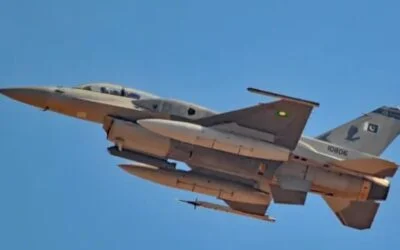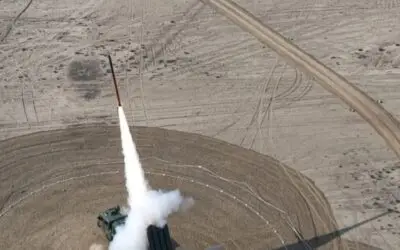
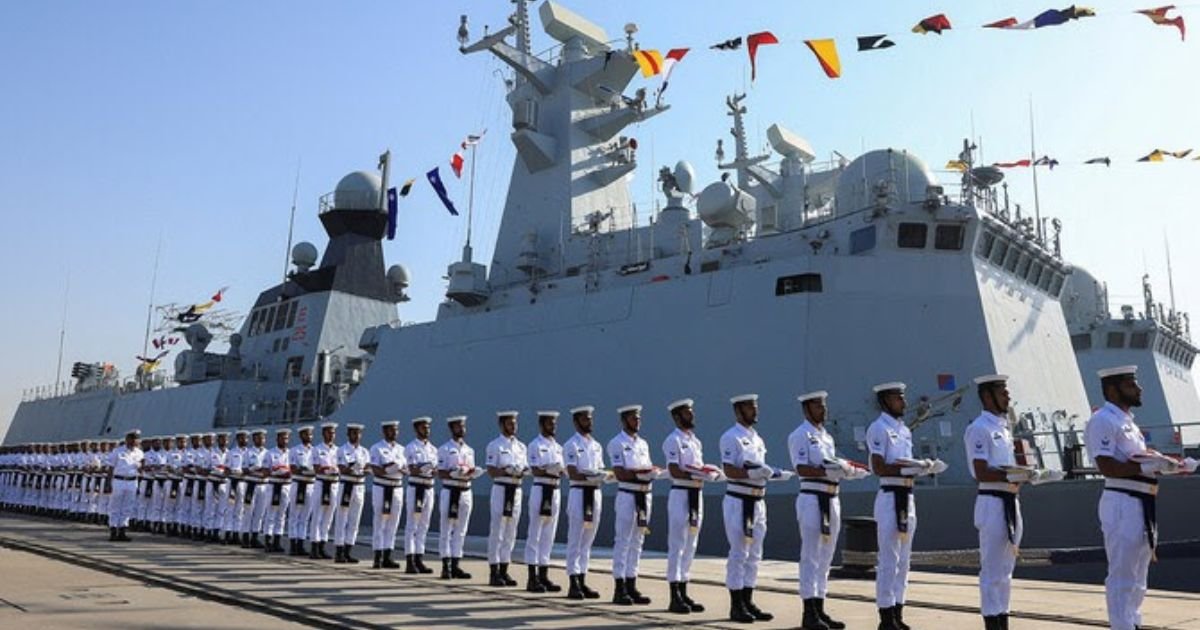
At the beginning of October 2025, the Indian Defense Minister Rajnath Singh threatened to take action against Pakistan in the case of any misadventure in the contested Sir Creek area. His comments made headlines throughout Pakistan and led to talk of a secret missile test retaliation. There were official statements that told otherwise. The defense sources of Pakistan have clarified that the naval exercise of around October 9-10 was normal training and not a response to the Indian threat. Those dates in the North Arabian Sea off Balochistan had already been called out in maritime safety notices, i.e., NAVAREA alerts of a live-fire exercise.
This was in a drill in October, which included missile and gunnery practice, and was well west of Sir Creek, now about 63.75-65.43 E and 23.25-25.00 N. None of the Pakistani sources could be credible that there was an unusual naval buildup in the areas around the creek. The activity was framed by official Navy statements as routine. The firing in October was part of the routine readiness cycle of the Pakistan Navy, not an escalation.
پاکستان نیوی نے اوماڑہ اور کراچی کے ساحلی علاقوں میں بڑے پیمانے پر میزائل اور گن فائرنگ مشقوں کا اعلان کیا ہے۔ یہ نوٹم 9 اور 10 اکتوبر کے لیے جاری کیا گیا ہے، جس کے تحت تقریباً 240 کلومیٹر کا سمندری علاقہ فائرنگ کے لیے مختص کیا گیا ہے۔ یہ مشقیں اس وقت کی جا رہی ہیں جب خطے میں… pic.twitter.com/VicUJHxBW3
— چوہدری شاہد محمود (@CSMR786) October 5, 2025
Pakistan also conducts regular massive multinational exercises. In February 2025, Rear Admiral Abdul Munib addressed the media during a briefing about the 9th AMAN-25 exercise, a massive exercise involving 60 countries.
Historical Patterns of Navy Exercises
The Pakistan Navy maintains a routine of large-scale coastal and maritime exercises, conducted on a multi-year basis to ensure full-spectrum preparedness. Its flagship, SEASPARK, was inaugurated in 2012 and has since then become a pillar of naval preparedness. In early November, SEASPARK-2015 took place, three years after the last one, and brought together all the operational arms, ships, submarines, aircraft, UAVs, marines, and special forces to practice joint warfighting procedures in the North Arabian Sea. SEASPARK-2020 proceeded despite the COVID-19 disruptions, covering a distance from Jiwani to Sir Creek and incorporating the naval, army, and air force to coordinate coastal defense. According to the SEASPARK cycle (2012, 2015, 2020), it is emphasized that Pakistan has continuously invested in the maritime integration of operations and deterrence.
Another notable event is the multinational AMAN exercises, which are the largest diplomatic exercise involving Pakistan’s navy. In February 2025, the 9th AMAN-25 was organized, which convened 60 countries. It consists of special forces, aircraft, and fielding ships. It is meant to enhance maritime security collectively, combat piracy, and promote interoperability via seminars and sea-phase exercises.
Secure Seas: Prosperous Future
AMAN 25 brings together Navies from across the globe. Around 60 Navies to participate in 9th Multinational Maritime Exercise alongside maiden AMAN Dialogue at Karachi
7-11 Feb 25#Aman25 #Aman2025 #AmanDialogue#PakistanNavy #PakNavy… pic.twitter.com/OxUj2jclBD
— PTV News (@PTVNewsOfficial) February 2, 2025
Pakistan also has strong bilateral relationships beyond massive multilateral exercises. It also co-hosted Sea Guardians in 2020 with China and Mavi Balina with Turkey. In July 2025, this cooperation was again expanded as the Navy carried out its joint exercises with the U.S. Navy in the Northern Arabian Sea, which denoted the balanced and flexible strategy of the maritime interaction by Pakistan. In mid-2025, intensive counter-asymmetric threats drills were also conducted by the Pakistan Navy in Karachi and other major ports. These were exercises aimed at enhancing maneuvers against sabotage, infiltration, and coastal assaults. Its purpose was clear: to enhance layered port defense and to secure uninterrupted maritime operations as the threats in the region changed.
PNS SHAMSHEER and USS FITZGERALD conducted a Passage Exercise (PASSEX) in the North Indian Ocean, underscoring the maritime cooperation between the two navies. 1/2 pic.twitter.com/8zWfrajNLc
— DGPR (Navy) (@dgprPaknavy) July 30, 2025
The exercises have a regular training pattern. Others, such as SEASPARK, are conducted every two or three years; others are annual bilateral exercises, or even massive multinational events like AMAN. None are spur-of-the-moment reactions. An example of such exercise was the port defence exercise last year, which was held at a time of increased Indo-Pak tensions, but had already been planned as part of routine readiness drills. Likewise, AMAN-25 in February was planned several months earlier. Even the naval shooting exercise, announced in October 2025, also follows the same pattern, announced via a Notice to Mariners long before the Defence Minister, Singh, made his remarks about Sir Creek.
Pakistan Navy’s Routine October Drills
Pakistan maritime authorities made a formal NAVAREA warning, which was also announced as a Notice to Mariners, on September 30. It also reported that the live missile and gunnery firing would be performed by the naval ships between 03.00 and 13.00 UTC on October 9-10, 2025, in a designated zone off the Balochistan coast. Mariners were recommended to avoid those hours. The notice referred to the exercise as a naval training exercise. It was not called secret by any official source and was not associated with Sir Creek. It was confirmed later by Pakistani media and defence officials that it was a routine live-fire exercise, as part of routine training.
On October 9 and 10, 2025, the Pakistan Navy is undertaking regular live-fire exercises in the North Arabian Sea. These exercises will test the warfare strategies and determine their operational preparedness. The announcement, however, caused concerns in India and generated social media rumors about the missile test. Pakistani officials denied such allegations. They explained that it was a routine naval test, and not a secret weapons test.
The specified area of exercises is hundreds of kilometers distant from Sir Creek. The coast or creek operations were unannounced in October. Sir Creek estuary on the Sindh-Gujarat border was not within range of fire. No new movements in the creeks were reported by Pakistani commanders. According to the official reports, the Navy posture in the region is defensive. The 301 Creeks Brigade of Marines, which protects the shoreline, has no offensive role. The Urdu Pakistani editorials have repeated that the boundary of Sir Creek is legally resolved as per the 1914 British settlement. They call India’s rhetorical aggression, with Defense Minister Rajnath Singh saying the road to Karachi goes through Sir Creek, just a political posture.
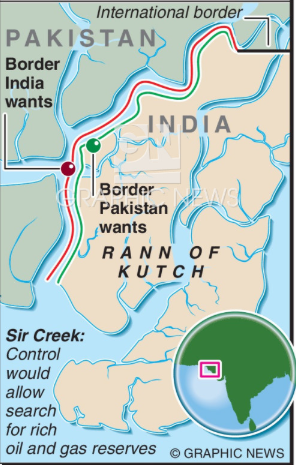
Source: Graphic News
Strategic and Diplomatic Implications
Even regular naval drills have a strategic value. The use of ships, aircraft, and missiles in the waters near its coastline indicates that Pakistan is willing to protect its sovereignty as well as protect sea lines of communication. A planned live-fire exercise sends a message of preparedness, indicating that the Navy and the Marine Corps are on alert and ready. The 301 Creeks Brigade and routine maritime patrols, as visible, also demonstrate the strong stance of Pakistan on Sir Creek. The waters of the creek had long been established in favor of Pakistan, and that its presence there is purely defensive. Although Islamabad emphasizes that these drills are not provocations, they clearly enhance Pakistan’s credible coastal defense and deterrent capability.
Routine exercises also support the foreign policy interests of Pakistan diplomatically. Multinational exercises like AMAN demonstrate the willingness of Islamabad to participate in collective maritime security and cooperation – an image which it seeks to convey to the rest of the world. Pakistan neutralizes the allegations of aggression by publicly stating that its exercises are scheduled and legal. The messaging of Islamabad is about stability and restraint in the current environment. The state media and military officials stress that Pakistan will decisively protect its territory, without confrontation. The Navy is presented as a responsible power that is eager to ensure peace, security, and stability in the region.
Conclusion
Pakistani sources are credible that the exercises at the coast in October 2025 were training naval operations, and not responses to Indian warnings. They are part of the normal series of preparedness drills in Pakistan, be it Sea Spark or AMAN and other fleet exercises. Their message works on two fronts domestically to assure citizens and the service personnel of Pakistan that the country is capable of offering protection to its coastline and territorial waters, and internationally as a means of quiet deterrence through the visible military preparedness. Throughout, Pakistan’s official stance remains consistent. Its posture at Sir Creek is defensive, aimed at safeguarding sovereignty, not provoking conflict. Together, the October 2025 drills highlight Islamabad’s effort to balance firm coastal defense with a deliberate tone of restraint in a tense regional climate.
You May Like To Read: Pakistan’s Decisive Response: How Swift Action After the Orakzai Ambush Restored Security