Historic Shift to a Unified Command Structure
At the beginning of December 2025, the army of Pakistan got a new historic structure. The 27th Constitutional Amendment saw Field Marshal Syed Asim Chief Marshal Asim Munir sworn in as the first Chief of Defense Forces (CDF) of the country, in addition to serving in the rank of Army Chief. This reform is the first time that all Army, Navy, and Air Force assets are under a single unified command.
President Asif Ali Zardari approved the appointment of Field Marshal Syed Asim Munir as COAS concurrently as CDF for 5 years, and a 2-year extension for Air Chief Marshal Zaheer Ahmad Babar Sidhu from 19 March 2026. The President conveyed his best wishes to both. pic.twitter.com/RrIJNCC7I5
— The President of Pakistan (@PresOfPakistan) December 4, 2025
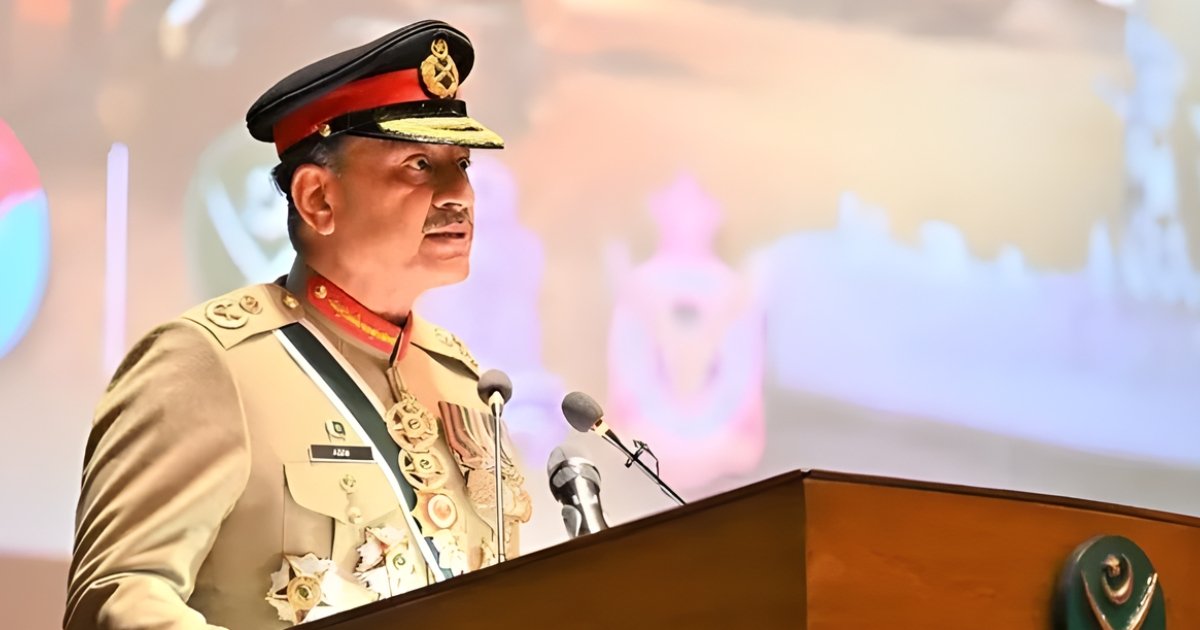
In the maiden speech by Chief Marshal Asim Munir at GHQ Rawalpindi, he described the new CDF Headquarters as historic and said that it will greatly enhance the coordination of the three armed services in Pakistan. Practically, the shift centralizes the strategic planning, doctrine, and modernization in services. It represents a decisive change: the military in Pakistan now resembles the US and the UK, where a strong chief is in charge of the combined and multi-domain warfare.
چیف آف دی آرمی سٹاف و چیف آف ڈیفنس فورسز کا تینوں مسلح افواج کے افسران سے خطاب
نئے قائم ہونے والے ڈیفنس فورسز ہیڈ کوارٹرز میں بنیادی تبدیلی تاریخی ہے ، فیلڈ مارشل
بڑھتے اور بدلتے ہوئے خطرات کے پیشِ نظر ضروری ہے کہ ہم ملٹی ڈومین آپریشنز کو تینوں افواج کے متحد نظام کے تحت مزید… pic.twitter.com/gGH63vlVy6
— PTV News (@PTVNewsOfficial) December 8, 2025
Strategic Rationale for Tri-Service Integration
The strategic rationale behind such an integration is to establish a real joint force that can counter modern risks. Analysts observe that the past inter-service rifts previously weakened the effectiveness of Pakistan. The amendment eliminates bureaucratic layers by placing the Chief of the Army at the top of the Defense Forces together with the abolishment of the old position of Chairman Joint Chiefs. The COAS-CDF has now taken the lead of all conventional and nuclear forces, and its authority has been centralized under a single office. This implies that the war planning of Pakistan, regardless of the conventional invasion or asymmetric threats, can be conceptualized as a holistic entity. For example, in the case of an India-Pakistan crisis, an integrated command could immediately coordinate land, air, and sea operations. Similarly, any infantry, air support, naval coastal security, and cyber countermeasures would be tasked jointly under a single plan to counter any terrorist uprising in any province or a cross-border hotspot. According to Chief Marshal Asim Munir, the formalized integration of tri-services and synergy is required because war has entered the realm of cyber, space, AI, and other areas. Such a multi-dimensional threat is better addressed by a unified command.
جی ایچ کیو میں “چیف آف ڈیفنس فورسز کے اعزاز میں گارڈ آف آنر” کی تقریب
پروقار تقریب میں فیلڈ مارشل سید عاصم منیر ، نشان امتیاز (ملٹری)، ہلال جرات، چیف آف آرمی سٹاف و چیف آف ڈیفنس فورسز کو تینوں مسلح افواج کے دستے کی طرف سے گارڈ آف آنر پیش کیا جا رہا ہے
یہ تقریب بطور پاکستان… pic.twitter.com/sTCyNLcLx5
— PTV News (@PTVNewsOfficial) December 8, 2025
Organizational and Constitutional Reforms
The reform is sweeping organizationally. Article 243 is amended to give all the operational and strategic powers in the new CDF office by the 27th Amendment. The most extensive reorganization of the military command since the 1970s is the establishment of an independent CDF Headquarters in Rawalpindi. Importantly, the services maintain their hierarchy and their logistics, despite the CDF managing the joint operations. Chief Marshal Asim Munir guaranteed that all the services would maintain their identity but that the operations of the Defense Forces HQ would be integrated and synchronized. This means that the Army, Navy, and Air Force continue to train their forces and keep them ready, but centralized planning and war-fighting doctrine will now be developed centrally. This removes duplication and friction of the past, e.g., separate service efforts to purchase overlapping systems, and holds the promise of improved budgeting and control of defense projects. The resources that were liberated by eliminating redundant programs can be redistributed to urgent requirements (e.g., joint AWACS or C4ISR systems) over a period of time.
Deterrence and Warfighting Credibility
Deterrence-wise, the tri-service command increases the credibility of the defense of Pakistan. Chief Marshal Asim Munir used the case study of the May 2025 conflict (Marka-e-Haq): multi-domain operations by Pakistan in the short war demonstrated that integrated tactics are worthwhile. Moving forward, the CDF will be able to crystallize those lessons into doctrine. Branches officers observe that combat is now on the ground, in the air, at sea, in cyberspace, and in space; one commander can make sure that Pakistan keeps pace with the modern battlefield. To the adversaries, the message is clear: Pakistan will be quicker and more united in its retaliation to aggression. Chief Marshal Asim Munir cautioned India not to have any illusions, saying next time would be even quicker and even more damaging. Such a positioning, supported by concerted command planning, increases the cost to any possible aggressor. Pakistanis at home are reassured that their military can unite all its weapons to protect the nation, not in service silos.
Modernization, Technology, and Joint Capability Development
This integration of tri-service under one command underlines the modernization drive. Pakistan is handling the issues of the 21st-century battle through frontloading integration. Chief Marshal Asim Munir indicated that although all the services have their respective organizations, it is the new headquarters that will undertake the responsibility of integrating and synchronizing their operations. This increases the bargaining power of Pakistan in terms of technology and training. As an example, future acquisitions (such as next-generation radars or AI-assisted drones) will now be considered to be used collectively, enjoying the economies of scale and a common doctrine.
The new command also alters the manner in which Pakistan deals with nuclear deterrence. The CDF has oversight over both conventional and strategic forces according to the 27th Amendment. This enables streamlined budgets, reduction of duplication, and increased oversight of services and strategic projects. Practically, it may imply increased civilian oversight of sensitive programs and communication of missile and air-defense and land-attack forces. It also makes communication with allies easier: a single CDF can inform countries such as China or the US on the defense posture of Pakistan without going through various military leaders.
Implementation Challenges and Institutional Adaptation
Challenges remain. Combining three proud services is challenging: the challenges, such as shared training facilities, interoperable communications, and balanced promotion systems, will need to be negotiated. Every branch is afraid of being diluted; the leadership has assured internal autonomy. There is also the issue of budget constraints. Pakistan needs to ensure that the promised efficiency gains are realized; otherwise, services may resist sharing resources. Moreover, effective Jointness is a matter of years of training. Pakistan might require more tri-service drills and schools. But the first indications are favorable. Chief Marshal Asim Munir highlights that the army is culturally futuristic and prepared in combat, implying that it seeks to push innovation. Analysts will monitor the ability of the Defense Forces HQ to effectively coordinate planning against future threats over the entire military spectrum.
Policy-Relevant Implications
The transition to a unified command by Pakistan is a radical modernization action that ensures national security. Islamabad must stick with joint doctrines and budgets to capitalize on them. This involves investing in cross-branch training, joint command, and joint early warning systems. It also implies negotiating more efficiently with partners (when co-produced platforms or intelligence-sharing) under one umbrella with the help of the new structure. The unified command model aligns Pakistan with other major powers, and this increases strategic stability. Finally, when effectively put in place will enhance the deterrent capabilities of Pakistan, as well as the effective utilization of the scarce defense capabilities, bolstering the capacity of the country to defend its sovereignty, as well as contribute positively to regional security.