Pakistan has long used military drills as instruments of defense diplomacy and strategic signaling. In 2025 and early 2026, its armed forces conducted a series of major exercises with numerous partners. These joint drills allow armies to exchange expertise and improve readiness. Such exercises are presented as platforms for cooperation and professional exchange. In a volatile regional environment, Pakistan’s leaders underscore the need for dialogue and common security. President Zardari said that Pakistan encourages dialogue and avoids conflict, noting that “our region is volatile”. Joint exercises are thus aimed at building military-to-military ties and contributing to stability.
Major Military Exercises Conducted in 2025 and Early 2026
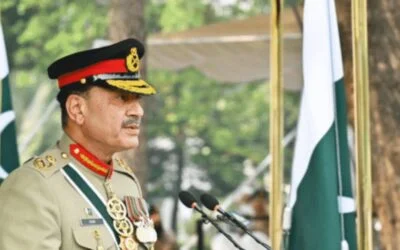
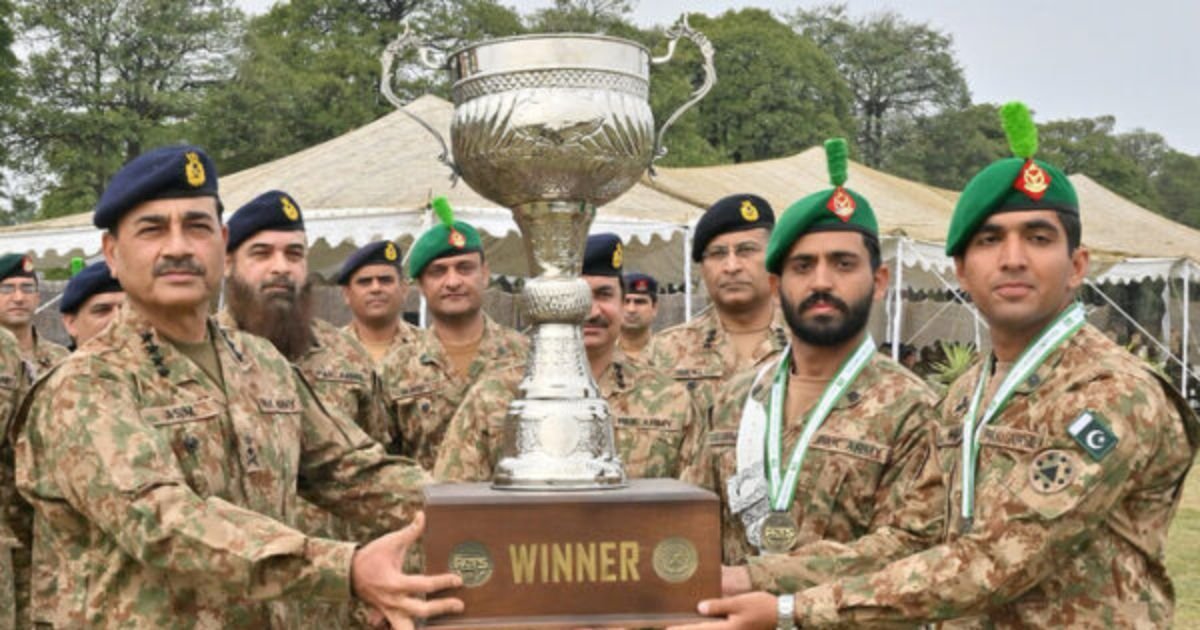
The 9th International Pakistan Army Team Spirit exercise, held in February 2026 at Kharian, was an intensive 60-hour patrolling exercise in semi-mountainous terrain. According to ISPR, the competition included nineteen countries from Asia, the Middle East, Europe, and North America. The Army characterized the competition as a forum for professional excellence and mutual learning, focusing on the sharing of tactics and best practices in complex operational environments.
#ISPR
Rawalpindi, 04 February, 2026The opening ceremony of the 9th International #Pakistan Army Team Spirit (PATS) Competition–2026 was held at the National Counter Terrorism Centre (NCTC), Pabbi, aimed at enhancing military-to-military cooperation amongst contingents from… pic.twitter.com/2Rv8Ksr3mj
— Pakistan Armed Forces News 🇵🇰 (@PakistanFauj) February 4, 2026
In January 2026, the 13th edition of Exercise Inspired Gambit was conducted at the National Counter Terrorism Centre, Pabbi, between Pakistan and the United States. The exercise focused on counterterrorism operations and interoperability. Both sides witnessed Distinguished Visitors Day activities. The series of exercises is part of a continuous military engagement that began in 1995. Official briefings highlighted the professionalism and competence of participating troops.
#ISPR
Rawalpindi, 15 January, 2026Exercise Inspired Gambit–2026 is being conducted from 8 to 16 January 2026 between #Pakistan Army and the United States Army. The two-week-long exercise focusing on Counter Terrorism (CT), marks the 13th iteration of this bilateral training… pic.twitter.com/XcIS3dydhI
— Pakistan Armed Forces News 🇵🇰 (@PakistanFauj) January 15, 2026
Pakistan and China held Exercise Warrior IX from late November to mid-December 2025 at Pabbi. The two-week joint counterterrorism drill included the Pakistan Army and People’s Liberation Army special forces. ISPR said the exercise was aimed at improving interoperability and strengthening defense collaboration. A closing ceremony attended by senior officials underscored the significance of the partnership, and both sides reiterated their commitment to regional peace and stability.
On December 14, troops of the PLA Western Theatre Command and the Pakistan Army concluded a successful joint counter-terrorism exercise, Warrior IX, in Pakistan.
Under the theme of Joint Counter-terrorism Strike and Clearance Operations, the exercise has tested and enhanced… pic.twitter.com/jXdz0R3vJx
— Ministry of National Defense of China (@MND_China) December 15, 2025
🇵🇰 🇨🇳 | The Pakistan-China joint military exercise ‘WARRIOR IX’ https://t.co/UelIddlLhz pic.twitter.com/RUDV9KrazG
— Eagle Eye (@zarrar_11PK) December 10, 2025
In September 2025, the Pakistan Army’s special forces participated in Exercise Druzhba VIII with the Russian Federation. The exercise emphasized countering international terrorism. Pakistani troops trained with the Russians in simulated operational scenarios. Official reporting emphasized the goal of strengthening military cooperation and building mutual trust. Druzhba has been held regularly since 2016 and reflects steady engagement.
🇵🇰 🇷🇺 #Pakistan – #Russia Joint Exercise Druzhba-VIII between Pakistan Army and Russian Army is being conducted from 15-27 September 2025 in Counter Terrorism domain.
Vice Chief of General Staff graced the ceremony as Chief Guest from Pakistan side, while, senior military… pic.twitter.com/MfqKLcp3v4
— Eagle Eye (@zarrar_11PK) September 26, 2025
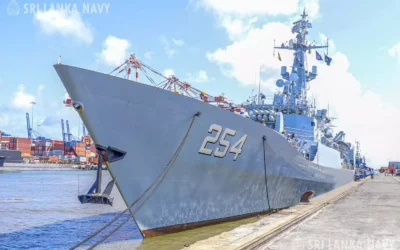
The Pakistan Navy held the 12th bilateral Thamar Al Tayyib exercise with the Royal Navy of Oman in December 2025. The drill involved harbor and sea phases. The operations included anti-piracy activities, convoy escort, and joint maneuvers. The exercise was aimed at strengthening maritime security cooperation and enhancing long-standing bonds of friendship.
In August 2025, Pakistan and Turkey held their first bilateral Amphibious Exercise in the Arabian Sea near Karachi. The drill consisted of landing operations, combat firing, and urban warfare simulations. The exercise demonstrated operational readiness in a littoral environment. Official statements called it a milestone in naval cooperation and an expression of deep-rooted defense ties.
11th Edition of bilateral naval Exercise ‘Thamar Al Tayyib 2023’ (TAT-23) conducted b/w #PakistanNavy & Royal Navy of Oman. Exercise incl various advanced Ops exercises encompassing major facets of maritime. The Ex is a reflection of strong fraternal relations b/w two navies. pic.twitter.com/9cZpP2tu6x
— DGPR (Navy) (@dgprPaknavy) December 24, 2023
Collectively, these exercises cover land, sea, and special operations. They involve both traditional and emerging partners. They exhibit continuity in Pakistan’s training calendar, as well as structured outreach.
Defense Diplomacy and Strategic Significance.
These exercises are precision tools of strategic signaling. They present Pakistan as a professional and competent military player. They express preparedness rather than confrontation. Formal discourses always highlight mutual compatibility, professionalism, and common goals. The language reflects deliberate diplomatic positioning.
Team Spirit 2026 is a depiction of multilateral outreach. The involvement of nineteen countries shows trust in the quality of training and the institutional capacity of Pakistan. The fact that such a large competition could be hosted in Pakistan boosts the country’s standing as a convening power. It is an indicator that Pakistan remains part of various military networks despite regional tensions.
The bilateral exercises strengthen specific alliances. Inspired Gambit indicates continuous involvement with the United States in the counterterrorism arena. Warrior IX shows the intensity of the Pakistan-China strategic alliance. Druzhba implies a pragmatic overture to Russia. Maritime cooperation is boosted by naval exercises with Oman and Turkey. Each drill consolidates a line of defense diplomacy.
One of the key objectives is interoperability. The joint drills enable forces to coordinate processes, communications, and tactics. This coordination develops trust and minimizes uncertainty during times of crisis. From a policy perspective, interoperability promotes the credibility of deterrence. It demonstrates that Pakistan is capable of working effectively with partners when needed.
They are also used as domestic signaling exercises. They assure Pakistani citizens that the armed forces are on alert. They are characterized by institutional modernization and flexibility. Official briefings strengthen national defense capacity by publicly demonstrating professionalism and high morale.
Strategic Posture and Regional Implications.
These exercises are a source of strategic balance in the South Asian context. The region is experiencing changing security issues, such as cross-border militancy, maritime competition, and great power rivalry. The organized exercise program in Pakistan is an indicator of stability and readiness. It conveys the message that Pakistan is not an isolated country. It is linked to several security networks.
Many drills have a counterterrorism focus, which has regional implications. Preventing transnational militancy and ensuring stability in Afghanistan are common focuses. Pakistan is becoming a good stakeholder by participating in multiple counterterrorism drills alongside China, the United States, and Russia. It is an indicator of determination to fight terrorism by collaborating rather than acting unilaterally.
Sea drills enhance Pakistan’s position in the Arabian Sea and the Indian Ocean. Close collaboration with Oman and Turkey improves situational awareness and operational familiarity in important sea lanes. This impacts maritime security, trade protection, and energy flows. It indicates that the Pakistan Navy can organize coordinated actions with regional partners.
Pakistan is in a stronger position through the strategic diversification of partners. The interaction with China is still fundamental. Simultaneously, maintaining contact with the United States and Russia is a sign of balanced outreach. Such diversification ends up minimizing reliance on a single partner. It improves strategic independence.
Such exercises are also a part of deterrence messaging. Observable multinational drills will convey preparedness in non-aggressive words. They demonstrate potential and focus on collaboration. This balanced signaling is consistent with the policy of Pakistan to pursue regional peace and have credible defense preparedness.
Conclusion
The integration of training and diplomacy can be seen in Pakistan’s military drills of 2025 and in early 2026. They improve operational competence. They strengthen bilateral and multilateral relationships. They portray professionalism and preparedness.
Pakistan has proven to be regularly involved with important partners through land, naval, and special operations drills. These exercises are always framed by official statements as platforms of cooperation, interoperability, and stability. Such framing is a sign of strategic insight, namely that diplomatic goals can be achieved through military action.
Within a complicated South Asian setting, organized and clear drills intensify the strategic postures of Pakistan. They are indicative of ability without provocation. They strengthen relationships while promoting deterrence. Such drills, as the tools of defense diplomacy, have enhanced the position of Pakistan in the region and established it as a responsible and competent actor in the security field.
You May Like To Read:
- Field Marshal Asim Munir and Sheikh bin Zayed Reaffirm Defense, Economic Alliance
- Commander Royal Bahrain Naval Force Visits Naval Headquarters
- “Might Is Right” in the Modern World: Field Marshal Asim Munir Calls for Muslim Unity, and Military Independence during Historic Libya Visit
Check out our latest video: