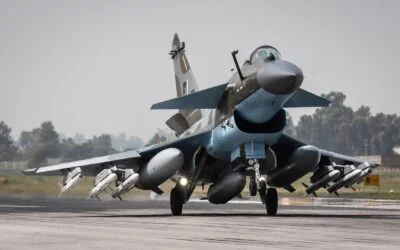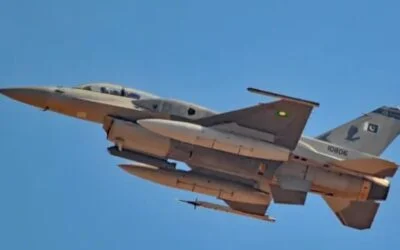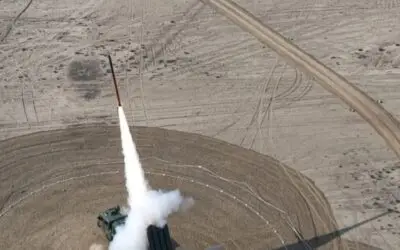

The Iran-Israel war of 2026 has underscored the roles of missile forces, air defenses, and strategic preparedness in modern war. Israel launched precision air strikes and missile attacks deep into Iranian territory, while Iran retaliated with massive barrages of ballistic missiles and drones at Israeli and U.S. targets, and Israel. The conflict illustrates how the use of missiles, deterrence credibility, asset survivability, and civil defense may determine the trajectory of war. For Pakistan, these developments offer important lessons on the credibility of deterrence, air defense integration, precision-strike capability, and second-strike survivability.
Missile Warfare and Arsenal Comparison
Iran fields the largest ballistic missile arsenal in the Middle East, composed predominantly of short- and medium-range designs intended for regional reach. Its inventory includes liquid- and solid-fueled missiles, as well as land-attack cruise missiles such as the Soumar and Hoveizeh. During the war, Iran’s deployment relied on massed volleys to saturate Israeli defenses, including Iron Dome and Arrow. Although many of these projectiles were intercepted, some penetrated defenses and hit urban and military targets, proving that volume and persistence strain even advanced air defense networks.
Pakistan’s missile force is numerically smaller but technologically varied and more modern. It operates solid-fuel, road-mobile ballistic missiles such as Abdali, Ghaznavi, Shaheen-I/IA, Ghauri, Shaheen-II, Shaheen-III, and MIRVed Ababeel. This range spectrum covers the Indian landmass under Pakistan’s doctrine of full-spectrum deterrence. In cruise missiles, Pakistan has Babur (ground- and sea-launched) and Ra’ad (air-launched), which provide precision strike capability at both operational and strategic ranges.
Pakistan displays Ababeel MIRV capable Medium Range Ballistic Missile for the first time in the history at #PakistanResolutionDay 2024. The very weapon system comes with a ‘stated’ range of 2200km and is able to hit multiple targets simultaneously. pic.twitter.com/aAfbPuyndZ
— AM Raad (@Raad_Pak) March 23, 2024
One important lesson from the conflict is the importance of mobility and survivability. Pakistan’s solid-fuel Shaheen series permits rapid launch without fueling delays, making it more responsive than older liquid-fuel systems such as some of Iran’s Shahab variants. The development of Ababeel, armed with Multiple Independently Targetable Reentry Vehicles (MIRVs), is focused on survivability in an emerging ballistic missile defense (BMD) world. Similarly, the Babur-3 submarine-launched cruise missile reinforces Pakistan’s second-strike posture, an arena in which Iran has no parity, as it does not have a sea-based nuclear platform.
Deterrence Credibility and Second-Strike Capability
The conflict underscores the significance of credible and survivable deterrence. Israel reportedly targeted Iranian command centers, leadership sites, and strategic infrastructure early in the war. Such decapitation-type strikes demonstrate how rapidly leadership and command structures can be disrupted. Pakistan thus needs to focus on hardened and redundant command-and-control systems to ensure continuity in times of crisis.
The NCA and Strategic Plans Division of Pakistan provide a centralized, institutionalized nuclear command structure. They have an evolving sea-based deterrent, which adds vital survivability. The Babur-3 SLCM test reportedly offered a credible second-strike capability, ensuring that no enemy could eliminate Pakistan’s deterrence in a single blow. This is important because the essence of deterrence is not merely weapon possession but assured retaliation.
Deterrence credibility also depends on visible readiness and technological adaptation, as the Iran-Israel war reveals. Continued testing, modernization, and deployment of survivable platforms signal resolve and capability. Pakistan needs to maintain indigenous development momentum to prevent technological stagnation in the fast-changing strategic environment.
Air Defense Integration and Resilience
Iran’s experience shows the vulnerability of air defense systems if not properly integrated and protected. Despite deploying systems like the Bavar-373 and reportedly S-300 or S-400 variants, Iran’s air defenses were under significant stress from Israeli suppression tactics. Preemptive strikes on radars and electronic warfare measures degraded the defensive shield, permitting follow-on attacks.
For Pakistan, the message is clear: air defense needs to be layered, networked, and resilient. Long-range surface-to-air missile systems, medium-range interceptors, point defenses, early-warning radars, and airborne surveillance platforms must operate within a unified command network. Pakistan’s existing systems, such as Chinese-origin platforms and radar networks, must be integrated through real-time data sharing and joint exercises simulating saturation attacks by drones, cruise missiles, and ballistic threats.
Critical military infrastructure (airbases, radar installations, missile depots, and communication hubs) needs to be hardened, dispersed, and camouflaged. Cybersecurity and electronic warfare capabilities also need to be strengthened to avoid network paralysis in the first hours of conflict.
Precision Strike & Escalation Management
Israel’s deep precision strikes on high-value Iranian targets reflect the growing dominance of stealth aircraft, stand-off munitions, and real-time intelligence. Even heavily defended territory was vulnerable to coordinated precision operations. Pakistan must assume that adversaries could use similar capabilities.
In response, Pakistan has invested in precision strike systems. Expanding the Ra’ad air-launched cruise missile program, as well as building guided munitions capability, would offer credible response options below the nuclear threshold. Precision conventional capabilities allow signaling and escalation control without resorting immediately to strategic weapons.
Pakistan’s Ra’ad-II air-launched cruise missile is a nuclear capable system, capable of striking targets at a distance of 800 kilometers, an advanced improvement over the earlier Ra’ad-I, which had a range of 600 kilometers. pic.twitter.com/ke08sSBPcm
— Defence Index (@Defence_Index) April 28, 2025
At the same time, Pakistan has a responsibility to secure its own high-value targets by ensuring hardened shelters, underground facilities, dispersal strategies, and early-warning assets like AWACS and satellite surveillance support.
Comparing Pakistan and Iran
While both Pakistan and Iran possess important missile capabilities, their strategic situations are different. Iran’s arsenal is numerically larger but is more regionally oriented. Pakistan’s force structure is geared towards deterrence policy against India, and its system varies from tactical, called Nasr, to Shaheen-III. Pakistan’s cruise missiles are nuclear-capable and have sea-based variants, thereby enhancing the credibility of a second strike, something Iran clearly lacks.
Pakistan’s centralized command system, in contrast to the dual military system in Iran, which is divided between the regular forces and the IRGC. The stress on Iran’s command system throughout the war helps confirm the need for clear and unified chains of command during crises.
Conclusion
The Iran-Israel war has sobering lessons for Pakistan. Missile warfare is increasingly becoming about survivability, precision, integration, and resilience, rather than sheer numbers. Pakistan needs to further bolster its second-strike capability with sea-based platforms and MIRV technology, develop further integrated air defense networks, improve precision conventional strike options, and invest in civil defense preparedness.
The strengths of Pakistan, i.e., indigenous missile development, diversified departure options, and institutionalized command structures, provide a solid foundation. By modifying the tactics of modern warfare patterns as they evolve and providing credibility to deterrence, Pakistan can better protect its national security in an increasingly volatile regional environment.
You May Like To Read: Pakistan Army Successfully Concludes Field Tests of the Ghazab MLRS System