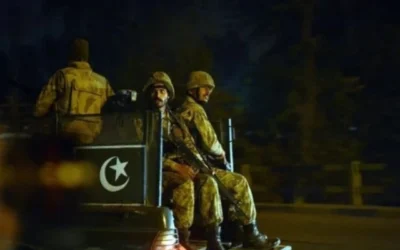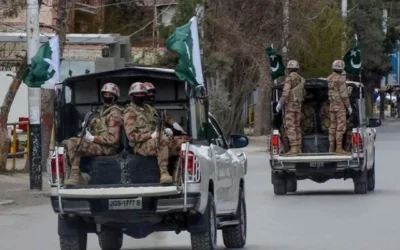
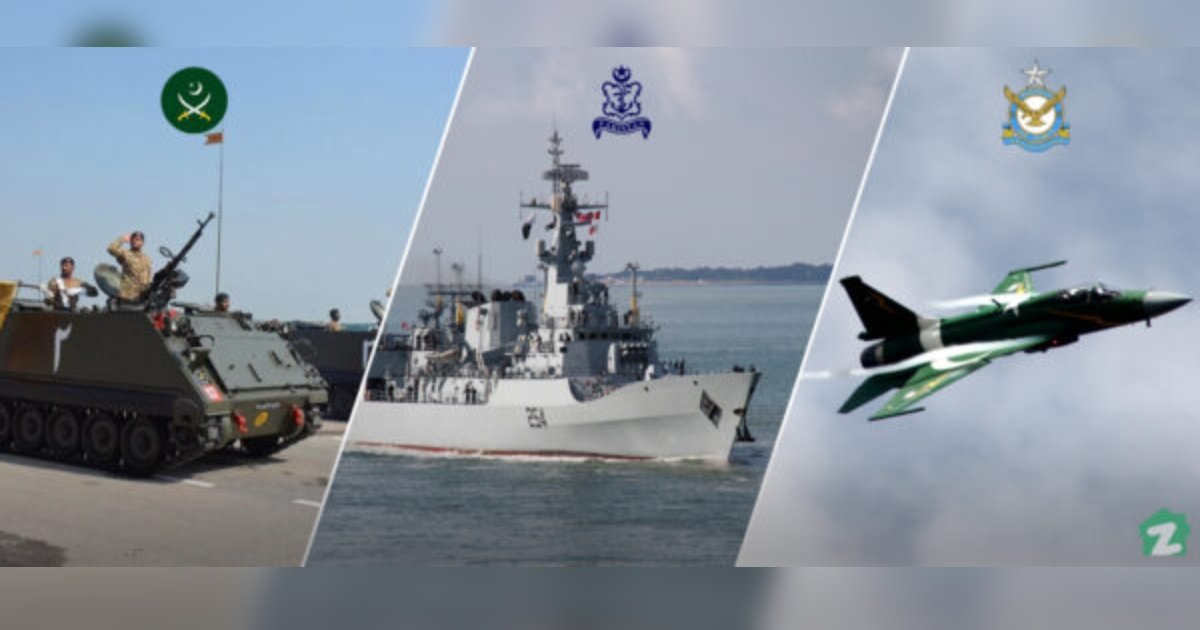
The military has long fought against terrorists on the rugged borders of Pakistan, but recent changes suggest that the military approach has shifted towards a multi-domain security strategy. March 2026 was characterized by increasing tension in the region, prompting the Army, Navy, and Air Force to step up operations beyond conventional counterinsurgency. The Pakistan Army further pursued its intelligence-led counter-terror operation under Azm-e-Istehkam against Fitna-al-Khawarij (FAK) and other militants on land.
The precision and reach of the Army and PAF were evident during the air strikes and border offensives during Operation Ghazab Lil Haq. At sea, the Navy also deployed Operation Muhafiz-ul-Bahr, transporting merchant tankers as well as protecting energy lifelines, as the tensions in the Middle East jeopardize the vital sea routes. Such coordinated efforts on the ground, air, and maritime levels demonstrate how the armed forces of Pakistan combine ISR intelligence, precision weapons, and collaborative doctrine to protect the country.
Army: Ground Dominance and Counter-Terrorism
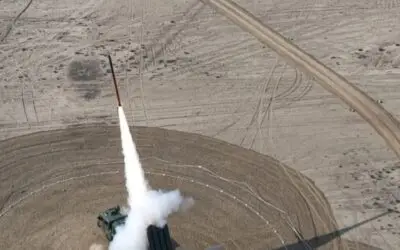
In late February and early March 2026, ISPR briefings emphasized continued Army operations along the Afghan border. With Operation Ghazab Lil Haq, dozens of Taliban posts were hit by infantry and artillery units along the Durand Line, and several opponent checkpoints were also captured. At the same time, the Pakistan Air Force (PAF) carried out precision attacks on weapons bases and operations centers within Afghanistan. On March 16-17, the PAF raids had managed to destroy Taliban ammunition dumps and logistical bases in Kabul and Nangarhar. The DG ISPR documented 274 insurgents killed and 73 destroyed border posts.
53 Locations were Targeted in Afghanistan
274 Taliban dead & 400+ injured
73 posts destroyed
22 locations were targeted through Airstrikes
18 Posts of TTA captured
115 tanks and artillery pieces destroyed.
DG ISPR Press Conference – 27 Feb 2026#Operation_Ghazab_Lil_Haqq pic.twitter.com/r29o98gg11— The Pakistan Brief (@thebriefPak) February 27, 2026
At the domestic level, the Army increased IBOs (intelligence-based operations) against militants. During a single week of March, ISPR declared five raids in Khyber Pakhtunkhwa: 13 terrorists had been killed in five different actions, between Bajaur and South Waziristan, and 15 Indian sponsored terrorist has been eliminated in Balochistan.
🛑 From Chaos to Control: Operation Ghazab Lil Haq is Crushing Terror Networks
📍Let the numbers speak louder than propaganda.
‼️ Since the launch of Op Ghazab Lil Haq, terrorist incidents in KP have dropped by a massive 65% a clear sign that decisive action delivers results,… pic.twitter.com/WdwEebaj1z
— Conflict Watch (@ConflictWatchX) March 28, 2026
Pakistan Security Forces Eliminated 14 Indian-Sponsored Terrorists in Balochistan Province
Check out this shot 🔥🔥 pic.twitter.com/aojpOrTv1Z
— Mohsin Ali (@Mohsin_o2) March 5, 2026
These synchronized IBOs, as part of the ongoing counter-terrorism operation under Azm-e-Istehkam, have earned President Zardari commendations for the achievement of peace. Soldiers reclaimed massive weapon stores and eliminated terror cells. The ground offensives were carried out in parallel, with Pakistan still defeating emerging threats along its borders, which indicates that the Army has a two-fold focus on internal stability and external threats. Land forces of Pakistan are therefore on full-scale operations, destroying FAK and FAH militants and insurgents through coordinated firepower and intelligence.
President Asif Ali Zardari lauded the Armed Forces for successful operations against India-backed fitna khawarij in KP. He said under “Azm-e-Istehkam” the campaign will continue with full force until terrorism is wiped out. The nation stands firmly with its forces.
— The President of Pakistan (@PresOfPakistan) October 16, 2025
Navy: Protecting Sea Lines of Communications
As the Army continues combating on land, the role of the Navy has expanded into maritime security in Pakistan. In response to the Middle East crisis, ISPR declared Operation Muhafiz-ul-Bahr (protector of the sea). The mission, to combat multidimensional challenges to national shipping and maritime trade, serves to keep the key sea lanes accessible as global tensions threaten oil routes. More than 90 percent of the trade and energy operations in Pakistan are moved by sea, so protection of these lines is a priority.
The Navy started protecting Pakistani tankers and fuel vessels in collaboration with the Pakistan National Shipping Corporation. Frigates and patrol aircraft were used to patrol the Arabian Sea to prevent piracy or aggression against merchantmen. The PN escort operations were underway with close coordination by the Pakistan National Shipping Corporation, and the Navy is vigorously monitoring the movement of merchant vessels to provide safe and secure passage.
<blockquote class=”twitter-tweet”><p lang=”en” dir=”ltr”>In view of the evolving regional maritime security environment and potential disruptions to critical sea lanes, Pakistan Navy has launched Operation Muhafiz-ul-Bahr to counter multidimensional threats to national shipping and maritime trade. The initiative has been undertaken to… <a href=”https://t.co/sMsxk1L1Ww”>pic.twitter.com/sMsxk1L1Ww</a></p>— PTV News (@PTVNewsOfficial) <a href=”https://twitter.com/PTVNewsOfficial/status/2031011192547025401?ref_src=twsrc%5Etfw”>March 9, 2026</a></blockquote> <script async src=”https://platform.twitter.com/widgets.js” charset=”utf-8″></script>
Operation Muhafiz-ul-Bahr would provide the continuous supply of national energy resources to the country, as well as ensure the safety of the sea lines of communications (SLOCs) in Pakistan. About 90 percent of trade in Pakistan is facilitated through sea, which illustrates the importance of securing maritime routes. These operations are indicative of the broadened role the Navy plays in protecting the security as well as the economic lifelines.
Air Force: Precision Strikes and ISR Integration
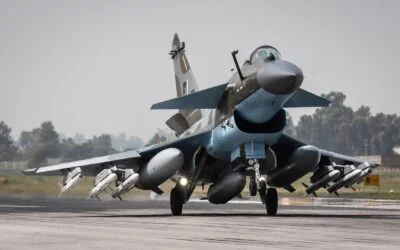
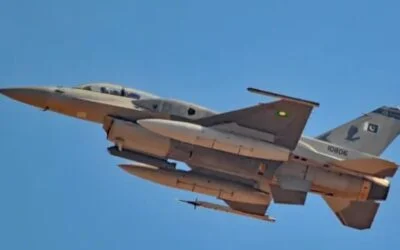
The PAF supports immediate intelligence, surveillance, reconnaissance (ISR), and precision strike in all domains. Fighter jets have been used in the last few weeks in combination with drones and AWACS to monitor and strike hostile elements well beyond the borders of Pakistan. Operation Ghazab Lil Haq demonstrates this change. On March 16, PAF jets made precision nighttime attacks against Afghan Taliban military bases in Kabul and Nangarhar, destroying ammunition dumps and technical infrastructure. The Pakistani fighters kept patrolling the airspace of Kandahar to deter threats.
Along with combat, the PAF modernized itself with intensive exercises. In February 2026, the ISPR announced Exercise “Golden Eagle”, which is a war game that combines the use of jets and drones in an AI-driven command center. This manned-unmanned teaming made it possible to share ISR and plan strikes very quickly in hostile settings. The Golden Eagle confirmed that the PAF has a high level of operational readiness and the integration of air, cyber, and space so that they can respond faster in real conflicts by integrating satellite, radar, and drone intelligence to direct precision strikes or JF-17 fighters.
PAKISTAN AIR FORCE DEMONSTRATES COMBAT READINESS IN SOUTHERN ZONE
10 February, 2025: Pakistan Air Force successfully conducted Exercise Golden Eagle in the Southern Air Command’s area of responsibility, involving the synchronized orchestration of the complete combat potential at… pic.twitter.com/8wchjd1IJs
— DGPR (AIR FORCE) (@DGPR_PAF) February 10, 2026
Jointness and Doctrinal Maturity
The armed forces of Pakistan have focused on joint operations. Coordination of border attacks was made by the Army and PAF, where ground troops seized posts captured through airstrikes. The news of simultaneous Army raids in Bajaur and South Waziristan, followed by PAF attacks in the adjacent Afghan provinces. Cross-border retaliation includes tanks and artillery, with the support of the JF-17 and F-16. As part of Operation Ghazab Lil Haq, DG ISPR Lt. Gen. Ahmed Sharif confirmed that Army activities in 53 frontier posts were correlated with air operations against insurgent supply lines and camps.
Adapting to Evolving Threats
The strategy of Pakistan is now multidimensional. One theatre is domestic counter-terrorism; the other is at sea, where the Navy is actively guarding economic lifelines during regional conflict. On the air, the PAF uses ISR and precision weapons to preempt threats. Every service has its traditional area- Army on land, Navy at sea, Air Force in the air- but interoperability is being highlighted as never before.
Higher-level briefings and ISPR statements emphasize that exercises, intelligence sharing, and coordinated strikes are normal. The integrated operations, whether counter-terror raids in Khyber or convoy escorts in the Arabian Sea, aimed to protect the entire nation. Combining anti-terror vigilance with maritime security and precision through ISR, the armed forces of Pakistan demonstrate a holistic, modernized defensive stance that addresses both conventional and non-conventional threats.
Conclusion
The armed forces of Pakistan are working together on land, sea, and air. Drills, intelligence sharing, and coordinated strikes are now the norm. This combined strategy, be it counter-terror raids in Khyber or escort operations in the Arabian Sea, is meant to protect the whole country. Combining counter-terrorism vigilance and maritime security with ISR-enhanced precision, Pakistan is establishing a strong multi-domain defense posture that aligns with the requirements of 2026.
You May Like To Read: Field Marshal Asim Munir Plays Key Role in US-Iran De-escalation Talks
Check out our latest video: