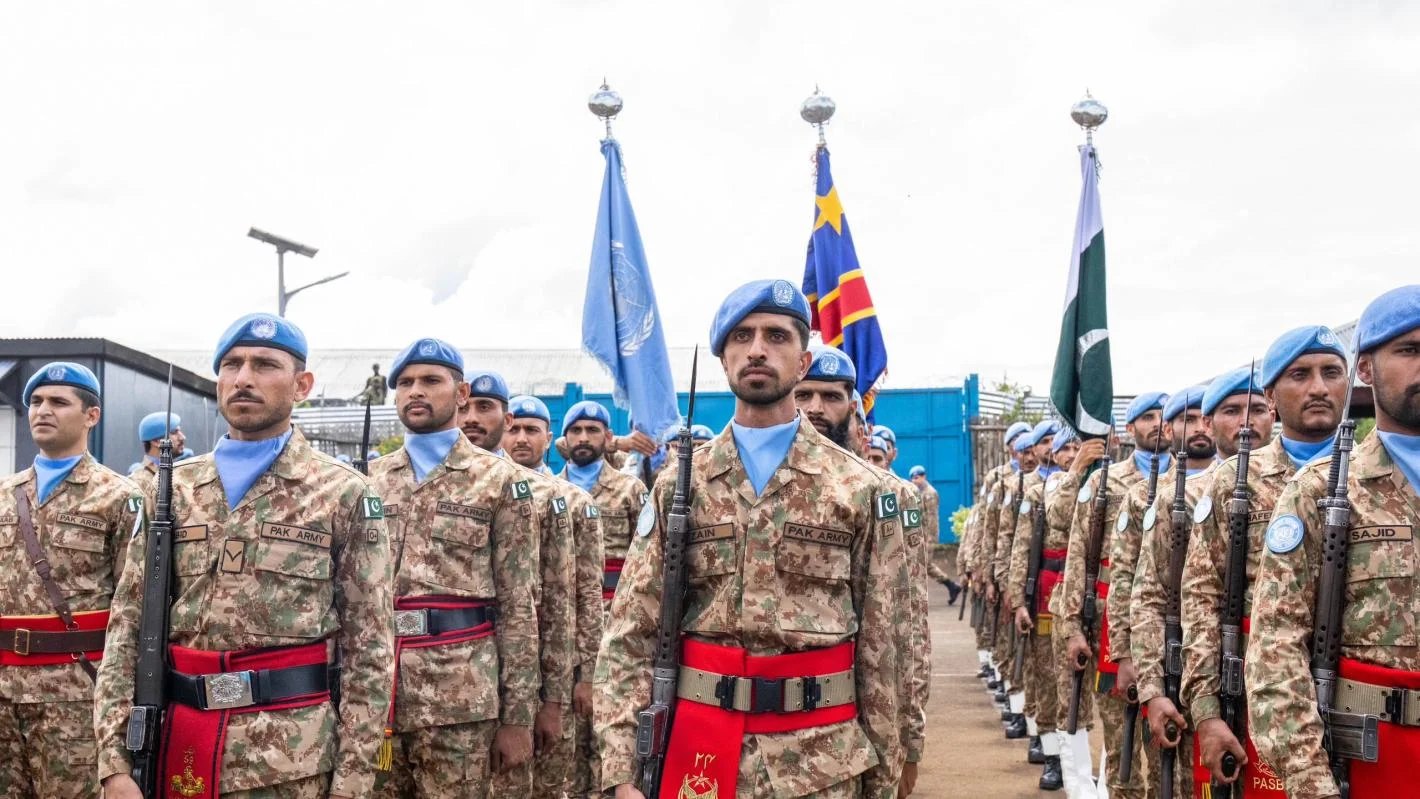
Amidst a fractured global security landscape marked by complex intra-state conflicts and unprecedented humanitarian crises, the United Nations (UN) peacekeeping apparatus remains a vital mechanism for conflict mitigation and sustainable peace building. Within this international architecture, Pakistan has firmly cemented its position as a foundational anchor of global stability, serving as one of the leading troop-contributing countries (TCCs) to the UN.
A comprehensive strategic assessment published by the Centre for Strategic Perspectives (CSP) at the Institute of Strategic Studies Islamabad (ISSI) outlines the vast historical footprint, specialized operational capabilities, gender mainstreaming milestones, and emerging tactical challenges that define Pakistan’s long-standing relationship with the United Nations Peacekeeping Operations (UNPKO).
Historical Footprint: A Legacy of Multilateral Deployment
United Nations peacekeeping occupies a core, high-priority position within Pakistan’s foreign policy agenda. Since joining the United Nations on September 30, 1947, Pakistan has viewed its participation in peace operations not merely as a military exercise, but as a core diplomatic commitment to international law and global partnerships.
- Total Personnel Deployed: Over 200,000 men and women
- Total Sovereign Missions Served: 46 global UN missions
- Current Deployment Strength: Over 4,000 peacekeepers
- Active Theater Engagement: 8 simultaneous global peace operations
Pakistan’s operational journey began in 1960 with the deployment of 400 troops to the United Nations Operation in the Congo (ONUC). Over the subsequent decades, the armed forces and police units have served in every major global theater, displaying versatility across varying terrains and mandates. The historical deployment timeline demonstrates the scale of this commitment:
-
UN Security Force in West New Guinea (UNSF, 1962–1963): Deployed a robust contingent of 1,500 troops to oversee a smooth administrative transition.
-
UN Transitional Authority in Cambodia (UNTAC, 1991–1993): Contributed 1,106 personnel to support post-conflict democratic stabilization.
-
UN Operations in Somalia (UNOSOM I & II, 1992–1995): Committed a massive force of 7,200 peacekeepers during the peak of the humanitarian crisis.
-
UN Protection Force in Bosnia-Herzegovina (UNPROFOR, 1992–1995): Dispatched ,3000 troops to safeguard civilian enclaves amidst active regional warfare.
-
UN Assistance Mission in Sierra Leone (UNAMSIL, 1995–2005): Stationed 5,000 personnel to dismantle rebel networks and manage disarmament loops.
-
MONUSCO / MONUC (Democratic Republic of Congo, 1999–Present): Deployed consecutive waves exceeding 2,700 troops to stabilize highly volatile eastern provinces.
This sustained involvement has come at a massive human cost. Pakistani peacekeepers have historically accounted for roughly 10 percent of all UN casualties, with 169 service members making the ultimate sacrifice in the line of duty for international peace.
Strategic Capabilities: Advanced Operational Pledges
Pakistan’s current and advanced capability pledges reflect a shift from providing standard infantry assets to deploying highly specialized, high-tech, and rapid-response tactical formations.
Current Foundational Pledges
-
The systemized deployment of qualified women officers in key field roles, specifically as staff officers, medical experts, and within armed forces nursing units.
-
The provision of world-class, pre-deployment instructional support at the center of excellence within the National University of Sciences and Technology (NUST).
-
Targeted capacity building focused on specialized courses covering military observers, staff operations, and the protection of civilians.
-
The continuous dispatch of specialized mobile training teams to assist other troop-contributing nations in upgrading their field capabilities.
Advanced Operational Pledges
-
Elevating both a core infantry battalion and a logistics support battalion to the UN’s rapid deployment level to guarantee immediate global mobility.
-
Deploying an elite Engineer Company alongside a fully functional Level 2 Field Hospital upgraded to rapid deployment status.
-
Integrating advanced technical surveillance assets by introducing a dedicated Aviation Unit and a Tactical Unmanned Aerial System (UAS) Unit.
-
Deploying specialized support elements including a Signal Company, a Canine Platoon, a Riverine Platoon, and an Explosive Ordnance Disposal (EOD) Unit.
-
Committing three distinct Formed Police Units (FPUs) alongside 50 highly trained military observers and staff officers stationed directly at UN Headquarters.
Gender Mainstreaming: Pioneering the Blue Helmets
A standout achievement of Pakistan’s contemporary UN diplomacy is its focus on enhancing the active participatory role of women in international stabilization missions. By integrating women into the frontlines of peacekeeping, Pakistan successfully achieved the UN’s rigid corporate target of sending 15 percent female staff officers to active missions.
The inclusion of female peacekeepers serves a dual operational purpose. In highly conservative or post-conflict zones, female officers are uniquely positioned to gain the confidence of vulnerable local communities, gather critical field intelligence, and manage relief operations for female survivors of conflict-driven violence. This comprehensive approach has significantly strengthened the strategic image and local acceptance of UN operations.
Evolving Challenges: Navigating Asymmetric Warfare
The ISSI brief outlines a complex matrix of contemporary challenges split across broad international systemic shifts and domestic operational needs:
Systemic and International Roadblocks
-
Asymmetric Environments: Modern conflicts have rapidly transitioned from inter-state wars to highly complex intra-state struggles involving non-state armed groups utilizing terrorist tactics and maintaining links to cross-border organized crime.
-
Muted Political Solutions: UN Blue Helmets are frequently inserted into zones characterized by weak political agreements, diminished host-country consent, or completely stalled peace processes, leaving missions without clear exit strategies.
-
Weapon Proliferation: The unregulated spread of new-generation weapons and advanced IEDs has drastically elevated the lethality of the environments where peacekeepers serve, frequently turning the peacekeepers themselves into intentional targets.
Domestic Strategic Challenges
-
Skill-Based Alignment: There is a pressing need to build a comprehensive, dynamically updated database to accurately catalog the specific, advanced skill sets of all personnel to ensure task assignments match evolving field needs.
-
Resource and Training Optimization: Pakistan must continually innovate cost-effective recruitment strategies, embed international peacekeeping curricula directly into baseline police, military, and medical training academies, and design tailored modules to counter the threat of organized crime in mission areas.
Ultimately, Pakistan’s extensive, multi-decade contribution to UN peacekeeping acts as a powerful pillar of its military diplomacy. As long-standing security architectures face new challenges worldwide, the professionalism, adaptability, and unwavering commitment of Pakistani peacekeepers will remain indispensable to the UN’s goal of maintaining international peace and security.