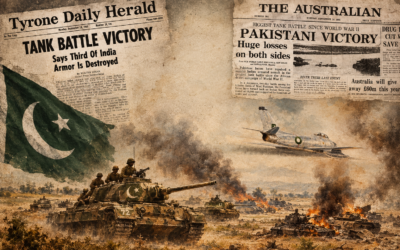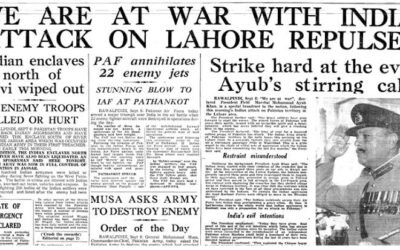

The Battle of Lahore, particularly the fierce fighting at the Burki sector, is a central chapter in the history of the 1965 Indo-Pakistani War. It was on September 6, 1965, that the Indian Army launched a three-pronged surprise offensive towards the city of Lahore, aiming for a swift capture that they believed would end the war quickly. However, their advance was met by a resolute and heroic defense from the Pakistan Army, which, along with the unwavering support of the civilian population, turned the battle into a legendary tale of national resistance. The defensive stand at Burki, a key village on the outskirts of Lahore, became a powerful symbol of Pakistan’s resolve and the ultimate triumph of national will.
The Offensive, and the Unflinching Response
The Indian offensive towards Lahore was a bold and ambitious move, but it was countered by a spirited and organized defense. The Pakistan Army, though initially surprised, quickly regrouped and mobilized its forces. The defense of the Lahore front was spearheaded by the 10th Infantry Division, which immediately deployed its troops to establish a defensive perimeter along the Bambawali-Ravi-Bedian (BRB) Canal, a natural barrier that would become the main line of resistance. The soldiers took up positions in dugouts and pillboxes, transforming the canal’s banks into a formidable fortress.
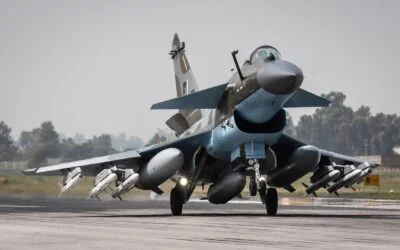
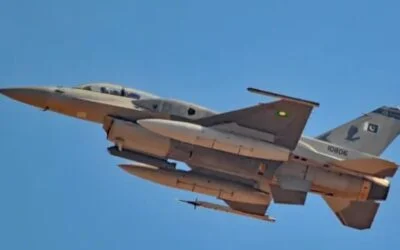
The fighting in the Burki sector was particularly intense. The Indian forces, advancing along the Khalra-Burki-Lahore road, were met with an unexpected and determined resistance. The Pakistani infantry, supported by artillery and limited tank units, fought with immense courage, engaging the enemy in close-quarter combat. The air force also played a crucial role, with PAF jets providing critical air support and striking enemy formations and supply lines, thereby slowing down their advance.
The Heroic Stand of Major Raja Aziz Bhatti
The Battle of Lahore is inseparably linked with the name of Major Raja Aziz Bhatti, a hero of unparalleled courage and self-sacrifice. As the Commanding Officer of a company of the 17th Punjab Regiment, he was tasked with defending a strategic position in the Burki sector. The area was subjected to continuous and heavy shelling, and his position was under constant threat from advancing Indian tanks and infantry.
For six consecutive days, from September 6 to 12, Major Bhatti showed extraordinary leadership and bravery. He refused to be relieved and continuously moved from trench to trench, inspiring his men with his presence and words. He personally directed artillery fire, corrected his troops’ positions, and supervised the laying of mines, all while exposed to direct enemy fire. On September 12, as he was observing enemy movements from an elevated position, he was hit by an Indian tank shell and embraced martyrdom. His sacrifice held the line and became a powerful symbol of the unyielding spirit of the Pakistani soldier. For his valor, he was posthumously awarded the Nishan-e-Haider, Pakistan’s highest military gallantry award.
A People’s Victory
The defense of Lahore was not a victory for the military alone; it was a victory for the entire nation. The civilian population of Lahore and the surrounding areas demonstrated an incredible show of solidarity with the armed forces. Citizens volunteered to provide food, medical aid, and other essential supplies to the soldiers on the front lines. Artists, poets, and musicians produced patriotic songs and poems that resonated with the national spirit, boosting morale and reaffirming the collective will to fight for the homeland. This complete unity between the military and the civilians in the face of an existential threat became a defining characteristic of the 1965 war.
Conclusion
The Battle of Lahore, and specifically the stand at Burki, is a powerful and inspiring chapter in Pakistan’s history. It demonstrated to the world that the Pakistani nation is prepared to pay any price to protect its freedom and sovereignty. The heroic defense of the city, the valor of individuals like Major Raja Aziz Bhatti, and the unwavering support of the civilian population collectively ensured that the enemy’s objective was not met. The battle solidified the principle of “peace through strength” and remains a source of immense pride. The legacy of the Battle of Lahore serves as a perpetual reminder of the bravery of the Pakistan Armed Forces and the unbreakable spirit of the Pakistani people in the face of adversity.