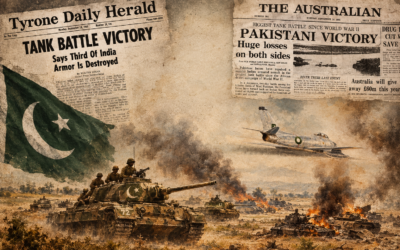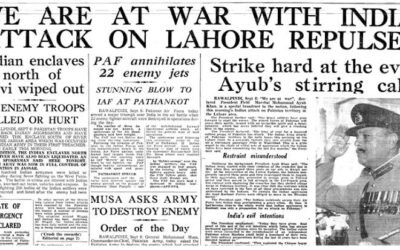
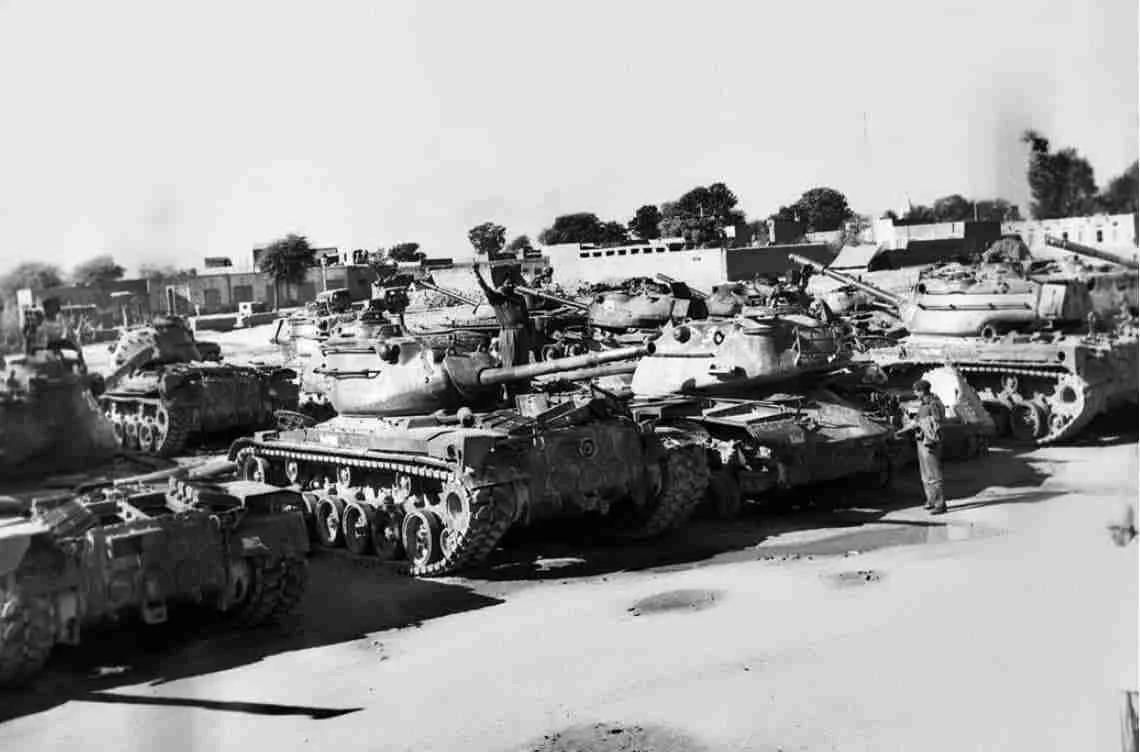
The Battle of Phillora, though often overshadowed by the larger and more decisive Battle of Chawinda, holds a significant place in the narrative of the 1965 Indo-Pakistani War. This intense tank battle, which took place from September 7 to 11, was a crucial preliminary engagement that set the stage for the major confrontation at Chawinda. Pakistani forces, facing a numerically superior enemy, fought a tenacious and strategically important delaying action. Their brave resistance at Phillora, while a tactical retreat, served a higher purpose: it bought precious time for the Pakistan Army to regroup, reinforce, and prepare for the final, decisive stand that would ultimately halt the enemy’s grand armored offensive.
The Initial Thrust, and Pakistan’s Defense
The Battle of Phillora was a direct result of the Indian Army’s main offensive in the Sialkot sector. The Indian 1st Armoured Division, with its formidable array of Centurion and Sherman tanks, launched a powerful thrust aimed at breaking through Pakistani defenses, capturing the key town of Phillora, and then advancing to Chawinda and beyond. The strategic objective was to sever the Sialkot-Pasrur railway line, thereby cutting off Pakistani supply routes and isolating the Sialkot Garrison.
The initial Pakistani defense was anchored by elements of the 6th Armoured Division, including the 25th Cavalry Regiment. Pakistani forces were tasked with fighting a disciplined delaying action. The fighting at Phillora was a brutal clash of armored might. Pakistani tank units, though outnumbered, used their maneuverability and superior training to engage the enemy. The tank crews demonstrated exceptional skill and bravery in holding their ground against overwhelming numbers. Despite being pushed back, the Pakistani resistance was fierce and costly for the enemy.
The Strategic Withdrawal
After several days of intense fighting, the Pakistani high command made a calculated decision to withdraw its forces from Phillora. This was not a rout but a carefully managed and tactical retreat. The objective was to lure the enemy further into a pre-selected defensive location where the terrain and Pakistani defenses would be to their advantage. This location was the area around Chawinda, where the Pakistan Army had been preparing a formidable defensive perimeter with infantry, artillery, and anti-tank units.
The withdrawal from Phillora served a critical strategic purpose. It conserved Pakistan’s fighting strength, which was essential for the subsequent decisive battle. The time gained from this brave delaying action allowed for the arrival of reinforcements and the meticulous planning of the final defense. The Indian forces, buoyed by their capture of Phillora, moved forward, unaware that they were walking directly into a well-prepared trap.
Significance of the Battle
The Battle of Phillora is a prime example of a tactical loss that contributed to a larger strategic victory. While the town of Phillora was captured by the enemy, the Pakistani forces achieved their ultimate goal: they delayed the enemy’s advance, inflicted heavy losses, and forced them to spend valuable time and resources. More importantly, they bought the time needed to prepare the ground for the decisive Battle of Chawinda. The resistance at Phillora demonstrated that Pakistani soldiers were not only capable of standing firm but also executing complex strategic maneuvers under pressure.
Conclusion
The Battle of Phillora, a precursor to the famous Battle of Chawinda, is a testament to the strategic depth and valor of the Pakistan Armed Forces. It stands as a powerful reminder that every skirmish, every delaying action, and every sacrifice is a building block in the greater defense of the nation. The bravery of the Pakistani soldiers who fought at Phillora ensured that the enemy’s momentum was broken and their advance was channeled directly into the jaws of a prepared and determined defense. The battle’s legacy is a tribute to the selfless acts of those who held the line, paving the way for the ultimate defensive victory that secured the Sialkot sector.