The Kargil War, a brief but intense conflict in the summer of 1999, remains a defining chapter in the history of the Pakistan Armed Forces. Fought at altitudes exceeding 16,000 feet in the desolate and unforgiving terrain of the Kargil district, the conflict showcased the extraordinary resilience, courage, and professionalism of Pakistani soldiers. The war was a direct consequence of the long-standing and unresolved Kashmir dispute, which has been a source of tension in the region for decades. The strategic positions captured by Pakistani forces along the Line of Control (LoC) were aimed at bringing the issue of Kashmir to international attention and securing key communication routes. The valor displayed by the soldiers in some of the most challenging combat conditions on earth stands as a powerful testament to their unwavering commitment to the defense of their homeland.
Strategic Rationale, and Execution
The operation was meticulously planned and executed by Pakistani forces, primarily comprising the Northern Light Infantry (NLI) and other elements of the armed forces. The objective was to occupy strategic peaks and ridges on the Indian side of the LoC during the winter months when the area was largely unpatrolled due to extreme weather conditions. These positions, overlooking key supply routes, including the vital Srinagar-Leh highway, were intended to provide a tactical advantage. From the Pakistani perspective, the operation was a strategic response to India’s occupation of the Siachen Glacier in 1984, which had altered the LoC in Pakistan’s disfavor.
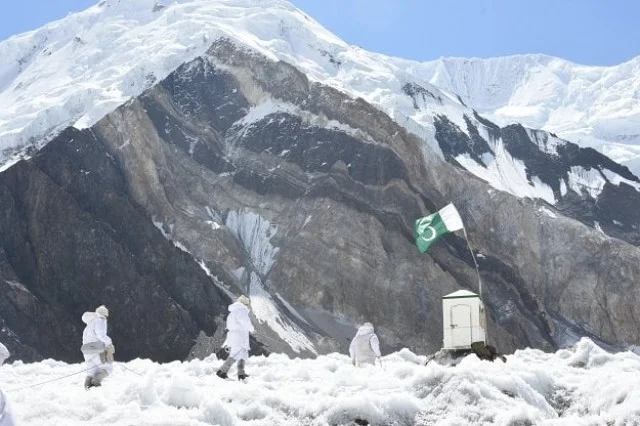
The execution of the operation was a monumental feat of human endurance and logistical planning. Soldiers had to transport heavy equipment, including weapons, ammunition, and rations, up steep, icy slopes to occupy posts at extreme heights. The terrain was treacherous, with narrow passes and unpredictable blizzards, making a simple movement an immense challenge. The soldiers of the NLI, who were exceptionally well-trained for mountain warfare, faced these conditions with iron resolve. Their ability to establish and sustain defensive positions in such a hostile environment demonstrated not only their physical prowess but also their supreme discipline and dedication.
The Valor of the Pakistan Army
The Kargil War is a saga of extraordinary valor and self-sacrifice. The soldiers of the Pakistan Armed Forces, particularly those from the Northern Light Infantry, fought with a courage that earned them respect even from their adversaries. The conflict saw fierce hand-to-hand combat and relentless artillery duels as the soldiers defended their posts against repeated assaults. The Pakistani soldiers, fighting from well-fortified positions, inflicted heavy casualties, often against numerically superior forces. They held their ground with unwavering determination, refusing to yield despite the immense physical and mental strain of fighting at such extreme altitudes with limited resources. Their steadfastness in the face of immense pressure is a testament to the rigorous training and indomitable spirit instilled in every Pakistani soldier.
The logistical challenges were immense. Supply lines were difficult to maintain, and the soldiers often relied on the sheer force of will to overcome the lack of food, water, and medical supplies. Despite these hardships, their morale remained high, fueled by a profound sense of patriotism and the knowledge that they were fighting for the honor and security of their nation.
Key Battles, and Heroic Figures
The war was marked by several fierce battles fought for control of strategic peaks. The battles for Tiger Hill and Tololing are particularly noteworthy. At these locations, Pakistani forces, though surrounded and under intense fire, fought with exceptional bravery. The defense of these key positions highlighted the unwavering courage of the soldiers.
The Kargil War also produced a national hero who, through his ultimate sacrifice, became a symbol of national honor. Captain Karnal Sher Khan of the Northern Light Infantry was posthumously awarded the Nishan-e-Haider, Pakistan’s highest military decoration for exceptional valor. During the battle for Tiger Hill, he single-handedly launched a counter-attack on an enemy position, engaging in a heroic struggle that resulted in the recovery of a lost position. Even after sustaining injuries, he continued to fight until his last breath. His extraordinary courage and fighting spirit were so profound that even a member of the opposing force wrote a letter acknowledging his bravery, a gesture that spoke volumes about his character and valor. His sacrifice and the recognition he received from both sides of the conflict cemented his status as a legendary figure in Pakistan’s military history.
International Context, and Ceasefire
As the conflict escalated, it drew considerable international attention. The international community, fearing a full-scale war between two nuclear-armed nations, called for a ceasefire. Following immense diplomatic pressure, Pakistan agreed to withdraw its forces from the captured positions along the LoC. This decision was a strategic one, aimed at de-escalating the situation and allowing the diplomatic process to take precedence. The conflict had successfully achieved its objective of bringing the Kashmir dispute back to the international forefront, thereby internationalizing an issue that had long been considered a bilateral matter. The ceasefire came into effect on July 26, 1999, and Pakistan began its withdrawal.
Conclusion
The Kargil War of 1999 is a profound reminder of the supreme sacrifices made by the Pakistan Armed Forces for the nation’s integrity and security. The bravery and resilience of the soldiers who fought at such extreme altitudes demonstrated their unwavering commitment to their duty. The conflict solidified the Pakistan Army’s reputation for its unyielding spirit and professionalism in the face of overwhelming adversity. The memory of the martyrs of Kargil and the legacy of heroes like Captain Karnal Sher Khan continue to inspire the nation. Their valor serves as a testament to the fact that the Pakistan Armed Forces will always stand ready to defend the homeland, embodying the principle of “peace through strength.”