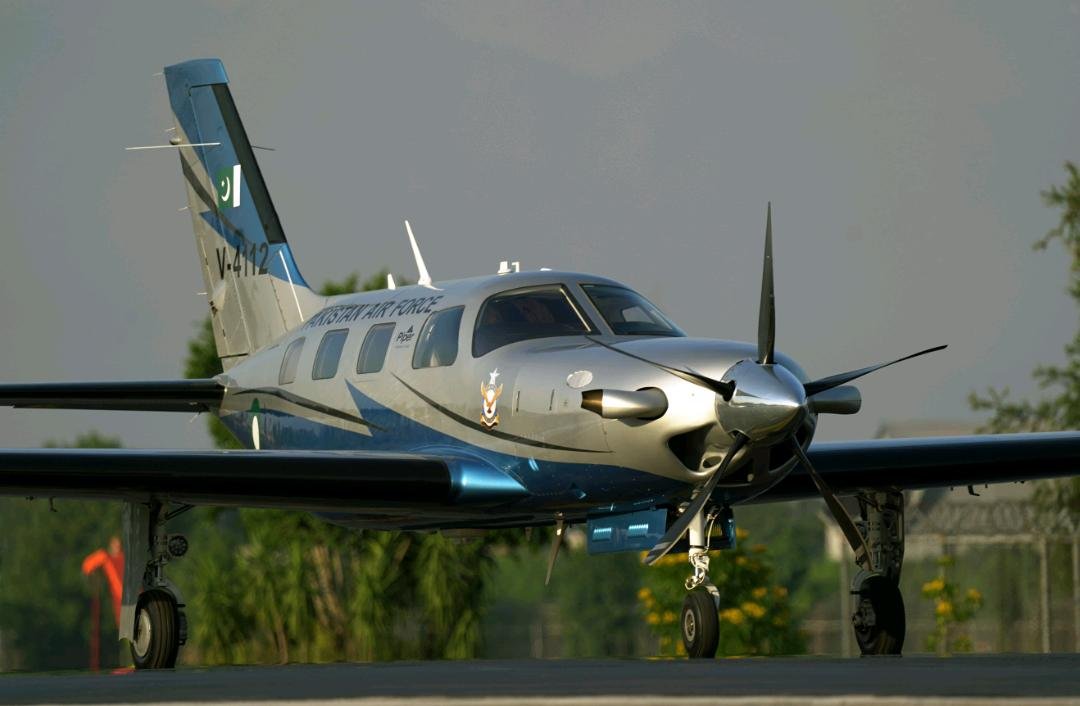
On this day in military aviation history, the Pakistan Air Force (PAF) proudly celebrates the 60th anniversary of the establishment of No. 41 Squadron. Affectionately known throughout the armed forces as the “Albatross,” the distinguished unit epitomizes the core military values of operational adaptability, dedicated tactical service, and understated professional excellence.
Today in History
No 41 Squadron of Pakistan Air Force, affectionately referred to as the “Albatross”, epitomizes the ideals of adaptability, dedicated service and understated excellence. Founded on 23 June 1966, at PAF Base Peshawar, the distinguished Squadron began its journey… pic.twitter.com/HifwNhZVLn
— DGPR (AIR FORCE) (@DGPR_PAF) June 23, 2026
From Humble Origins to Strategic VIP Transport
The squadron’s storied history began on June 23, 1966, when it was officially raised at PAF Base Peshawar as the No. 41 Light Communications Flight. Originally established to fulfill critical auxiliary support roles in the immediate aftermath of the 1965 war, the flight initially operated a modest, resource-efficient fleet of vintage piston-engine aircraft, including a single Beechcraft, an Aero Commander, and a T-6G Harvard trainer. The unit’s early mandate focused on essential short-range liaison duties, multi-role communications, mail delivery, and the secure transport of PAF personnel between regional commands.
As the strategic requirements of the Pakistan Air Force evolved, the unit underwent a profound operational transformation. Recognizing its growing importance, the PAF re-established the flight in 1985 as the No. 41 VIP Light Communications Squadron. To position the unit closer to the national leadership, federal command centers, and strategic government facilities in Islamabad, the squadron officially relocated its headquarters to PAF Base Chaklala, now known as PAF Base Nur Khan, on August 29, 1988.
The Journey of Fleet Modernization
To overcome the performance limitations and restricted operational reach of its early propeller-driven aircraft, No. 41 Squadron pursued an aggressive, decades-long modernization path. This evolution saw the systematic introduction of increasingly advanced utility, twin-engine, and jet platforms to meet the rigorous demands of executive transport and domestic air mobility.
The squadron expanded its capabilities by integrating the widely utilized Cessna 172 into its inventory, followed by the acquisition of a twin-engine Piper Seneca-II, which was transferred to the fleet from the Pakistan Atomic Energy Commission to bolster intermediate-range VIP missions. The unit further diversified its operational capacity by conducting successful flight trials for the rugged Harbin Y-12 utility turboprop, subsequently inducting the platform into active service alongside the Beechcraft Baron.
Entering the modern era of high-speed executive transport, the Albatross made a massive technological leap by inducting a fleet of Brazilian-manufactured Embraer Phenom 100 very light twin-engine jets, later augmented by upgraded Phenom-100E variants. This transition provided the squadron with superior range, rapid cruising speeds, and elevated comfort levels for high-priority state personnel. This cutting-edge modernization matrix was further solidified with the addition of the high-performance Piper M600 single-engine turboprop, featuring advanced digital avionics designed to execute short-field landings across Pakistan’s highly diverse and demanding geographic terrains.
Breaking Barriers and Lifesaving Humanitarian Legacies
Beyond its everyday executive and logistical commitments, No. 41 Squadron has written itself into national history through landmark progressive milestones and vital humanitarian interventions. The unit broke institutional barriers in transport aviation when Squadron Leaders Nadia Gul and Saira Amin successfully qualified as aircraft commanders of the Embraer Phenom 100 and the Harbin Y-12, respectively. Their achievements marked the first time female aviators in Pakistan attained the rank of captain on these complex multi-engine weapon systems, paving the way for future generations of female pilots.
The true mettle of the Albatross, however, has consistently shone brightest during times of national crisis. During the catastrophic 2005 Kashmir Earthquake, the squadron’s Harbin Y-12 aircraft were deployed around the clock, flying endless hazardous sorties to transport vital international relief goods from hubs across the country directly into the severely damaged airfields of Muzaffarabad. Operating under extreme pressure, the squadron also transformed its aircraft into makeshift air ambulances, evacuating critically injured citizens from remote northern valleys to specialized military hospitals. This tradition of selfless service was mirrored in recent years during the global pandemic, where the unit maintained continuous flight lines to deliver protective personal equipment, medical gear, and frontline supplies to remote airbases nationwide.
Guardians of the Strategic Skyway
Today, operating as a vital component of the prestigious No. 35 Air Mobility Wing under the Federal Air Command, the men and women of No. 41 Squadron stand as a powerful testament to the Pakistan Air Force’s enduring commitment to professionalism, technological innovation, and national service. Six decades after its first taxi run in Peshawar, the Albatross remains a highly disciplined, spiritually anchored vanguard—perpetually poised at the cutting edge of military air mobility, and ever ready to answer the call of the nation.