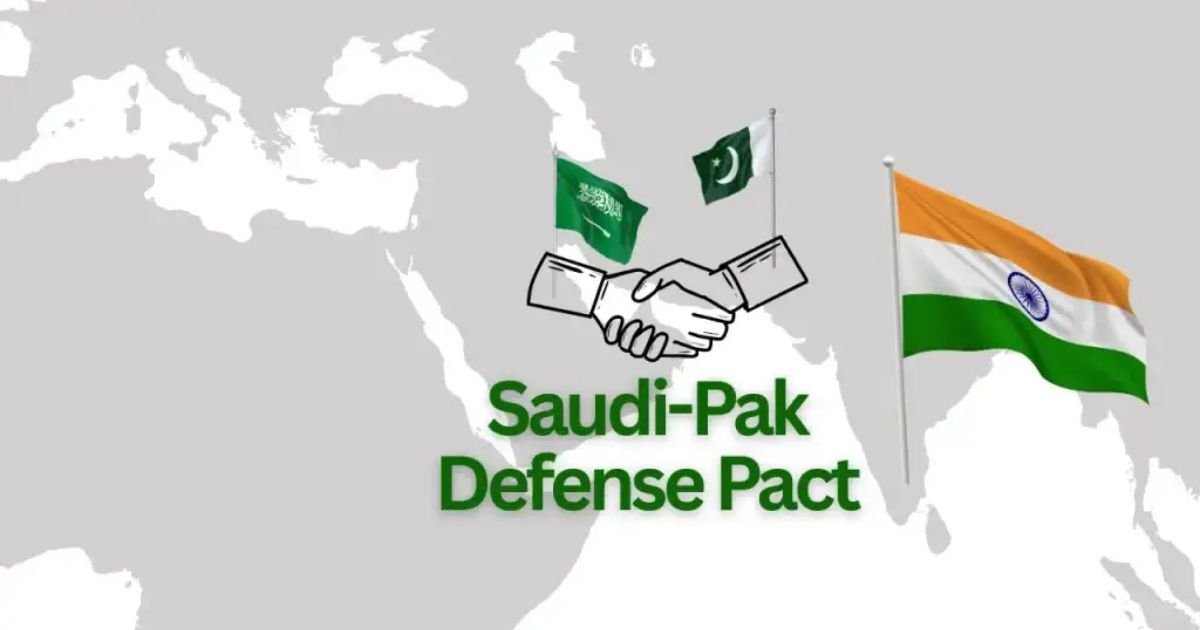
Pakistan and Saudi Arabia signed a Strategic Mutual Defence Agreement on September 17, 2025, in Riyadh. The agreement assured that aggression towards one nation would be considered aggression towards both. The agreement was signed by Prime Minister Shehbaz Sharif and Crown Prince Mohammed bin Salman, officially formalizing their long-standing partnership.
The Ministry of External Affairs in India responded cautiously. Spokesperson Randhir Jaiswal said that India was aware of the deal and would review its security implications. He reaffirmed the strategic alliance between Riyadh and New Delhi. Indian coverage highlighted the most important aspect of mutual defence. Authorities stressed that the agreement was an extension of decades of cooperation, not a threat. Indian media coverage was marked by a tone of caution, concern, and hedging. Most mainstream outlets adopted a more diplomatic approach rather than outright condemnation, emphasizing that India would need time to evaluate the consequences but hoping Riyadh would remember shared interests and sensitivities.
Our response to media queries on reports of the signing of a strategic mutual defence pact between Saudi Arabia and Pakistan
🔗 https://t.co/jr2dL0L4xP pic.twitter.com/Exlrm4wBEw— Randhir Jaiswal (@MEAIndia) September 18, 2025
Differences in Coverage: Headlines, Sourcing, Tone
The reaction of the Indian media to the Pakistan-Saudi mutual defence pact was more of insecurity than sober analysis. Hindustan Times described it as a win-win for Pakistan but framed it as a threat to India. The analysts emphasized that Pakistan was now able to tap American, Chinese, and Saudi armaments, indicating their anxieties about the increasing level of Islamabad. They framed the agreement as disruptive, rather than appreciating it as a sovereign and historic alliance. This neglected the decades of Saudi-Pakistan military and political cooperation. The outrage also failed to appreciate the fact that both the U.S. and China had not criticized the agreement. The fact is that it is perceived as a threat only in New Delhi, since it gives more power into the hands of Pakistan in the region.
Indian outlets diverged sharply in framing the pact. The Times of India (TOI) ran a headline on Sept 19: “Mutual interests & sensitivities’: India reacts to Saudi-Pakistan defence pact.” It highlighted New Delhi’s “extensive strategic alliance” with Riyadh while speculating about nuclear dimensions. Analysts suggested Saudi Arabia could gain access to Pakistan’s nuclear shield. The tone was cautious yet laced with alarmist undertones. In contrast, The Indian Express took a diplomatic line. Its Sept 19 headline read: “Saudi and Pakistan seal defense pact; Delhi says Riyadh kept it in the loop.” The report cited Indian sources saying Saudi officials had briefed Delhi. Even its editorial argued India should not be alarmed, dismissing nuclear-shield talk as exaggerated.
NDTV’s coverage was restrained. A Sept 18 report headlined “India’s measured response as Pak-Saudi announce mutual defense pact” stressed continuity, quoting the MEA’s view that it formalized an old arrangement. Its world section later carried Reuters analyses on nuclear concerns, but the India desk kept to official statements. By contrast, TOI’s political desk highlighted domestic fallout. Indian TV channels like India Today and Zee News went further with dramatic visuals, branding the deal an “Islamic NATO” or focusing on Pakistan’s nuclear role. Overall, headlines ranged from neutral (“measured response”) to alarmist (“grave concern”), reflecting clear divides in sourcing, tone, and editorial intent.
This obsession with an alleged nuclear umbrella reflects the hypocrisy of India. India, itself a non-NPT nuclear-weapon builder, is the one to preach to Pakistan on proliferation. The unfriendly reporting is an indication of frustration. Pakistan has gained legitimacy, monetary assistance, and military collaboration with one of the richest and most powerful Muslim nations. India is ambitious to dominate South Asia, but its own media is showing anxiety due to the increasing strategic weight of Pakistan. Quite on the contrary, the treaty reaffirms that Pakistan is perceived as a stable and valuable security ally, which further reflects in Indian criticism.
Key piece on the Pak-Saudi strategic pact raises key questions –
1. Will Pak’s nuclear umbrella now include Saudi?
2. “The agreement [per Pak] states that any aggression against either country shall be considered an aggression against both” – Soes that mean that Saudia Arabia…— Vishnu Som (@VishnuNDTV) September 18, 2025
Cross-Check: Facts vs. Hype
A lot of the Indian coverage seems exaggerated compared to Pakistani and neutral reporting. Credible sources such as Reuters and Al Jazeera term the agreement as institutionalizing already existing collaborations, and not targeting India. Saudi officials emphasized that it was not an answer to particular countries but the formalization of long-standing relationships. Saudi Deputy Defense Minister Khalid bin Salman even made it a universal connection, and one front against any aggressor, always and forever, stressing the defensive universal nature thereof. The Pakistani leaders have made it quite clear: Defense Minister Khawaja Asif made a comparison of it to Article 5 of NATO, focused on mutual defense.
KSA and Pakistan..
One front against any aggressor..
Always and forever.🇸🇦🇵🇰 https://t.co/2rYaZEVIjt— Khalid bin Salman خالد بن سلمان (@kbsalsaud) September 17, 2025
Pakistani media, on the other hand, framed the pact as a strategic win. Dawn described it as a diplomatic and geopolitical victory in line with regional fears of Israel and U.S. retrenchment. Tribune Pakistan emphasized decades of military cooperation that is now formalized in the deal. International experts likewise point to Gulf security shifts (Israel’s aggression and declining U.S. guarantees) as the drivers, not any anti-India posture. Taken together, Indian coverage often stripped the pact of its defensive context and long history, portraying hype over nuclear threats while ignoring the reality of continuity and shared security.
You May Like To Read: Strategic Triumph of Pakistan Navy, Operation Dwarka of 1965
Implications and Recommendations
The coverage gap has some lessons for Pakistani diplomacy. Islamabad needs to emphasize the defensive nature of the pact. Fear-driven accounts can be softened with references to Saudi pledges that relations with India are stronger than ever. The Foreign Office and the Pakistani media should emphasize the cooperative clause, an attack on one is an attack on both, and remind the audience of the historic alliance behind it. The false claims of some kind of secret umbrella can be neutralized by clear statements that the agreement states that it mentions no nuclear weapons, which the experts confirm. Context is important: the agreement is based on the Gulf-Israel tensions and emerging requirements related to the security situation in the region, and not the antagonism towards India. Other international analyses, such as Reuters and Belfer, put it in terms of institutionalizing ties. Distortions can be corrected by quoting these.
Pakistan is also supposed to be proactive in addressing the media across the world. Interviews can be used by ministers and diplomats to emphasize the consultative and defensive spirit of the pact. Op-eds should be published in local and international newspapers by analysts and scholars to correct misunderstandings. Dawn has already provided reasons why the pact is not a Pan-Islamic war pact but a reaction to Gulf realities. Emphasis on common religion, military cooperation, and an eight-year alliance highlights continuity. In the event of misinformation (which could be a statement of nuclear sharing), authorities need to react swiftly through textual evidence and briefings.
It is essential to have the same message. Pakistan can assume responsibility by framing the pact as a means of enhancing joint deterrence and peace. It can also indicate how alliances, even in the case of U.S. partners, have frequently been defensive without necessarily subjecting members to war. This kind of positioning will disarm alarmist stories and make the international and Indian public understand the actual nature of the pact: a defensive alliance of mutual security interests, not a maneuver to attack India.
You May Like To Read: Pakistan-Saudi Mutual Defense Pact: Nuclear Security Implications