
The Inter-Services Public Relations (ISPR) has issued a response addressing Indian media’s production regarding “Operation Sindoor,” characterizing the documentary as a factually inaccurate, highly dramatized reconstruction designed to reshape the narrative around “Marka-e-Haq.”
The production relies on selective interviews, emotional narration, and cinematic embellishments that contradict operational timelines, battlefield records, and prior statements made by Indian military authorities.
Deputy Prime Minister/Foreign Minister Senator Mohammad Ishaq Dar @MIshaqDar50 spoke with Turkish Foreign Minister Hakan Fidan. They exchanged views on recent regional developments and discussed efforts to promote regional peace and stability.
FM Fidan invited DPM/FM to attend… pic.twitter.com/HV6X23hyIy
— Ministry of Foreign Affairs – Pakistan (@ForeignOfficePk) August 19, 2026
Narrative Contradictions and Chronological Inconsistencies
ISPR highlighted several core operational and timeline contradictions within the Indian presentation:
- Timeline Misalignment: The documentary attempts to link a speech delivered by Pakistan’s Chief of Army Staff on April 16, 2025, to the Pahalgam incident of April 22, 2025. While official Indian claims previously asserted that three alleged perpetrators of the Pahalgam incident were eliminated on July 28, 2025 almost 82 days after Operation Sindoor. The documentary presents the May 7, 2025 strikes as a retaliatory punishment for the same event, creating an unresolvable timeline discrepancy.
- Operational Admissions: Despite asserting complete mission success, interviews within the production confirm widespread Pakistani air, missile, and long-range loitering munition deployments, active air-defense engagements along the Line of Control, and sustained counter-strikes.
- Escalation and Cessation Dynamics: The narrative claims simultaneous escalation dominance through deep strikes alongside a deliberate strategy to provide an “exit window.” Furthermore, the documented cessation of hostilities was achieved through direct communication between the Director Generals of Military Operations (DGMOs) and facilitated via diplomatic channels, contradicting assertions of an unconditional unilateral outcome.
Battlefield Records and Counter-Operations
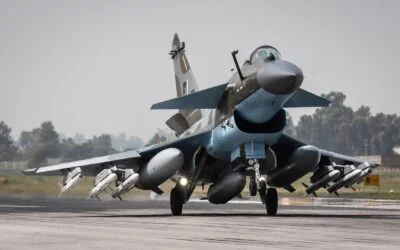
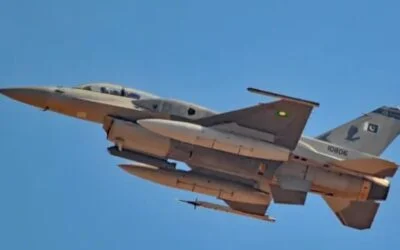
The statement reiterated the official record of Pakistan’s Armed Forces during Marka-e-Haq, noting the successful defense of national airspace resulting in the downing of eight military aircraft.
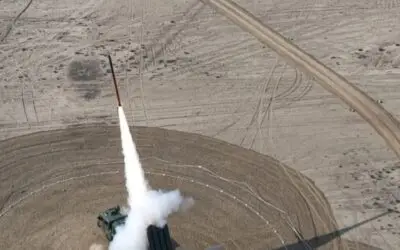
In response to initial Indian action, Pakistan executed Operation Bunyanum Marsoos, deploying Fatah precision-guided rockets, precision air munitions, loitering systems, and artillery against 26 designated military targets. These actions targeted facilities utilized in cross-border strikes and entities linked to subversion within Pakistan.
ISPR emphasized that Pakistan’s military posture relies on verified operational evidence, diplomatic exchanges, and international observers rather than dramatized visual productions.
While reaffirming Pakistan’s commitment to regional peace and strategic stability, the Armed Forces maintain operational readiness to defend national sovereignty and territorial integrity against any potential military misadventure.