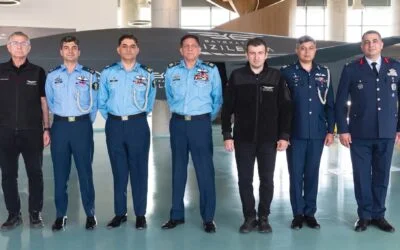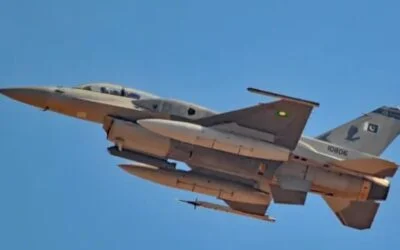
The Pakistan Air Force (PAF) marks the anniversary of the formal raising of its historic No 2 Squadron. Originally established on June 1, 1957, as the No 2 Fighter Conversion Squadron at Mauripur (now PAF Base Masroor), the unit laid the initial, firm bricks of the PAF’s jet-age training foundation.
Carrying forward the rich legacy of the Royal Pakistan Air Force (RPAF) Conversion School established in 1948, the squadron initially utilized Dakota, Fury, Tempest, and Harvard aircraft before evolving into the Jet Transition School under the command of Squadron Leader M. K. Abbasi. Equipped with Freighter Mk XXIII and Lockheed T-33 aircraft, it became the crucible for the nation’s pioneering jet pilots.
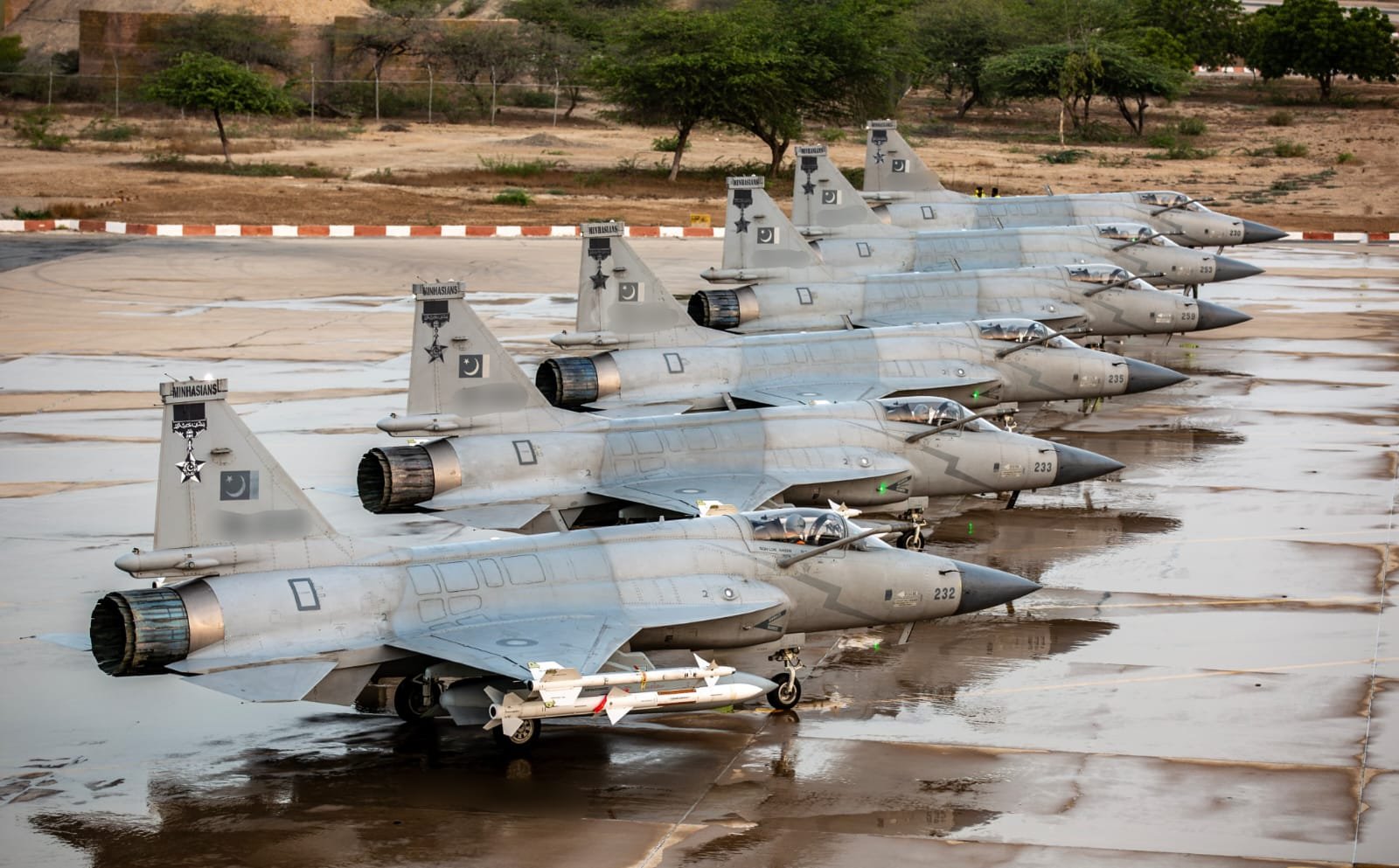
Today, its personnel proudly call themselves the “Minhasians”—a lasting tribute to Pilot Officer Rashid Minhas Shaheed, Nishan-e-Haider, the nation’s youngest martyr and a member of the squadron. Notably, No 2 Squadron holds the singular distinction of being the only unit in the entire Pakistan Air Force authorized to carry the Nishan-e-Haider—Pakistan’s highest gallantry award—directly upon its official squadron crest.
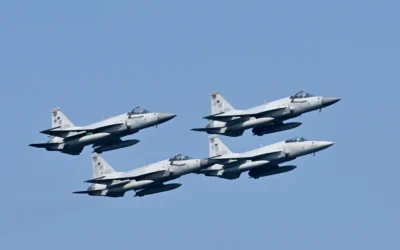
From its origins in fighter conversion, the squadron’s operational mandate has constantly shifted to match the strategic demands of modern aerial warfare. Following successive transitions through photo-reconnaissance, night interdiction bombing, and air superiority roles, the squadron currently operates the state-of-the-art JF-17 Thunder block fighters as a premier Multi-Role unit, standing guard over the nation’s airspace.
Today in History
On 01 June 1957, Pakistan Air Force formally raised No 2 Squadron as No 2 Fighter Conversion Squadron, equipped with T-33s and carrying forward the legacy of the RPAF Conversion School at Mauripur, established in 1948. Earlier the school had been equipped with… pic.twitter.com/QTWllpKWqZ
— DGPR (AIR FORCE) (@DGPR_PAF) May 31, 2026
Critical Analysis
The historical trajectory of No 2 Squadron offers deep insights into how the Pakistan Air Force manages institutional memory, tactical adaptation, and technological absorption:
The Operational Metamorphosis: From Trainers to Multi-Role Powerhouses
The operational history of No 2 Squadron acts as a microcosm for the evolution of the PAF itself. The squadron has undergone four distinct, massive shifts in its primary mission profile:
[1957] Fighter Conversion (T-33)
   │
[1972] Tactical Reconnaissance (RT-33)
   │
[1982] Night Interdiction Bomber (B-57)
   │
[1990] Air Superiority (F-7P)
   │
[2015-Present] Multi-Role Dominance (JF-17 Thunder)
This structural agility is highly unusual in military aviation, where squadrons typically retain fixed, traditional roles (e.g., pure interceptor or pure bomber). The PAF’s ability to seamlessly re-engineer No 2 Squadron’s doctrine from a training school to a night bomber unit, and finally into a front-line multi-role squadron, highlights a highly flexible command philosophy capable of reallocating human capital and material assets to meet emerging external threats.
The Strategic Pivot of the JF-17 Architecture
The induction of the JF-17 Thunder into No 2 Multi-Role Squadron in January 2015 marked a vital technological and logistics pivot. Prior to this, the squadron relied on imported, specialized platforms like the American B-57 or the Chinese F-7P.
By transitioning to the JF-17—co-developed and manufactured domestically at Pakistan Aeronautical Complex (PAC) Kamra—the squadron achieved true operational autonomy. In the current South Asian threat environment, a multi-role JF-17 squadron provides the PAF with a rapid-response platform capable of swinging between beyond-visual-range (BVR) air interception and precise maritime/ground attack missions without requiring separate, platform-specific fleets.
Institutional Lore as a Force Multiplier: The “Minhasian” Identity
In military sociology, symbols and martyrdom serve as critical psychological force multipliers. The rebranding of the squadron’s personnel as “Minhasians” following the heroic sacrifice of Pilot Officer Rashid Minhas on August 20, 1971, serves a distinct dual purpose:
-
Internal Deterrence & Morale: Embedding the Nishan-e-Haider onto the unit crest elevates the squadron’s status to an elite institutional fraternity, fostering an unyielding organizational culture among young incoming pilots.
-
Preservation of Core Values: By tying its institutional identity directly to the youngest recipient of the nation’s highest gallantry award, the PAF systematically operationalizes the ideals of extreme sacrifice, absolute loyalty, and operational precision across generational lines.
Legacy Absorption and Resource Management
The squadron’s history reveals a deliberate pattern of absorbing orphaned capabilities from other units to preserve specialized skill sets. For instance, absorbing photo-reconnaissance capabilities from No 20 Squadron in 1972, and taking over night interdiction tasks following the temporary number-plating of No 7 Squadron in 1982, shows tactical prudence. Rather than letting complex capabilities diminish during periods of structural reorganization, the PAF used No 2 Squadron as a reliable holding environment, ensuring the force retained its critical operational memory through periods of budgetary and geopolitical constraint.