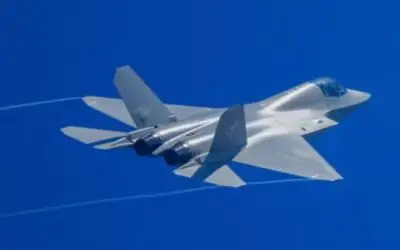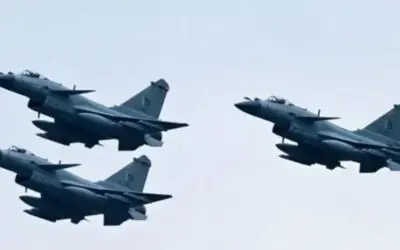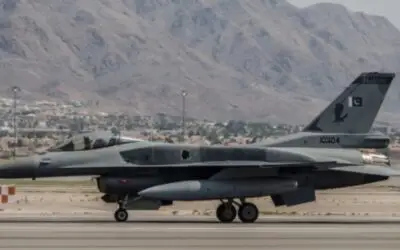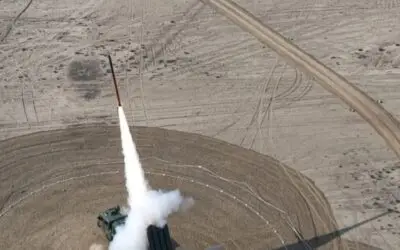
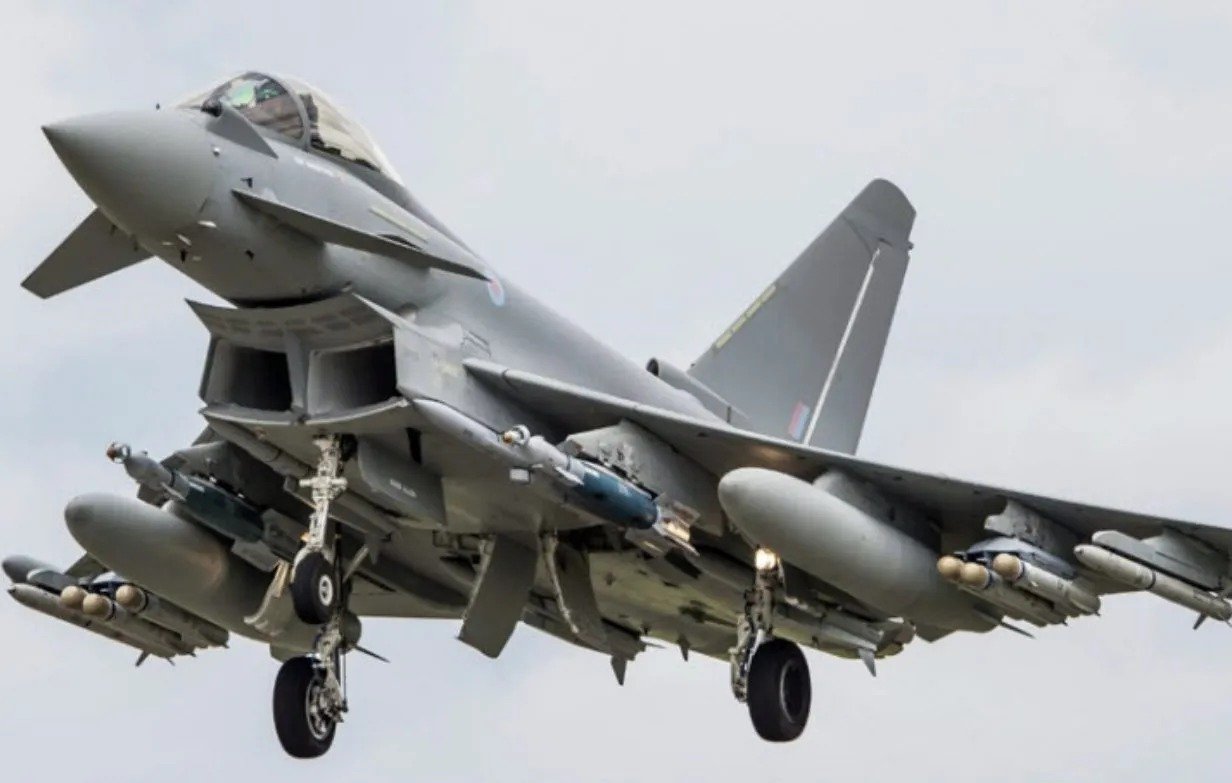
The Chengdu J‑10C is a Chinese-built, 4.5-generation multirole combat aircraft developed by Chengdu Aircraft Industry Group (CAC) for the People’s Liberation Army Air Force (PLAAF) and export clients, most notably the Pakistan Air Force (PAF). It is a modern evolution of the J-10 family, boasting major improvements in radar systems, avionics, weapons, and stealth features.
Airframe & Aerodynamics
The J-10C measures around 16.9 meters in length with a 9.8-meter wingspan and features a canard-delta wing configuration. Its airframe combines metal and composite materials and incorporates diverterless supersonic inlets (DSI), improving radar cross-section and aerodynamic efficiency. These changes enhance the aircraft’s agility, making it suitable for both air superiority and ground-attack roles.
Propulsion & Performance
Powered by a single WS-10B afterburning turbofan delivering about 144 kN of thrust, the J-10C achieves a thrust-to-weight ratio above 1.0, offering supercruise capability at ~Mach 1.1 and max speeds near Mach 2.0. It boasts a service ceiling of 18,000 meters and a combat radius ranging from 550 to 1,100 kilometers, depending on loadout.
Avionics & Sensors
One of the most significant upgrades is the integration of an active electronically scanned array (AESA) radar, which improves detection range, target tracking, and resistance to electronic jamming. The J-10C’s AESA radar gives it a target tracking edge in BVR (beyond-visual-range) engagements, especially when paired with advanced missiles like the PL-15. The glass cockpit also features a helmet-mounted display (HMD) and AI-assisted digital fly-by-wire controls.
Armament
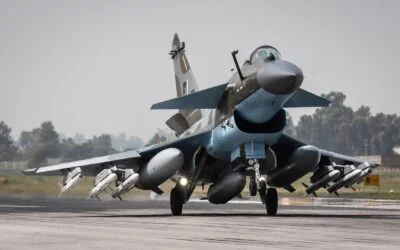
The J-10C carries a robust payload of up to 7,000 kg on 11 external hardpoints. Its standard internal weapon is the 23mm GSh-23 cannon. Externally, it can deploy a mix of air-to-air missiles, including the PL-10 and PL-15, alongside older variants such as the PL-12. It also carries precision-guided munitions like the LT-2 laser-guided bombs, LS-6 glide bombs, and the KD-88 air-to-surface missile, giving it a comprehensive strike package.
Electronic Warfare & Survivability
The J-10C includes a suite of electronic countermeasures, radar warning receivers, infrared search-and-track (IRST), and low-observable features. Although it lacks true stealth, its reduced radar signature and jamming capabilities significantly enhance survivability in contested airspace.
Combat Use & Global Interest
The J-10C gained attention after its reported use during the 2025 India-Pakistan air skirmish, where it allegedly scored a BVR kill against a Rafale using a PL-15 missile, prompting a strategic reassessment by regional air forces. The export variant J-10CE is already in service with Pakistan and has been offered to other countries seeking capable alternatives to U.S. and Russian platforms.