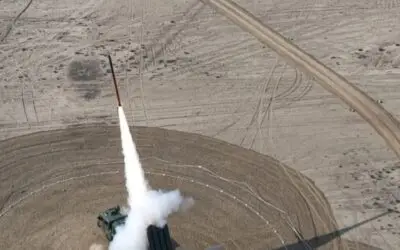
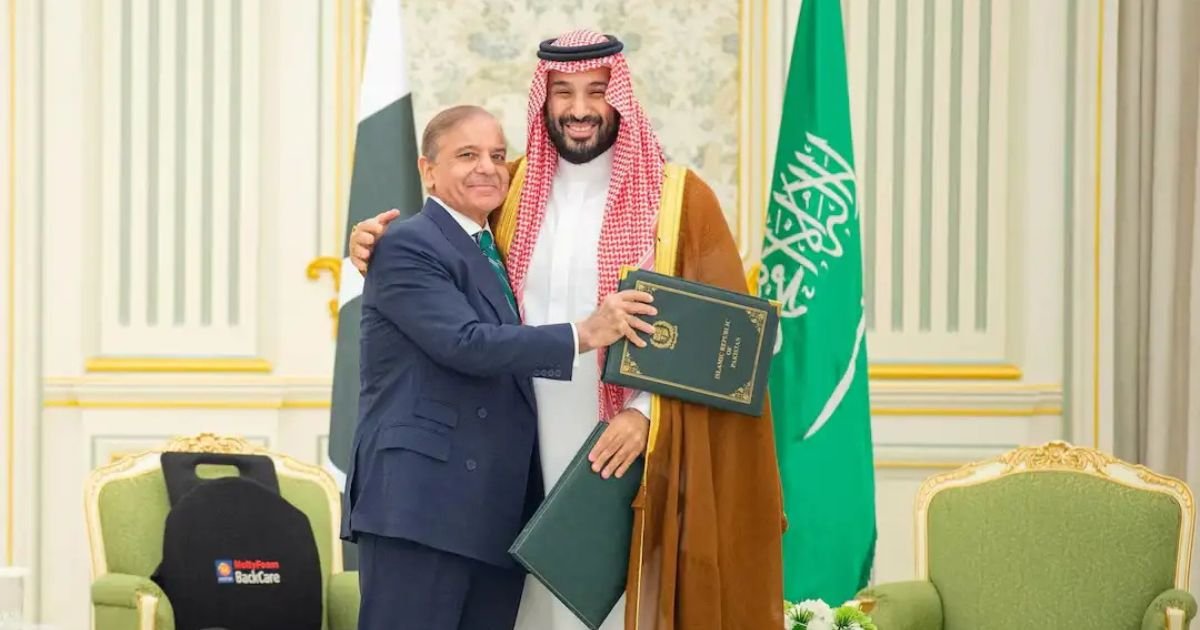
The Strategic Mutual Defense Agreement between Pakistan and Saudi Arabia was signed on 17 September 2025. It binds both states to defend one another. Any aggression towards one will be considered aggression towards both. It is a strictly defensive deal. The accord provides a de facto nuclear umbrella to the Gulf. This enhances the deterrence against Israel and Iran. It also attracts crucial Saudi investment. Any shared capabilities will be controlled by the command-and-control and security regime in Pakistan. Proliferation issues are still a concern, such as IAEA safeguards, export controls, and insider vetting. The agreement will define regional stability.
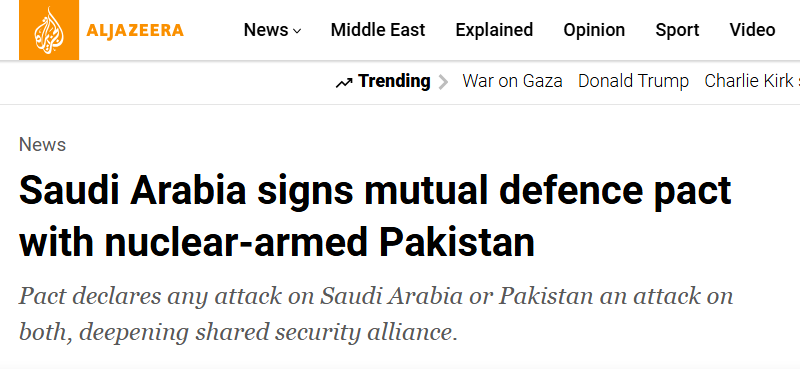
Source: Al Jazeera
Command, Custody, and Safeguards
Pakistan’s Prime Minister and the Saudi Crown Prince signed the defense pact. It legalizes decades of collaboration. Any aggression against one country will be considered as aggression against both. This expands the security umbrella of Pakistan. Islamabad has claimed that nuclear weapons will always be under Pakistani control. The highest decision-making body concerning nuclear issues is the National Command Authority (NCA), chaired by the Prime Minister. The Strategic Plans Division (SPD) is under the NCA, and it has strict custody of the arsenal. Weapons are under the complete control of the Pakistan Army. It implements a Personnel Reliability Program modeled on the U.S. practice. The two-person rule is also applied. It takes at least two individuals to execute any action that involves a nuclear weapon.
The arsenal is secured by electronic locks and rudimentary PAL systems. Chip-and-pin controls are coded to provide an additional level. No device can be armed without valid authentication, even if it was stolen. The C2 system of Pakistan, operated by the NCA and SPD, is still intact. Dual consent in this chain would be necessary in the event of any activation of shared capabilities under conditions of Article 5-style. Pakistan Nuclear Regulatory Authority (PNRA) has improved physical-protection regulations under Regulation PAK/925. These are based on IAEA guidelines. The measures include intrusion detection, two-person checks, and insider-trust protocols at nuclear sites. The layered defenses and institutional safeguards are the result of decades of development. The deterrent from Pakistan can only advantage Saudi forces under a strictly regulated command mechanism. Full security is maintained by Pakistani codes and personnel.
The world may worry about a back-door nuclear transfer of nuclear warheads. Such concerns are addressed by the established regime of Pakistan. There is no automatic sovereign transfer of weapons. The agreement simply initiates a Pakistani resolution to grant protection. In Pakistan, the Personnel Reliability Program, the two-person rule, and the PAL locks ensure that the risk of a diversion remains low. Cooperation on nonproliferation is also maintained between the countries. Pakistan assisted in the enforcement of the 2004 Strategic Trade Act, now under the jurisdiction of SECDIV. Islamabad may reinforce confidence further. An alternative is to sign a parallel agreement, which subjects new civilian facilities to IAEA peer review. These measures, together with the adoption of IAEA protection by Riyadh, assist in restricting the risks of proliferation and addressing the needs of regional security.
You May Like To Read: Operation Sarbakaf: Progress Report
Regional Deterrence and Stability Dynamics
In the case of Pakistan and Saudi Arabia, the agreement strengthens mutual deterrence. One of the main concerns mentioned by Saudi analysts is Israel. The nuclear-armed Israel deterrence gap is bridged by ties with the arsenal. The Shaheen-III of Pakistan already has a range of the Levant. The alliance, hence, expands the deterrent umbrella of Islamabad to the Middle East. The reasoning resembles Article 5 of NATO, in which U.S. nuclear defense extends to Europe. The Pakistani leaders put the pact in the same terms. Defense Minister Asif referred to it as a mutual umbrella arrangement. He cautioned that aggression against either of the states would be mutually defended. He further emphasized that the agreement is not directed at a particular country.
Pakistan’s defense minister said his nation’s nuclear program “will be made available” to Saudi Arabia if needed under the countries’ new defense pact, marking the first specific acknowledgment that Islamabad had put the kingdom under its nuclear umbrella https://t.co/qH47dd8Y2e
— Hassan I. Hassan (@hxhassan) September 19, 2025
The agreement will reset the regional balance. India has already vowed to examine the implications for their security. Riyadh will hedge itself against Tehran’s ambitions. Saudi officials have hinted that they could follow suit in case Iran becomes nuclear. Israel, which maintains ambiguity regarding its military capabilities, will now observe. The fact that Pakistan is the only Muslim majority nuclear power now finds its way into the Gulf politics directly. The responses of the Chinese and the U.S. will be different. Washington can be concerned with proliferation and loss of influence. Beijing, which is a close ally of Pakistan, will most probably view the pact as a win for its partner.
Our response to media queries on reports of the signing of a strategic mutual defence pact between Saudi Arabia and Pakistan
🔗 https://t.co/jr2dL0L4xP pic.twitter.com/Exlrm4wBEw— Randhir Jaiswal (@MEAIndia) September 18, 2025
The arrangement represents a more lasting change. Gulf states are losing confidence in relying solely on U.S. security assurances. This pushes Saudi Arabia and other GCC members to collective defense. An umbrella led by Pakistan can be used to bridge that gap. Critics cite the limitations of Pakistan and say that all resources concentrate on India. The pact is just a formalization of practice. Pakistan has decades of troop presence in Saudi Arabia and has trained thousands of Saudis. The doctrine now covers strategic assets. The agreement enhances the deterrence of both nuclear and conventional threats, such as Israel, Iran, and the Houthis. It has no impact on Pakistan’s nuclear thresholds. Rather, it connects the fundamental security dilemma of Pakistan in South Asia to a broader Islamic security paradigm.
The Islamic Republic of Pakistan and The Kingdom of Saudi Arabia have signed a Historic Strategic Mutual Defence Agreement (SMDA)
Building on the historic partnership extending for nearly eight decades, based on the bonds of brotherhood and Islamic solidarity, as well as shared… pic.twitter.com/ma4ZhCoHMI
— Government of Pakistan (@GovtofPakistan) September 17, 2025
Policy and Technical Recommendations
To gain confidence and maintain stability, Pakistan must establish permanent liaison cells with the Saudi command and conduct nuclear-security exercises once a year with common early-warning procedures. Invitations to IAEA or U.N. observers can be taken as a sign of transparency. Saudi-centric funds are recommended to enhance intrusion monitoring, cyber protection, and widen the Personnel Reliability Program, as PNRA still implements the IAEA standards and welcomes peer reviews. Diplomatically, Islamabad can reassure the neighbors with risk-reduction talks with India and Iran and reiterate that its weapons are purely defensive. Credibility would be enhanced with joint participation in global nonproliferation forums and support of a WMD-free Middle East. These steps include security, technological upgrades, and outreach, which serve as a stabilizing factor and strengthen the image of Pakistan as a responsible nuclear power.
You May Like To Read: Commander Bahrain National Guard Meets PAF Chief, Vows Deeper Defence Cooperation