In early 2026, Pakistan moved to convert its domestic air power into export revenue by negotiating fighter-jet deals with Saudi Arabia and Bangladesh. Pakistan’s air chief met Bangladesh’s counterpart to discuss the sale of JF-17 Thunder jets to Dhaka. At the same time, Pakistan is negotiating to exchange $2-4 billion in Saudi loans for the purchase of JF-17 fighters. These moves come as Pakistan’s military promotes the JF-17’s recent combat record (from clashes with India) and low cost to win new customers.
Breaking:— Pakistan and Saudi Arabia in talks about the JF-17 thunder fighter jets sale to the Saudi Kingdom.
— Pakistan is likely to settle its $4B oil payments to Saudi Arabia as part of a mega defence deal with Kingdom. pic.twitter.com/sNPFHcQAEc
— South Asia Index (@SouthAsiaIndex) January 7, 2026
Just IN:— Pakistan and Bangladesh are discussing a defense agreement that could include following:
— JF-17 aircraft sale to Bangladesh
— Pak military base in Bangladesh
— Air Defence Radars sale to B’desh
— Intelligence & Resource Sharing— South Asia Index (@SouthAsiaIndex) January 7, 2026
Technical Overview of the JF-17 Thunder
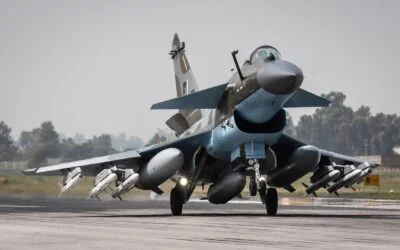
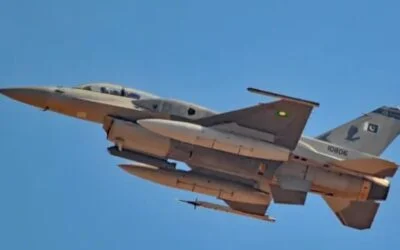
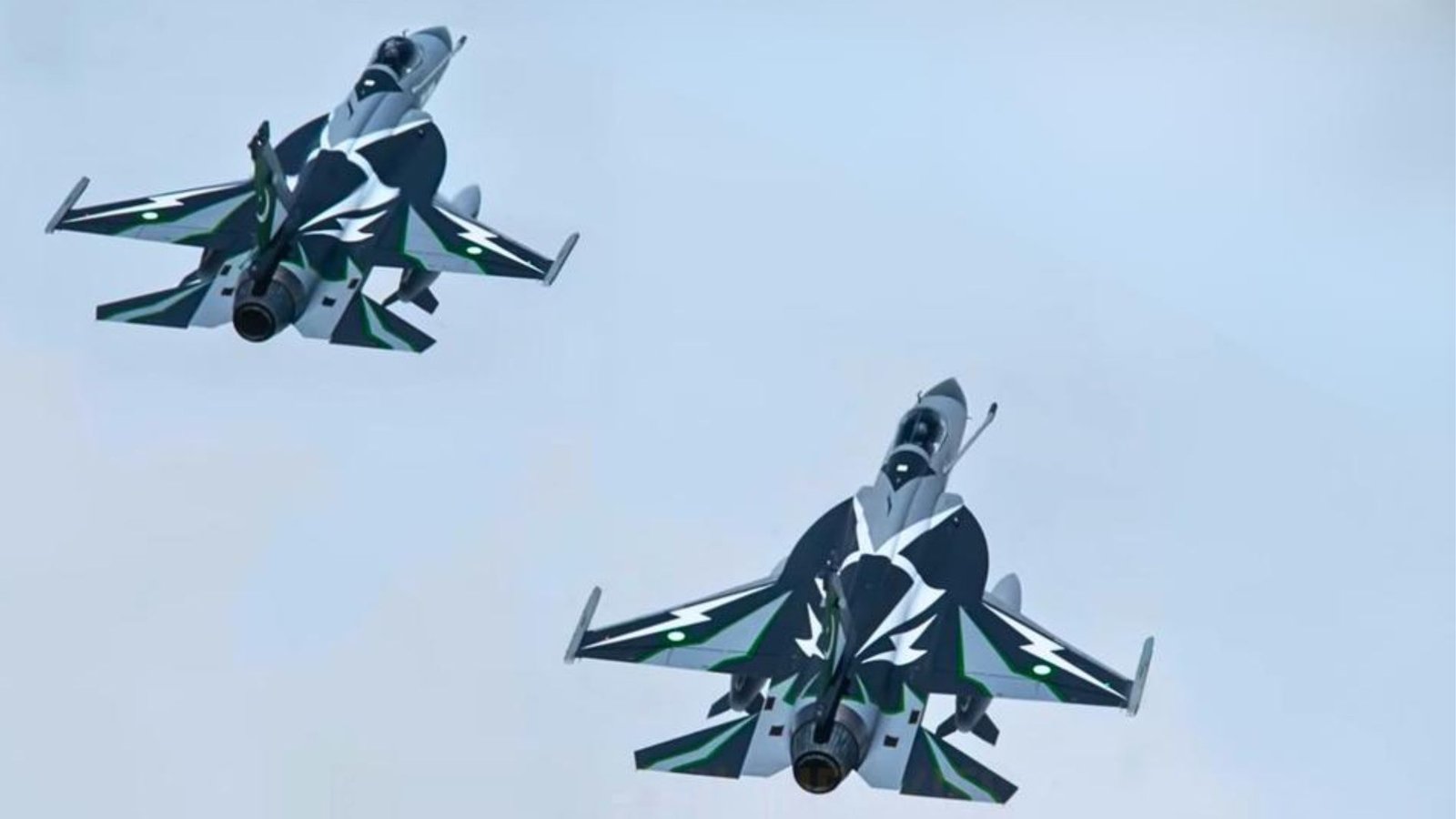
A Pakistani JF-17 Thunder multirole fighter on display (Dubai Airshow, Nov 2025). The JF-17 Thunder is a single-engine, lightweight, multirole fighter. The JF-17 Thunder was jointly developed by China’s Chengdu Aircraft Corporation and Pakistan’s Aeronautical Complex. Its latest Block-3 variant (introduced in 2020) is a 4.5-generation aircraft that carries advanced avionics, an active electronically scanned array (AESA) radar, electronic warfare systems, and both air-to-air and air-to-ground missiles. Unlike fifth-generation stealth jets, the JF-17 has no stealth shaping and is designed for high maneuverability at medium and low altitudes. The Air Force calls it “potent” and “agile” with good survivability.
Key Facts about the JF-17’s Design and Cost
The JF-17 is powered by a single Russian RD-93 turbofan (derived from the MiG-29 engine) and a Chinese/Pakistani-built airframe (58% of its production is in Pakistan). Block-3 jets carry beyond-visual-range missiles and modern weapons and have capabilities similar to jets like Sweden’s Gripen or China’s J-10. Estimates put each JF-17 at about $25-30m, which is much cheaper than Western fighters (e.g., a Rafale ~$90m). An Islamabad analyst says the JF-17’s appeal is based on “lower price, flexible weapons integration, training, spares, and generally fewer Western political strings”. In short, it is a “good enough” multirole jet for air forces that are modernizing on tight budgets.
The JF-17’s performance has been battle-tested in the recent India-Pakistan skirmishes, something Pakistan has used to market the jet. In May 2025, Pakistan declared it shot down some Indian fighters in four days of aerial combat; later, Indian authorities acknowledged losses but without any details. Pakistan points to this success as having been achieved against “much more expensive Western and Russian systems,” making the JF-17 “an attractive option” for other air forces. In summary, the JF-17 offers modern capabilities at a price suitable for the export market; it is a good platform for exports to developing air forces.
Strategic and Defense Diplomacy
The JF-17 deals have obvious strategic purposes for Pakistan’s foreign policy.
Saudi Arabia: Pakistan and Saudi Arabia signed a formal mutual defense pact in September 2025, in which an attack on one shall be considered an attack on both. This strengthened a decades-old security relationship, where Pakistan has long trained and advised Saudi forces while Riyadh has repeatedly bailed out Pakistan financially. The current jets-for-loans talks (valued at some $4-6 billion) are embedded in this framework. For Pakistan, selling JF-17s to Saudi Arabia cements the alliance and demonstrates loyalty (after Islamabad stood by the Gulf kingdom during crises in Yemen and Afghanistan). For Saudi Arabia, acquiring JF-17s (and training from Pakistan) is part of a strategy to diversify its military ties at a time when it reassesses its reliance on the U.S. – Riyadh has been offered U.S. F-35s, but long delivery times and political rows have pushed it to look at alternatives. Analysts point out that Saudi talks with Pakistan indicate how Riyadh is restructuring its security partnerships “to hedge against uncertainty about U.S. commitments” in the region.
#BREAKING Pakistan, Saudi Arabia in talks to convert nearly $2B Saudi loans into a JF-17 fighter jet deal.
— Reuters pic.twitter.com/WVkWjv7ZdT
— Mansoor Ahmed Qureshi (@MansurQr) January 7, 2026
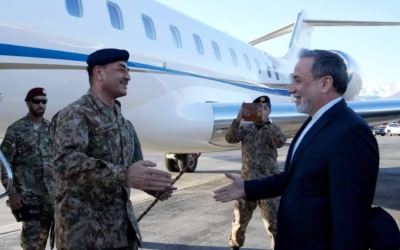
Bangladesh: The talks in Islamabad mark a thaw in Pakistan-Bangladesh relations. Since the collapse of the government of Sheikh Hasina in 2024 and the installation of an interim regime headed by Nobel laureate Yunus, Dhaka has been trying to expand the relationship. Military cooperation is an important aspect: Pakistan hosted visits by Bangladeshi officers and promised to expedite the delivery of training aircraft (Super Mushshak) as well as support for the Bangladeshi Air Force, whose fleet is becoming outdated. The Pakistani statement stresses “strong historical ties” and a “common resolve to strengthen the defense cooperation”. For Bangladesh, at odds with India of late, JF-17 purchases (alongside other Western and Chinese platforms) would diversify suppliers. Training with the PAF and incorporation of the radar systems would strengthen military-to-military ties. India has taken note, its foreign ministry says it is “closely monitoring” the Bangladesh-Pakistan JF-17 talks “as a matter of national security”.
#BREAKING
Bangladesh Air Force chief Air Chief Marshal Hasan Mahmud Khan visits Pakistan. A potential deal to be signed with Pakistan for JF-17 thunder block 3 and Super Mushak aircraft from Pakistan for BAF pic.twitter.com/QdnsX5aKNc— Defense Technology of Bangladesh-DTB (@DefenseDtb) January 6, 2026
🚨 URGENT | DEFENCE UPDATE – Bangladesh Air Force buying JF-17 Block III Light Multi-Role Fighter Aircraft, Super Mushak Trainer Delivery Fast-Tracked, Huge Training & Air Defence Cooperation Package In the Works🚨
Bangladesh Air Force Chief Air Chief Marshal Hasan Mahmood Khan,… pic.twitter.com/WOXPgaNhnc
— BDMilitary (@BDMILITARY) January 6, 2026
In both cases, the deals are instruments of defense diplomacy. They indicate Pakistan’s desire to be a security partner in the regions of its interest. In the Middle East, the sale of fighters places Pakistan into the Gulf security agendas. In South Asia, supporting Bangladesh’s Air Force subtly balances Indian influence and provides Dhaka with assurance of other partners. More broadly, Pakistan’s recent arsenal of sales (to Libya’s General Haftar, Sudan’s army, etc.) demonstrates that it is seeking political allies anywhere it can, even in conflict zones. Each aircraft sold is accompanied by long-term relations: maintenance contracts, training programs, and officer exchanges. As such, the JF-17 deals help extend Pakistan’s strategic footprint beyond its borders.
Pakistan has reached a deal worth over $4 billion to sell military equipment to the Libyan National Army, four Pakistani officials said, despite a U.N. arms embargo on the fractured North African country. https://t.co/xls8aQaq99
— Reuters Africa (@ReutersAfrica) December 22, 2025
Last 24 hours:
— Saudi Arabia is set to acquire JF-17 thunder fighter jets from Pakistan in a $4B deal, half of which would be loan swap while rest would be cash.
— Pakistan and Sudan are finalizing a $1.5B defence deal which includes the JF-17 fighter jets, drones & Air…
— South Asia Index (@SouthAsiaIndex) January 9, 2026
Economic Implications for Pakistan’s Defense Industry
Pakistan’s arms exports are increasingly viewed as an important economic opportunity rather than just a strategic activity. Historically, these exports brought in some $300 million to $500 million per year, most of it from small arms, ammunition, and limited aircraft sales. But recent and potential deals may change that dramatically. In late 2025, Pakistan agreed to sell 16 JF-17 fighter jets and 12 Super Mushshak trainers to Libya’s eastern military for around $4.6 billion, and another deal valued at around $1.5 billion to equip jets and over 200 drones to Sudan’s regular army is coming close to completion. Pakistan is also in talks with Bangladesh on a major fighter purchase and with Saudi Arabia on a possible jets-for-loans package involving about $4 billion of aircraft and $2 billion of equipment. If these sales go through, export revenues could rise into the multi-billion-dollar range.
These developments come at a time when Pakistan is under serious economic pressure and is on a $7 billion IMF program in 2026, while relying on periodic Gulf financing. Large defense export orders could bring important foreign exchange, local manufacturing support, and better high-tech jobs throughout companies such as the Pakistan Aeronautical Complex and its suppliers. Government officials have emphasized that strong export orders may even serve the purpose of decreasing reliance on international lenders. Critics point out, however, that arms contracts are sometimes unpredictable and that there are political and ethical questions being raised by buyers like Libya and Sudan. Still, if realized, this shift towards major arms exports would mark a significant expansion of Pakistan’s defense industry and its contribution to the national economy.
Geopolitical Context & Rivalries
Pakistan’s growing arms exports are playing out in a sensitive geopolitical context of regional rivalries and competition for great power status. India views these developments with some concern, especially as countries in its immediate neighborhood, including Bangladesh, explore Pakistani aircraft, a move that challenges New Delhi’s influence in the region and its military image. At the same time, JF-17 also reflects the deep China-Pakistan defense cooperation, and Beijing quietly supports its global marketing and gains from a less politically direct export channel. The United States is also watching closely, especially because the Saudi consideration of Pakistani jets is going hand in hand with talks on sophisticated US platforms, signaling a desire by Riyadh to have strategic options. According to SIPRI data, India and Saudi Arabia continue as the world’s largest importers of arms, while Bangladesh has heavily relied upon Chinese arms suppliers, so anything that moves them towards Pakistan is geopolitically significant. As Pakistan shifts from being an importer to an emerging exporter of arms, its expanding defense footprint is starting to make an impact on regional power calculations, even as deals with such conflict-ridden states as Libya and Sudan invite international scrutiny.
Conclusion
The JF-17 deal with Saudi Arabia and Bangladesh could become a turning point. Economically, they promise billions to Pakistan’s defense sector. Strategically, they strengthen relations with important allies in the Gulf and South Asia. And geopolitically, they take place in the midst of a great power scramble in arms sales: Pakistan is using a Chinese partnership to punch above its weight in the export of defense goods, all the while as India, China, and the U.S. struggle for influence in its backyard. These developments will be followed closely by the capitals of the region, as well as the analysts of defense, who are watching the changing balance of air power.