In the military annals of the South Asian subcontinent, tea has not only served as an essential drink but also, on occasion, symbolized psychological balance. Although “fantastic tea” made its entry into the digital age of modern times following the arrest of an Indian pilot in 2019, symbolizing Pakistani hospitality and professionalism, its roots lie in the marshy and blood-soaked lands of 1971. Here, tea functioned as not merely an expression of hospitality but as an instrument of defiance as well.
The Kamalpur Stand-off: Defying a Brigade
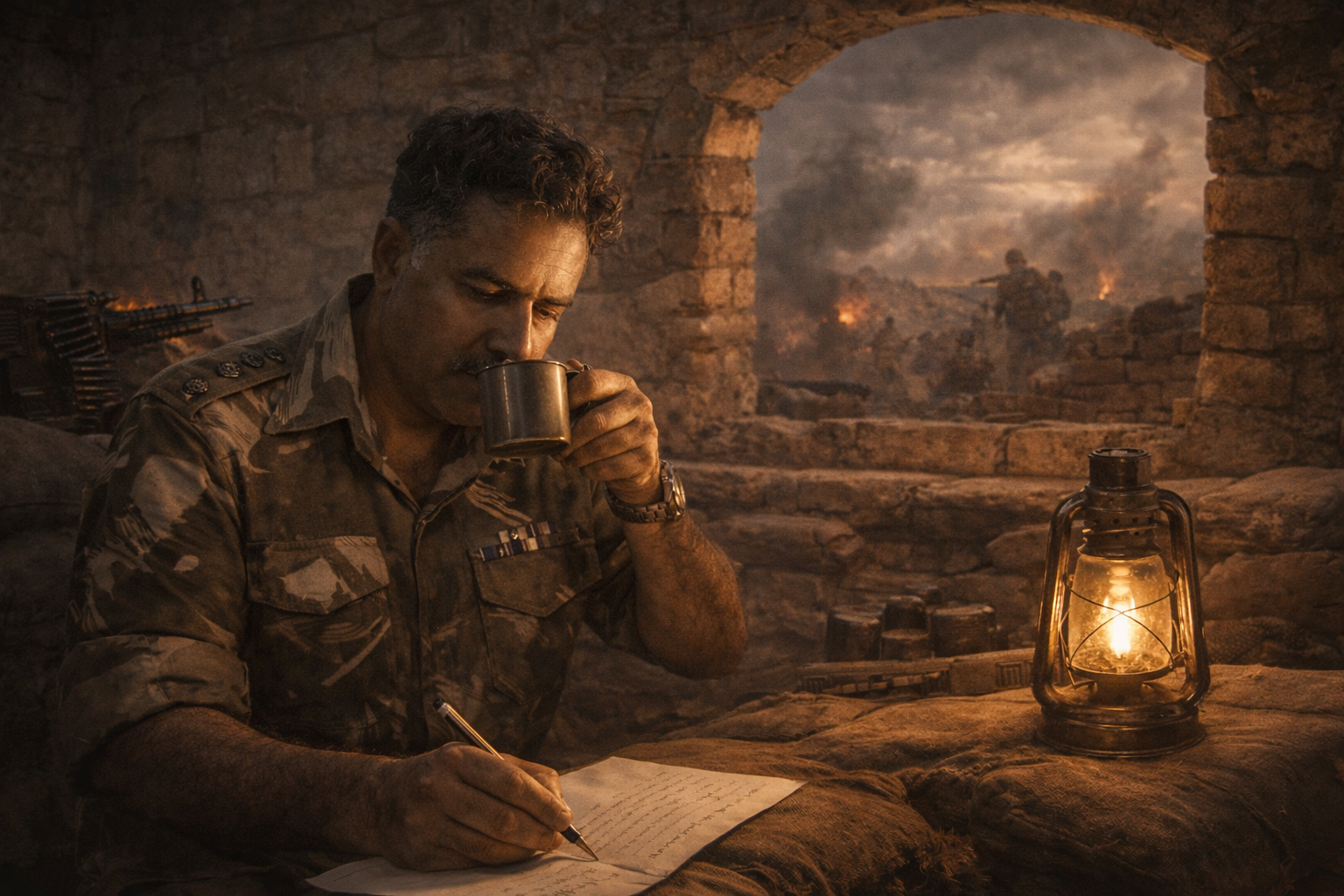
The tale of the Jamalpur sector is one of a strategic pause. It began at Kamalpur, a Border Outpost (BOP) where Captain Ahsan Siddique Malik of the 31 Baluch, with a few of his men, stood in the way of the Indian 95 Mountain Brigade.
The small contingent managed to repel these attacks for a total of two weeks. In fact, the degree of resistance had reached a point where the Indian commander, Brigadier HS Kler, was compelled to bypass this post and leave a full battalion to merely place a siege on it. Needless to say, this was a major victory for the Pakistani defense forces, having successfully halted the momentum of an enemy brigade with merely a company.
When the garrison finally surrendered on December 4, after running out of ammunition and being cut off from the surrounding area through airstrikes, the Indian Brigadier, Kler, met Captain Ahsan personally. He wanted to lay eyes on the man as well as the defenses that had embarrassed his timeline, which finally resulted in Captain Ahsan being conferred the Sitara-i-Jurat award.
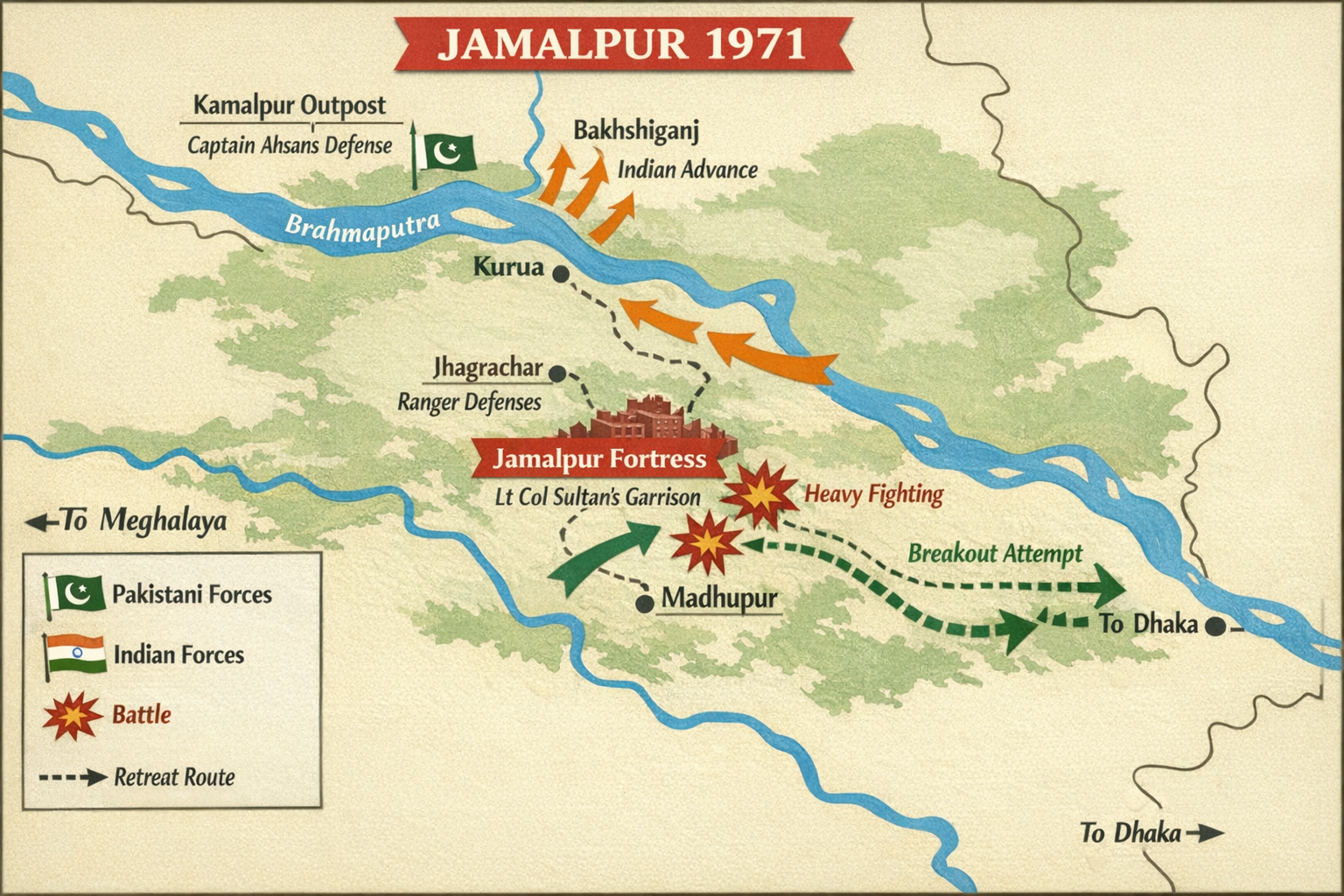
Map of Jamalpur during the said offensive in 1971, generated by AI using reference battle maps of the time.
The “Bullet” Response: Jamalpur Fortress
By December 5, the battle shifted to Jamalpur Fortress. Jamalpur, which housed 1,500 soldiers and included battle-tested ‘31 Baluch’, presented a psychological barrier in front of the Indian forces’ advance. Following two days of bombing, Brig Kler presented a formal surrender demand to the Pakistani commander, Lieutenant Colonel Sultan.
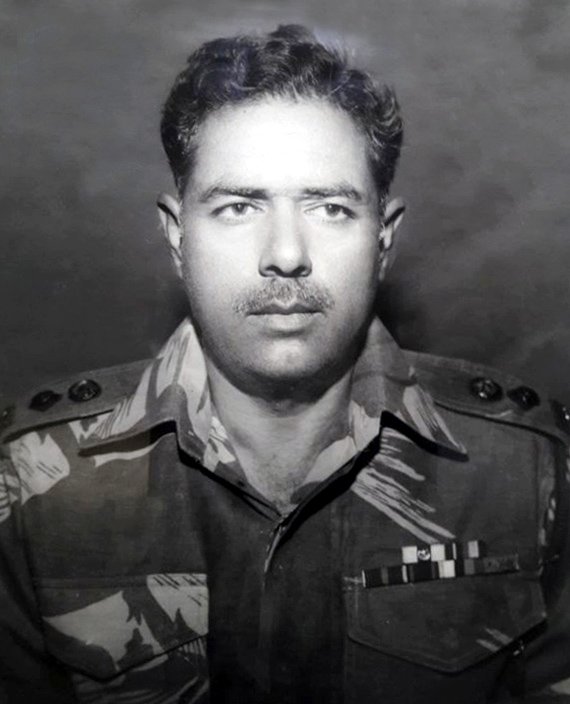
Source: thefridaytimes
Kler’s letter resembled more of a threat:
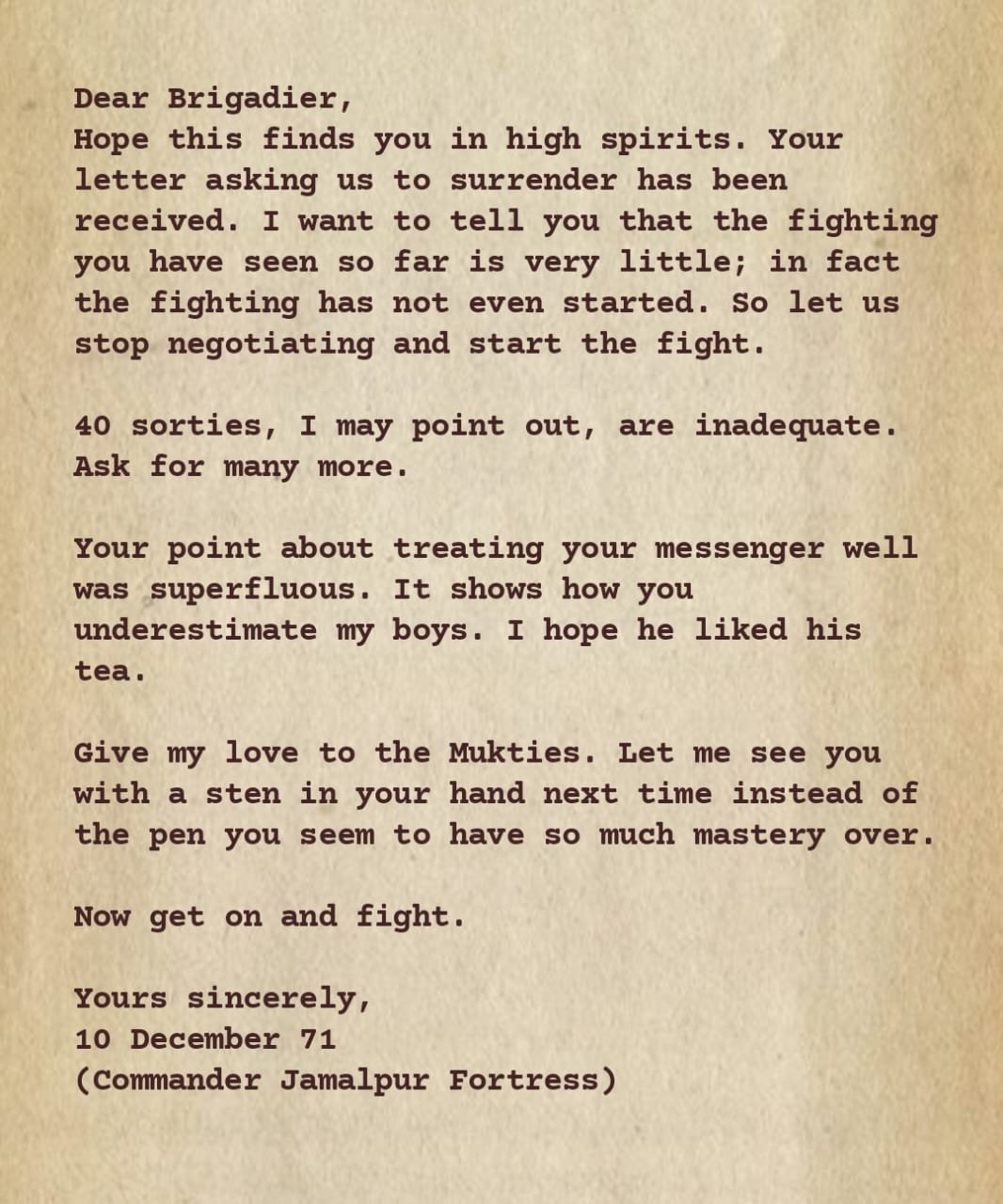
Brig Kler’s letter, designed by the writer, sourced from the book Tragedy of Errors by Lt. Gen. Kamal Matinuddin
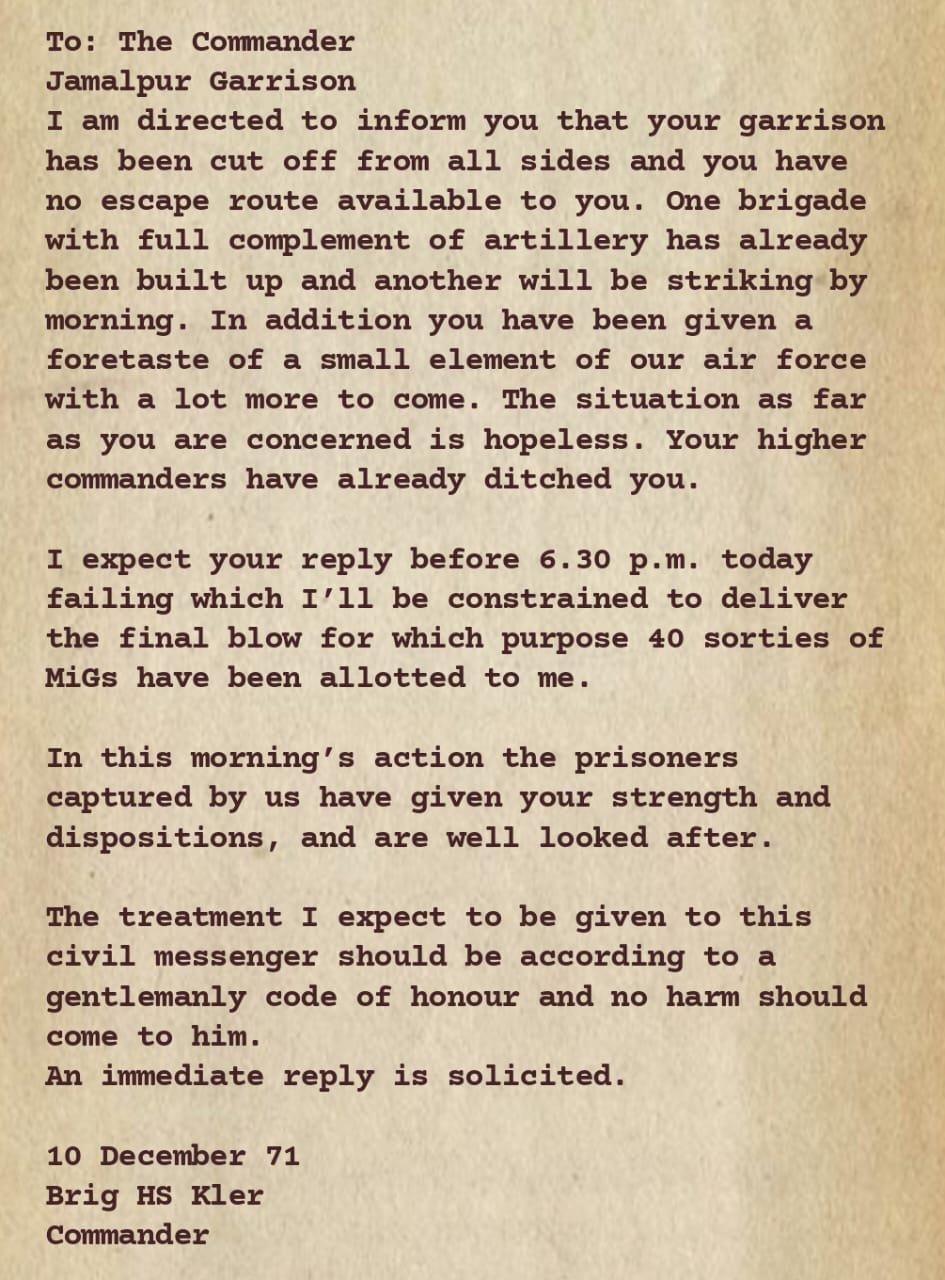
Colonel Sultan’s reply remains the height of military bluster, tightly wound around a bullet.
He not only refused the surrender offer but also belittled the might of the Indian threat by telling Kler, “The fighting has not even started yet.” He found the strength of 40 sorties “inadequate”. Through this high-stakes interaction, tea was mentioned:
“Your point about treating your messenger well was superfluous. It shows how you underestimate my boys. I hope he liked his tea”. At that point, the tea symbolized a message from the Pakistani defenders. The message directed the tea consumers on the Indian side of the conflict that defenders of the fort were not bothered by the siege, the Migs, and the artillery, but still proved to be generous hosts.
Years of Sound Character –1971 to 2019
This tradition of “the hospitable defender” from 1971 has now found a contemporary expression in 2019. The release of a video of Wing Commander Abhinandan Varthaman, caught and grounded, sipping a cup of tea, was a masterstroke of “Gray Zone” operations by the Pakistani Army. “The tea is fantastic” was a dual-pronged admission made by the pilot.
Tactical Narrative: It told the world that it was a nation following the Geneva Accords, which held a “code of gentlemanly honor” even during engagements involving high-intensity aerial combat.
Psychological Stability: Just as the appearance of Colonel Sultan’s messenger in 1971, the fact that the cup was there implied that the hostage-takers were in complete control of the situation and stable enough to be offering hospitality in the middle of a rapidly escalating international crisis.
It is more than a drink. The strategic pauses at Kamalpur and Jamalpur illustrate just how much of an offensive could be derailed by the conviction of a smaller, better-fortified unit of troops than by any other means. The tea, whether offered within the confines of the 1971 correspondence or captured on a cell phone camera in 2019, is Pakistan’s symbol of professionalism under pressure
You May Like To Read: A Day of Decisive Action: Pakistan Air Force, December 14, 1971