
The landscape of counter-terrorism (CT) in Pakistan has undergone a fundamental change, marked by a shift toward proactive security operations based on an intelligence-driven approach rather than reactive ones. This transformation became most evident with the introduction of Operation Azm-e-Istehkam in the revised National Action Plan (NAP) in 2024 and was further reinforced by high-intensity operations in 2025-26, such as Operation Ghazab-lil-Haq. Together, these initiatives exemplify how Pakistan is integrating intelligence, drones, and airpower into a multi-domain counter-terrorism system.
The security strategy explicitly combines civilian and military agencies. Pakistan established new coordination bodies under the NAP. For example, in Balochistan, district coordination committees were established, comprising local MPs, deputy commissioners, police, military, and intelligence representatives. From February to November 2025, these committees held 472 meetings to oversee reconstruction and security efforts, along with billions in funding allocated for local projects.
At the national level, efforts intensified to enhance data sharing between the military and the Interior Ministry. The ISPR press conference in 2025 credited all law enforcement agencies for the IBO figures. Even provincial police forces operated on a war footing: special Counter-Terrorism Departments (CTDs) established in KP and Balochistan collaborate with army units on cross-border threats. For instance, a successful operation in Kohat in March 2026, where Kohat District Police and KP’s CTD worked together to kill six high-value terrorists. These examples highlight a multi-agency approach involving NACTA, CTDs, the army, FC, police, and intelligence, working in concert to act on intelligence.
Kohat DPO says the operation was carried out after police received intelligence that terrorists were planning to orchestrate a large-scale attack in Lachi. https://t.co/T6EO0UvwYe
— Dawn.com (@dawn_com) March 15, 2026
Intelligence-Based Operations and Coordination
The intensity of the effort is indicated by the numbers. Pakistan’s ISPR published data that revealed 75,175 IBOs during 2025, increasing from 67,000+ IBOs during the autumn. In simple words, that’s more than 200 intelligence-guided raids daily throughout the whole year. Such IBOs are based on HUMINT, signals intelligence, and battlefield evidence. These operations were mainly concentrated on Fitna-al-Khawarij sanctuaries in KP and Fitna-al-Hindustan, which indicates the continued pressure around known hideouts. By comparison, Frontier Corps and army posts on the Afghan border also shared the information regarding infiltrating militants, which led to pre-emptive raids on border gangs.
🚨 BREAKING: DG ISPR Lt Gen Ahmed Sharif Chaudhry briefs media on Pakistan’s security situation.
75,175 counterterrorism operations conducted last year, revealed DG ISPR.
“Terrorists are Khawarij and have no connection to Islam,” he added, asserting that the state is committed… pic.twitter.com/VsaSLRpeFb
— SAMAA TV (@SAMAATV) January 6, 2026
- High Level Results: By Jan 2026, according to the officials, a total of 2597 terrorists have been neutralized in the year 2025, i.e., 1800 terrorists in KP, 784 in Balochistan. Total “terror incidents” numbered 5397 (mostly in KP). Counter IED and anti-ambush drills were stepped up following hundreds of these attacks earlier in the year.
- Institutional Coordination: Two institutions, the National Counter-Terrorism Authority (NACTA) and the ISI, together with the police, analyzed the threats, and Army Aviation and naval surveillance sometimes supported ground forces with targeting data. In Balochistan, the target was the empowerment of local police: the provincial government removed all Category-B restrictions and gave the Balochistan police mandate over the entire province. At the grassroots level, the police and Rangers beat units joined the army quick reaction teams regularly.
- Technical Surveillance and Drones: Unmanned systems were a central part. For the first time, the KP police launched a specialized division of UAVs in 2025. Insurgents had “an edge” by using armed drones in South Waziristan and other districts of the tribes, so police responded by deploying anti-drone guns and installing a radar system in the hot zone.
To counter this, the police and military acquired their own UAVs. Ground Control Stations are now dotted across KP, so police drones are able to patrol borders and assist checkpoints. These units utilize surveillance quadcopters & jamming gear to detect or disable hostile drones. Each district will have a drone force and anti-drone jammers under the command of the DPO.
Khyber Pakhtunkhwa Police have launched Pakistan’s first dedicated UAV (drone) Division, creating a specialized unit for aerial surveillance and security operations, making the province a pioneer in organized drone deployment.#Pakistan #KP #Peshawar @YarMKNiazi @KP_Police1 pic.twitter.com/YfdrnlP5fU
— All About Pakistan (@Aboutpakistan90) March 7, 2026
Airpower and Cross-Border Strikes
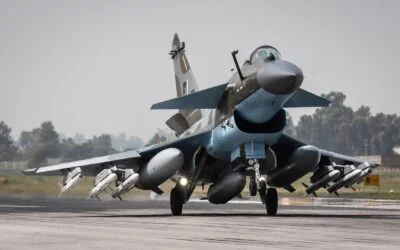
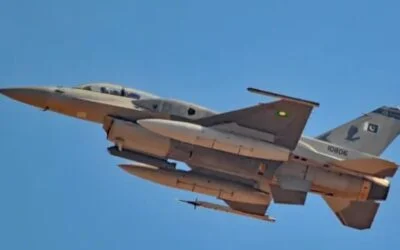
Whilst intelligence and drones are first-line, the airpower offers critical support. Pakistan fighter jets i.e., JF-17 Thunder are able to deliver precision strikes on caves or vehicles across the borders. These are complemented by the Pakistan Air Force’s helicopters and armed drones.
Cross-border operations, such as attacks on TTP depots at Kabul and Nangarhar, highlight the integration of airpower into counter-terrorism. The effect of such strikes is twofold: tactually destroy caches or leaders and strategically send a signal of deterrence. Back home, Air Force trainers report flights over Balochistan and KP logistic hubs (like Quetta and Parachinar), to practice low-level flying over mountains, which means faster insertions.
Technology-Driven Intelligence-Led Warfare
Pakistan’s approach shows a clear move to a tech-driven intelligence-led war on terrorism. Every domain (information, land, air) contributes to the common ground. The intelligence analysis identifies the targets, drones scout or even direct the munitions, and air and ground forces execute. Thousands of arms and IEDs are recovered each month. Even militant organizations recognize a new reality: their cadres are caught on phones and videos all over Pakistan, under relentless watch.
Key factors in this integrated strategy are:
- Scale of IBOs: 75,000+ ground raids in one year; making continuous pressure.
- Inter-agency fusion: Army, paramilitary, police, and intelligence sharing information and working together.
- UAV and Sensor Networks: Specialized police UAV networks and anti-drone in all provinces.
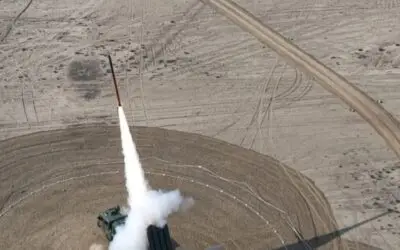
- Precision strikes: Employment of guided rockets, guided bombs, and mortars based on real-time intel.
These elements combine to tighten the noose on militants. By acting on tips and sharing intel quickly, security forces limit the freedom of movement for militants. For example, one IBO in Mastung was directed by “confirmed reports” from Army Aviation drones and swiftly eliminated four terrorists. Such stories are routine now, progress that would have taken weeks in the 2000s is done in days.
Of course, challenges remain. Pakistan has prioritized the principles of precision and civilian safety. Every IBO is meant to minimize collateral damage with rapid evacuation teams on site and social media teams to combat misinformation. The military has stated openly that it distinguishes terrorists from communities, calling the latter “our people”. Ensuring security in cities and in border towns (where militants sometimes hide among civilians) still requires caution and cooperation from society.
Conclusion
Pakistan’s strategy in CT for 2025 combines an enormous amount of human intelligence work with local policing and cutting-edge tech. The results i.e., tens of thousands of operations, massive weapons seizures, and a militant casualty counted in the thousands, are suggesting that this integrated model is paying dividends. Short of a lasting political solution, the focus on information dominance (through surveillance and intel-sharing) supported by airpower is the best bet that the country has to contain and degrade insurgent threats. This multi-domain approach (IBOs, UAV, air strikes) is a fundamental shift to an intelligence-led “whole-of-nation” war on terror.
You May Like To Read: President Zardari Confers Military Awards on Tri-Services Personnel for Distinguished Service and Bravery
Check out our latest video: