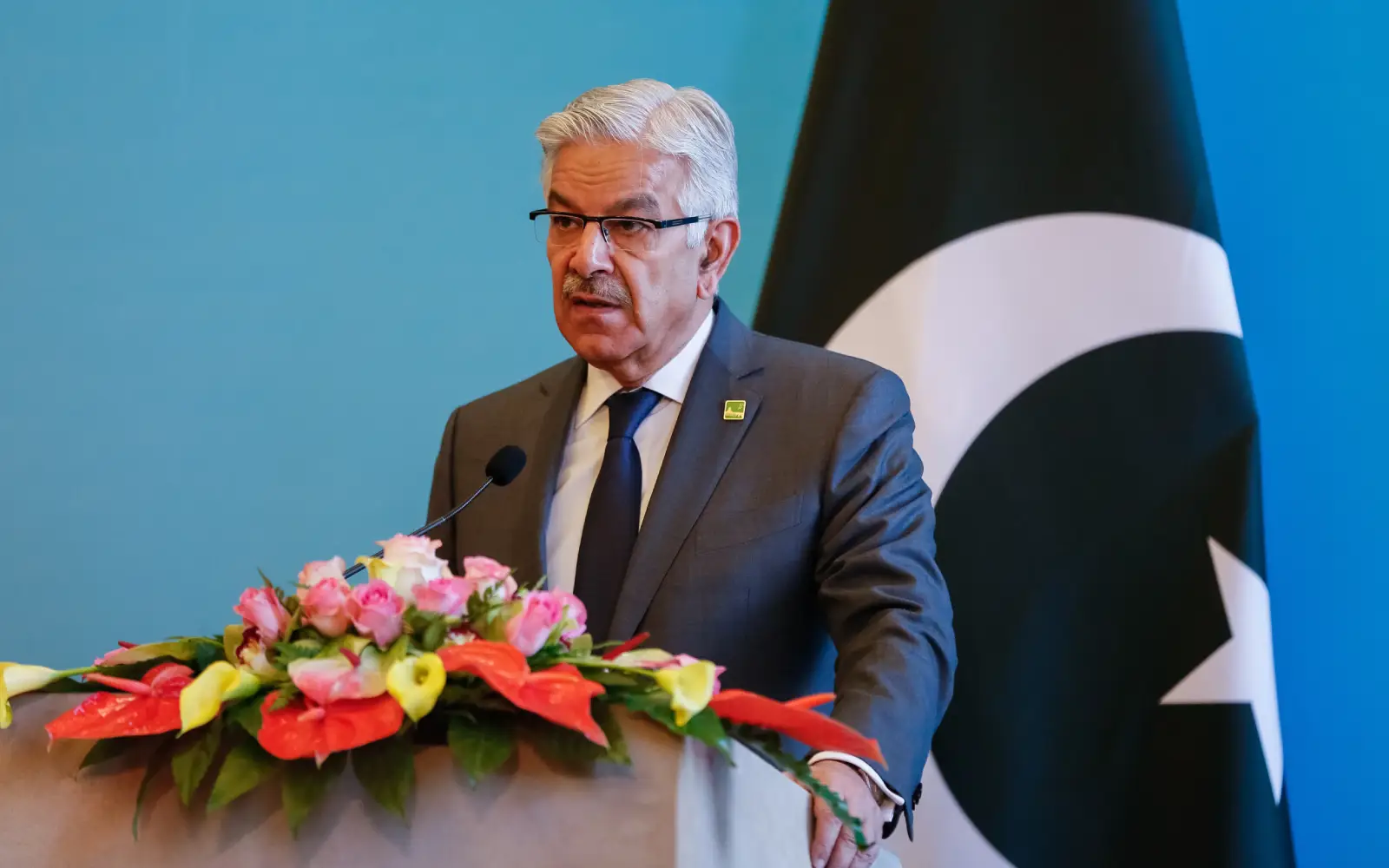
In a stern address to the National Assembly on Wednesday, Pakistan’s Defense Minister Khawaja Asif issued a stark warning to Afghanistan, stating that Islamabad would consider “open war” if Kabul fails to prevent militants from launching attacks on Pakistani soil. This marks a significant escalation in tensions between the two neighboring countries, which have been grappling with deteriorating relations over the past year.
#WATCH: Pakistan’s Defense Minister Khawaja Asif warned on Wednesday there would be an “open war” if Kabul did not stop militants from launching attacks on Pakistani territory. https://t.co/765fQNMAhL pic.twitter.com/EoVUZiaZPq
— Arab News Pakistan (@arabnewspk) May 13, 2026
Minister Asif’s remarks followed a series of deadly attacks in Pakistan’s northwestern Khyber Pakhtunkhwa province, bordering Afghanistan. A recent car bombing and ambush in Bannu resulted in the loss of at least 14 police officers, while another bombing in Lakki Marwat district claimed the lives of nine people and left dozens wounded. Pakistan attributes these attacks to militants operating from bases within Afghanistan, specifically those linked to the Tehreek-e-Taliban Pakistan (TTP) group.
“Then only one alternative remains. Then there will be war,” Asif declared, emphasizing Pakistan’s frustration with Afghanistan’s alleged inaction. He further revealed that Islamabad had engaged in numerous rounds of dialogue with Kabul, facilitated by Qatar, Türkiye, and Saudi Arabia, but these efforts failed to yield written assurances from Afghan authorities to halt attacks against Pakistan.
Asif also accused the Afghan Taliban government of acting as a proxy for India, Pakistan’s regional rival. He claimed that Kabul was supporting terrorist activities against Pakistan, furthering a proxy war on behalf of “Hindutva” ideology.
Afghanistan has consistently denied allegations of harboring militants responsible for attacks within Pakistan, asserting that militancy in Pakistan is an internal security issue. However, cross-border violence has been on the rise, leading to increasingly frequent and intense military clashes between the two sides.
The United Nations Assistance Mission in Afghanistan (UNAMA) reported that at least 372 Afghan civilians have been killed in conflict with Pakistan in the first three months of this year alone. A significant portion of these deaths were attributed to airstrikes on a drug rehab facility in Kabul, although Pakistan denies targeting civilians.
Despite the mounting tensions, Minister Asif expressed Pakistan’s continued preference for dialogue, urging Kabul to address Islamabad’s security concerns and seek a mutually agreeable solution to the issue of terrorism.
“Our wish, of course, is that there should be a difference,” he stated. “That they should talk to us. That they should come to some kind of arrangement with us. So that some solution to this terrorism can be found.”
Analysis
The statement by Pakistan’s Defense Minister represents a critical juncture in Pakistan-Afghanistan relations. The increasingly bellicose rhetoric reflects Islamabad’s growing frustration with the perceived lack of cooperation from the Afghan Taliban government in addressing cross-border militancy.
Several factors contribute to this escalating tension:
- The TTP Factor: The Tehreek-e-Taliban Pakistan (TTP) poses a significant security threat to Pakistan, and Islamabad believes the group enjoys safe havens within Afghanistan.
- Trust Deficit: Deep-seated mistrust and historical grievances between the two countries further complicate efforts to find common ground.
- Regional Geopolitics: Accusations of India using Afghan soil to undermine Pakistan add another layer of complexity, reflecting the broader geopolitical rivalry in the region.
The potential for “open war” between Pakistan and Afghanistan carries significant risks, including:
- Humanitarian Crisis: Armed conflict would likely lead to widespread displacement, loss of life, and a severe humanitarian crisis in the already vulnerable region.
- Regional Instability: Escalation could draw in other regional actors, further destabilizing the area and potentially leading to a wider conflict.
- Setback for Counter-Terrorism Efforts: A focus on military confrontation could detract from efforts to address the root causes of terrorism and undermine regional counter-terrorism cooperation.
Moving forward, de-escalation, dialogue, and cooperation are essential to prevent a further deterioration of the situation. Engagement from regional and international actors to facilitate constructive dialogue and address mutual security concerns is crucial to finding a peaceful and sustainable solution to the challenges facing Pakistan and Afghanistan.