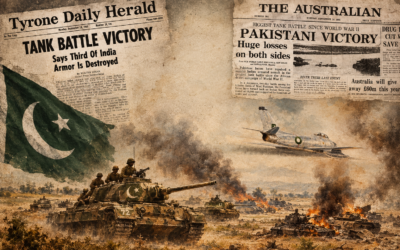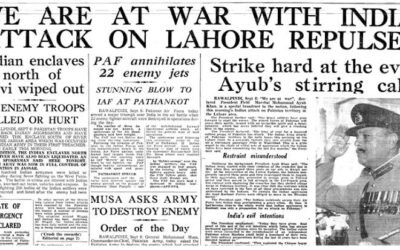
The sun had just set on 15 August 1965 across the fields and villages of the Chhamb sector. Tensions were on the rise for weeks. Ever since Pakistan launched Operation Gibraltar, the region has been on high alert for an impending clash with India. The situation escalated further due to the shelling by the Indian Army of civilian settlements in the Chhamb sector. This was the time when the Pakistan Army’s IV Corps Artillery bided its time. Make its name etched in the pages of military history as the force that not only drew the first blood but created such a fear in the hearts of the enemy that would endure throughout the war.
The Pakistani troops in the sector were led by Maj. Gen. Akhtar Malik, GOC 12 Div. They had little in the form of artillery support to retaliate against Indian shelling. The Indian Army’s 14 Field Regiment had been especially merciless, whose barrages were directed at the very center of the local population. This was a conscious breach of the ceasefire that had been in place, and it required a befitting reply.
#14AugustAzadiDay: Major General Akhtar Hussain Malik received the medal Hilali-Jur’at, the second-highest military award of #Pakistan, for his role in the Indo-Pakistan War of 1965 where he launched operation Grand Slam in Kashmir… pic.twitter.com/ujeHZ9x4F2
— APPG for the Ahmadiyya Muslim Community (@APPG_Muslim) August 14, 2020
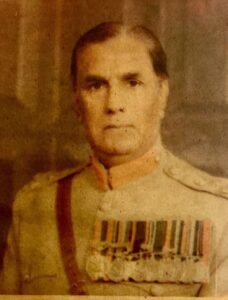
With his command short of the firepower, Maj. Gen. Malik prompted an emergency appeal to Brig. Amjad Ali Chaudhary, who was commanding IV Corps Artillery. He requested him to respond to the infringing Indian Field Regiment, a move that would trigger a terrific counter-bombardment.
Source: military-history.fandom
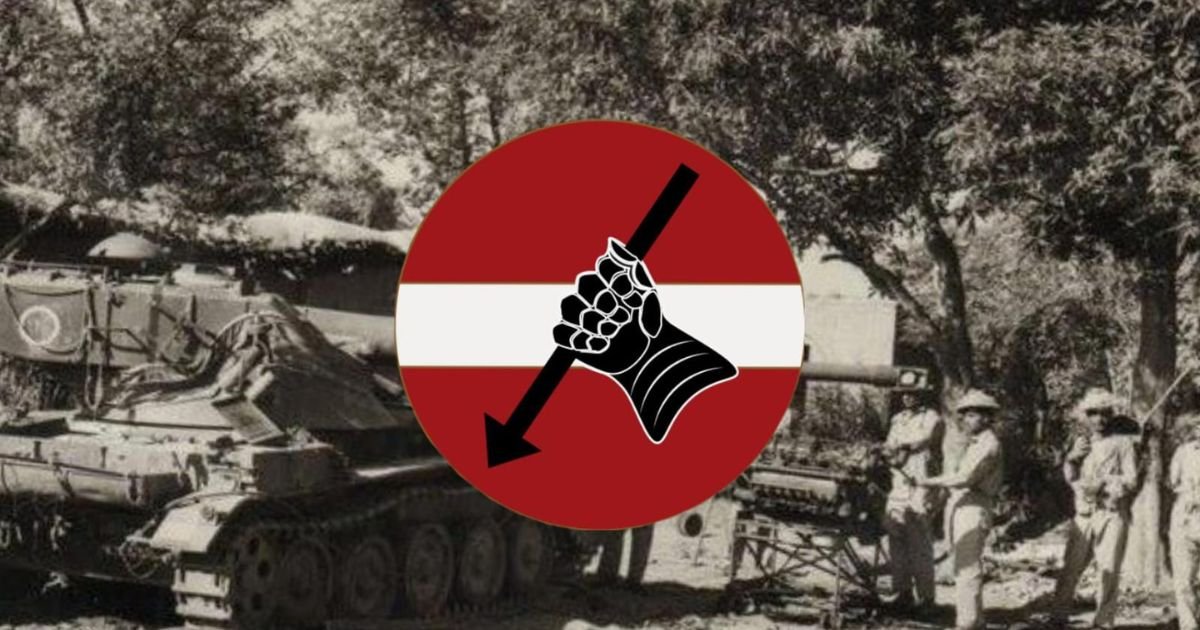
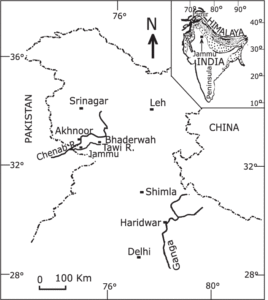
Brig Chaudhary was a tough commander with great tactical skill and aggressive flair. He acted fast. For the Indian provocation, he at once deployed a lethal concentration of firepower: 2 and 39 Field Regiments, 28 Medium Regiment, and one battery of 10 Medium Regiment. These batteries were quickly positioned in their pre-arranged gun positions within the Munawwar Gap Area, a strategic position that provided cover and an open field of fire on the Indian positions on the Munawwar Tawi River.
Source: researchgate
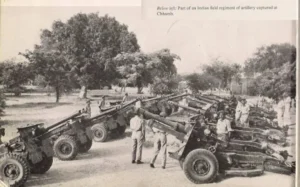
The Pakistani strategy was deliberate. It was a trap to draw the Indian guns into a suicidal duel. The 81 AK Field Battery was instructed to initiate the first fire, consciously exposing its position. The objective was not to cause harm but to lure in the Indian 14 Field Regiment’s fire. As planned, the Indian guns took the bait, and their positions were located with lethal precision by Pakistan. The intelligence was immediately passed on to the awaiting Pakistani artillery batteries. The scene was set for a counter-bombardment that would go down in history for its ferocity.
This was followed by a tempest of steel and flame that rained upon the Indian gun emplacements. The collective firepower of the Pakistani artillery brigades crushed its Indian counterparts. Shells exploded with merciless accuracy. It reduced the Indian gun positions to a hell on earth of blasts and flying shrapnel. The counter-bombardment was so heavy and so incessant that the Indian army was left reeling in shock. Their scheduled withdrawal became a frantic retreat to safety as the shells kept dropping. The punishment was maintained, with the fire being guided by the “eyes in the sky”, a Pakistani Air Observation Post (Air OP). This air asset fed back instantly, enabling the Pakistani gunners to correct their fire and make each shell hit its target.
The cost in human lives of this deadly barrage was instant and heavy. The raw power and firepower of the Pakistani artillery demoralized the Indian troops in the sector. The Indian 14 Field Regiment CO, not used to such a serious reaction, was said to be so shaken that he abandoned his regiment and escaped across the River Tawi. He abandoned the wrecked bodies of his men. In accordance with some Pakistani reports, he was subsequently court-martialed, and the regiment was dissolved. This was a grim indicator of the psychological toll of the artillery’s activities.
Source: defencejournal
Another victim of this incessant fire was Brig. B.F. Masters, Commander of the Indian 191 Infantry Brigade. He was at his Brigade Order Group, a vital command conference, close to a gun position, when the Pakistani shells arrived. A direct hit instantly killed him. His killing was a serious setback to the command and control of the Indian Army in the region and a huge morale boost for Pakistan. The loss of a brigade commander this early in the war was a clear indication that the Indian Army had lost the battle at Chhamb. It also highlighted the Pakistani Army’s determination and the deadly efficiency of its artillery.
Source: Instagram via beyond.the.battles
The firefight in the Chhamb sector was more than just a firefight. It was a watershed moment. IV Corps Artillery had proven its power by unleashing a coordinated firepower that the Indians could not have envisaged. Not only had they silenced the guns of the enemy, but they also landed a psychological blow that would never heal. From this day on, the IV Corps Artillery of Pakistan would become a name synonymous with fear in the enemy ranks and one of utmost pride in the country. It was a unit that had forged its reputation in steel and flames. It was a unit that had actually drawn first blood.
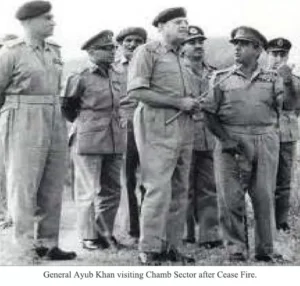
Field Marshal Mohammad Ayub Khan, President of Pakistan during the 1965 War wrote the following tribute (in his own handwriting) on the performance of 4 Corps Artillery commanded by Brigadier Amjad Chaudhry as follows:
“By all accounts the part played by the 4 Corps Artillery can only be termed as magnificent. The results they achieved are miraculous for which they deserve congratulations and gratitude of us all“. (Signed) Field Marshal Mohammad Ayub Khan President of Pakistan 13 November 1965[source]