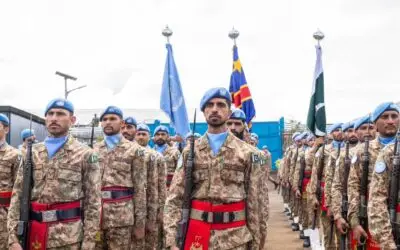
In the history of the Indo-Pakistani War of 1971, the tale of the Eastern Theater often takes center stage in terms of the broader deployment of troops. Nevertheless, in the case of the Western Front, especially in the rugged terrain of the Sulemanki Sector, there existed a tale of heroism, the intensity of which would eventually make the Commander-in-Chief of the enemy momentarily halt in awe. It is the tale of the 6th Battalion, Frontier Force Regiment (6 FF), otherwise known as the ‘Piffers’.
The Piffer Spirit: A Legacy of Battle-hardened Soldiers
The 6th Frontier Force is part of a tradition of regiments with the “Frontier Force” prefix who have been known as The Frontier Force Regiment, “Piffers” for short, after the Punjab Irregular Frontier Force. These soldiers would traditionally have been prized as well as being tough enough to survive in, and fight in, some of the most hostile environments in the world. It is in this role that, in 1971, they would face a mission that would require superhuman courage.
The objective of these forces was the capture of the high ground in the Sulemanki-Fazilka Sector. This region had strong fortress defenses by the Indian Army, which had the ‘Sabuna Distributary’ protecting it and deep mine fields and armor behind it.
The Charge of Major Shabbir Sharif
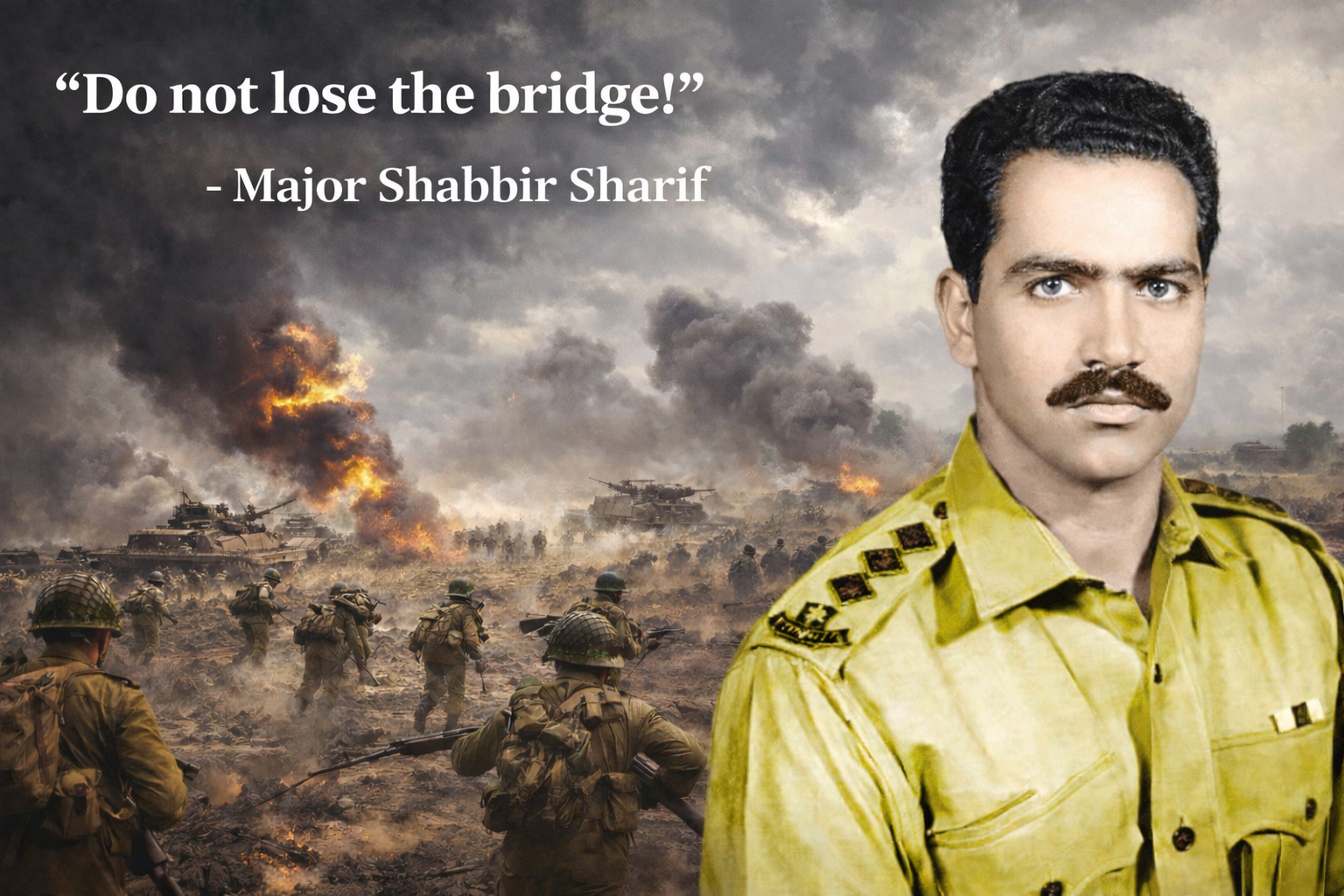
The gallantry of 6 FF in 1971 is typified in the form of Major Shabbir Sharif, in particular, a company commander leading the assault on Sabuna Canal. On Dec 3, 1971, Sharif and his troops performed nothing short of a miracle when they swam through the icy waters of the canal and fought off strongly defended minefields to initiate a hand-to-hand combat to seize the high grounds dominated by the Indians.
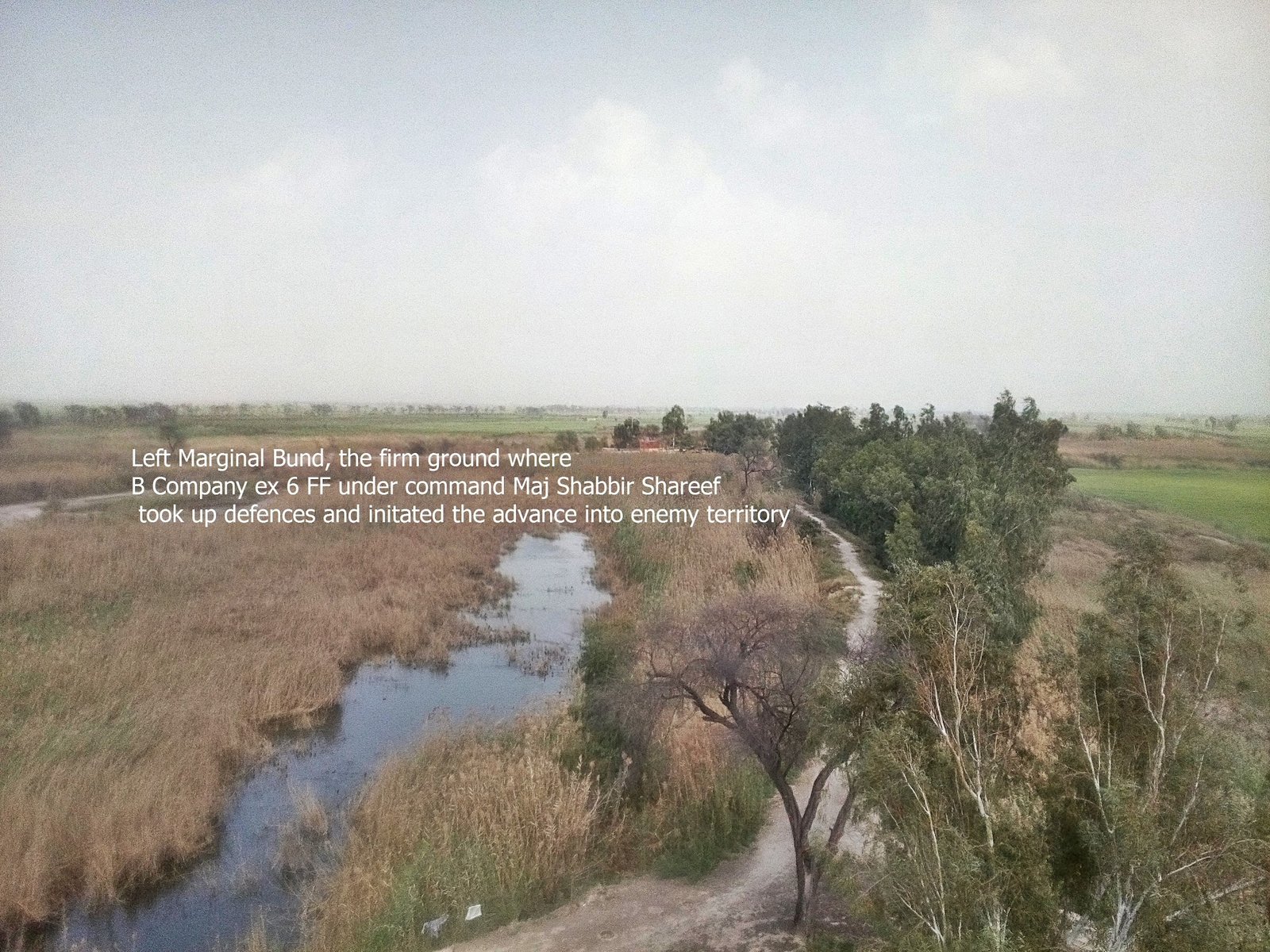
Position of 6 FF
Source: defence.pk
The tenacity of the 6 FF was so strong that they destroyed several enemy tanks and repelled numerous counterattacks launched by an Indian battalion supported by a tank squadron. During the height of the battle, Sharif famously stood out of his trench to challenge the Indian tank commander to a one-on-one duel in which he was able to hurl a grenade into the latter’s tank. Major Shabbir Sharif led the “Piffers” to outmaneuver the minefields and swim across the 30ft-wide Sabuna Canal, taking the high ground and crucial Beriwala Bridge. His clever tactics forced the enemy to reshuffle their command structure numerous times, and the 6 FF defended their positions against more than 15 enemy counterattacks until the ceasefire. This earned the battalion the legendary status of being unmatched in grit.
Despite being injured by a grenade, Sharif did not abandon his troops. On December 6, he was struck by a direct shot from a tank shell while he was attacking an oncoming tank with his 3.5-inch rocket launcher. Sharif was awarded the ‘Nishan-e-Haider’, the highest award for bravery, for the Pakistan Armed Forces. He is the only person to have been awarded the Nishan-e-Haider as well as the Sitara-e-Jurat.
Recognition from the Enemy
The performance of this 6 FF and the story of their valour in Sulemanki soon spread amongst enemy ranks. Field Marshal Sam Manekshaw, who was the Indian Chief of Army Staff, had a close association with this unit. He was commissioned into a sister regiment, 4/12 Frontier Force, in 1934.
General Sam Manekshaw was the Indian Army Chief during the 1971 War. He was commissioned into 6 FF Regiment in 1934, where he was trained, groomed, and shaped as an officer. He fought in the Second World War with his unit, 6 FF and continued to serve with same unit until 1947.
— Tactical Tipu (@Tactical_Tipu) December 5, 2025
When the news filtered through to Manekshaw about the resistance and courage that the 6 FF had shown at Sulemaki, he did something that had never happened before in modern warfare. Realizing the “Piffer” spirit he cherished, Manekshaw wrote to the Pakistani government directly. He stated that though they were on opposing sides of the border,
“The 6th Frontier Force had fought with a gallantry that did its regimental heritage proud”. He is quoted to have said:
“Your men fought like tigers!”
The Code of Honor: Professionalism in Combat
The gallantry of 6 FF involved more than aggression; it involved the Code of Honor that dictates the life of a Piffer. The Battalion’s discipline and professional behavior were sustained even when the balance of the war turned against them. The Battalion’s strength in holding on to territory, despite adverse odds, has become a textbook example of an infantryman’s resolve.
The 1971 war may have resulted in a Pakistani loss, but the 6 FF came out with their heads held high. The 6 FF had gained the admiration of their brothers and, to top that, the admiration of the enemy commander as well.
A Son, a Friend, a Shaheed
Shabbir of Sabauna
__
Sometimes I wonder what motivated him to approach death with such alacrity
My son always had a premonition where he was headed
Sometimes when I pine too deeply for him, he comes in my dream gesturing he has acknowledged my feelings pic.twitter.com/OeJAx6hUYT— imran (@meemainseen) December 7, 2020
The events surrounding the 6th Frontier Force Regiment in 1971 are a reminder that the value of bravery is one that transcends cultures. The value of bravery is that it takes common sense into consideration by recognizing that when we are on the battlefield, there is no ‘us’ and ‘them’, there is only ‘us’. The 6th Frontier Force was involved in a war in 1971, but it was also following a tradition of bravery that is still analyzed in military history circles on both sides of the border.