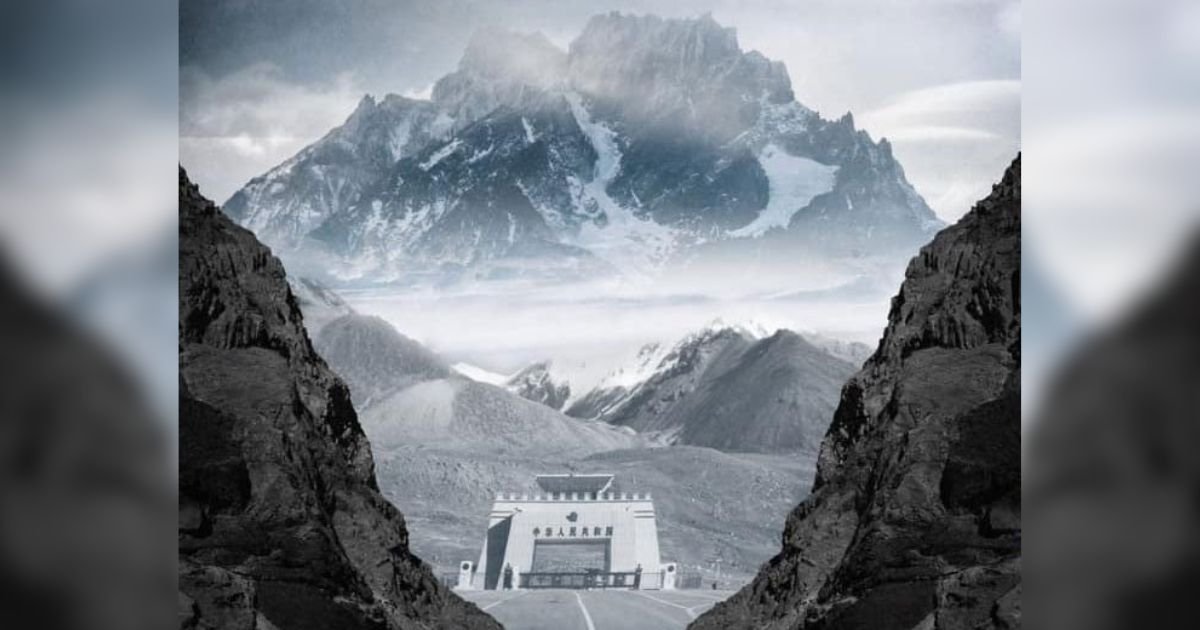
The Karakoram Highway (KKH) is considered by many as the ‘Eighth Wonder of the World’. It is not just an engineering feat but a testament to a lasting strategic alliance. The highway is a symbol of determination and a lifeline between nations across some of the world’s toughest terrain. It is a result of the historic partnership between the Pakistan Army’s Frontier Works Organization (FWO) and Chinese workers and engineers who turned an ancient Silk Road into a modern link of trade and diplomacy. This historic endeavor was pursued against immeasurable odds and has solidified the ties between China and Pakistan. Its construction has heavily impacted regional geopolitics and economic growth.
The origins of the KKH in the early 1960s were a time of great geopolitical change. Pakistan and China share a border in the vast Karakoram mountain range. Both saw the strategic necessity of building a direct, all-weather road connection. It provided a vital link for Pakistan to access its nearest ally and opened the door to trade, cultural exchange, and strategic depth. For China, it meant access to the Indian Ocean and secured its footing in a strategically critical area. The task at hand was, however, next to impossible. To cut a highway through the rugged Himalayas and Karakoram, a country of piercing peaks, deep gorges, glaciers, and seismic instability, was a daunting mission.
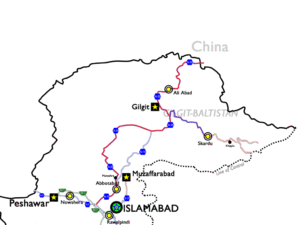
KKH on the map
Source: wikimedia
This humongous task could not be handed over to civilian contractors. This was not a mere construction project but a national priority. It needed military precision, discipline, and the readiness to encounter inconceivable risks. This is where the Pakistan Army, in the form of its recently formed Frontier Works Organization (FWO), took charge. Formed in 1966 specifically to build the KKH, the FWO soon became the central machinery working on this project. Its mission was clear: to overcome nature’s might and construct a strategic road.
The joint effort between the Pakistan Army (FWO) and their Chinese allies was a synthesis of technical skill, common purpose, and a gargantuan human sacrifice. The Chinese engineers contributed high-technology blasting skills, heavy plant, and high-altitude building prowess, while the FWO contributed with manpower, local support facilities, and on-ground knowledge of the hostile Pakistani terrain. This was an equal partnership that was fighting against common odds: the mountains themselves.
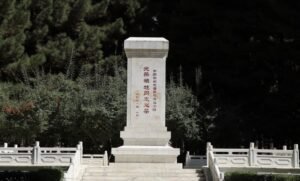
Cemetery of Chinese workers in Gilgit who died during the construction of the KKH
Source: pamirtimes
The building process was a dogged, decades-long battle. Laborers struggled against harsh weather patterns that ranged from blistering summer temperatures to below-freezing winter temperatures of the rocky heights. They faced landslides, rockslides, and flash floods. These natural and often unpredictable phenomena often swept away finished portions, and workers were forced to begin again. The massive scale of the excavation required the removal of millions of cubic meters of rock and soil, much of it by hand. Thousands of Pakistani and Chinese lives were lost in the process of construction, mainly by falls, landslides, and accidents, and the KKH earned the nickname of a ‘friendship highway built with blood’. In the midst of construction, the engineering units at work had to be pulled back when the 1965 and 1971 wars broke out. The construction was halted for a small time. Every kilometer of the road stands as a testimony to their unrelenting dedication.
The role played by the FWO was crucial on the Pakistani side. Apart from actual construction, they had the task of creating huge logistical networks that provided an uninterrupted supply of crucial equipment, explosives, fuel, and supplies to isolated work camps. They oversaw huge detachments of men, keeping morale up and discipline intact in the most trying conditions. Their engineering units showed phenomenal flexibility and came up with imaginative solutions for bridges across raging rivers and tunnels through solid rock, often in terrain earlier believed to be impassable. The FWO’s capacity to rally resources, provide security in distant regions, and implement a project of such scale under pressure demonstrated the institutional strength and engineering prowess of the Pakistan Army.
The opening of the KKH in 1979 (with follow-on upgrade and realignments to carry on for decades) was a victory of human efforts and consolidation of the Sino-Pakistani ‘all-weather friendship’. Strategically, it gave Pakistan an important northern link, weaning it from its conventional trade route dependence and making it a more formidable defender along the border. For China, it provided an overland link to South Asia and, beyond that, supplemented its maritime Silk Road activities.
Economically, the KKH has been revolutionary. It promotes trade, cultural exchange, and tourism. The highway has made Gilgit-Baltistan an easier place to access by further linking it with the national economy. It has set the stage for China-Pakistan Economic Corridor (CPEC), a flagship of China’s Belt and Road Initiative, that is reviving and expanding the KKH as its northern artery. The KKH, initially designed as a strategic linkage, has therefore become a premier economic corridor that highlights its abiding relevance.
The construction of the Karakoram Highway is an abiding testament to the profound cooperation between the Pakistan Army (FWO) and China. It symbolizes a common vision translated into reality through unprecedented valor, engineering excellence, and human sacrifice. A road in more than one way, the KKH is an embodiment of strategic alliance, economic prospects, and the irreparable bond created between the two countries against the most daunting natural obstacles. It stands as a reminder of what can be done when countries come together with a common goal, turning visions into tangible realities that are chiseled into the very face of the earth. It is famously said that:
One sapper lost for each kilometer of the road.
Check out our latest video: