Strategic Outreach Beyond the Battlefield
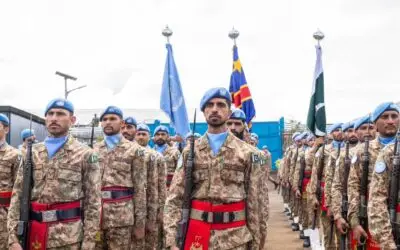
The Pakistan military is increasingly using diplomacy and multilateral cooperation to exert its influence beyond military operations. A notable example is the move by Islamabad to join a newly launched “Board of Peace” for Gaza, a U.S.-backed initiative that is to stabilize conflict zones. The foreign ministry announced Pakistan will support the goal of achieving lasting peace in Gaza through permanent ceasefire implementation, humanitarian aid, and reconstruction. Planning Minister Ahsan Iqbal hailed Pakistan’s inclusion as a diplomatic win, which put the country at the center stage, with other Muslim nations interested in achieving peace in Gaza. He said Prime Minister Shehbaz Sharif joined leaders of 19 nations at Davos to sign the founding charter of the board, highlighting Islamabad’s active role. Pakistan’s moral stand on Gaza hasn’t changed. Islamabad continues to condemn the Israeli offensive, but joining the board gives it the chance to contribute directly to ceasefire talks and reconstruction planning. The government also argues that participation is the only way to help shape any Gaza settlement from within.
Pakistan welcomes Gaza ceasefire. It would help in establishing lasting peace and alleviating the suffering of innocent Palestinians. #GazaCeasefire #PeaceInTheMiddleEast #Palestine pic.twitter.com/VLaiUwqb7b
— Ministry of Foreign Affairs – Pakistan (@ForeignOfficePk) January 16, 2025
Hosting Multinational Exercises and Building Interoperability
Pakistan’s army routinely opens its training grounds for international drills. In April 2025, it was hosting the 8th Team Spirit exercise in Kharian, in which an invitation was extended to contingents of 20 armies, including Gulf partners such as Saudi Arabia, Bahrain, and Qatar. The challenging 60-hour patrolling exercise was “aimed at improving combat skills” via sharing innovative ideas between participants. ISPR later noted that Team Spirit has “gained much prominence as a very competitive professional military activity” for the participating countries. General Asim Munir attended the closing ceremony, and he appreciated the professionalism and endurance shown by the respective teams.
Similarly, to look at the other end of the spectrum, Pakistan and the UAE concluded Exercise Jalmood-I, a two-week drill on hostage rescue and counterterrorism in November 2025. Held at the unique forces training center, it included the troops of the elite commandos of Pakistan and the Presidential Guard troops of the UAE, targeting urban hostage rescue scenarios. The significant attendance of high-ranking UAE officers at the closing ceremony recognized the strengthening of the defence ties. These joint drills with Gulf allies strengthen Pakistan’s commitment to security cooperation in the region and enable its forces to drill together with partners.
#ISPR
Rawalpindi, 11 November, 2025#PakistanArmy and UAE Presidential Guards concluded two-week Joint Counter Terrorism Exercise Jalmood-I at Tarbela. The exercise focused on Hostage Rescue Operations, included troops from #Pakistan Army Special Services Group (SSG) and UAE… pic.twitter.com/NSljI4GscZ— Pakistan Armed Forces News 🇵🇰 (@PakistanFauj) November 11, 2025
Pakistan’s outreach is not limited to exercises, but also formal defense pacts. In September 2025, Islamabad and Riyadh signed a historic Strategic Mutual Defence Agreement offering to respond as a single entity to any aggression against either of the two. This institutionalized Pakistan’s role as a security guarantor of a key Arab ally. Deputy Prime Minister Ishaq Dar said other Muslim states have since shown interest in similar pacts and have even suggested that the Saudi agreement could become an “Eastern NATO” of Islamic countries. “By God’s will, Pakistan will lead 57 Islamic nations,” he added, underlining Islamabad’s aspirations of being the leader to take the initiative of collective security. Islamabad defines these partnerships as mutually reinforcing, where binding Saudi Arabia (a major energy and economic partner) into its security network not only discourages joint threats but is often accompanied by economic benefits such as Gulf investments and arms deals. For Pakistan, institutionalization of defense cooperation with the Gulf states gives it an enhanced strategic relevance, having a strong deterrent capability in the face of regional challenges.
Military Diplomacy, Soft Power, and Strategic Influence
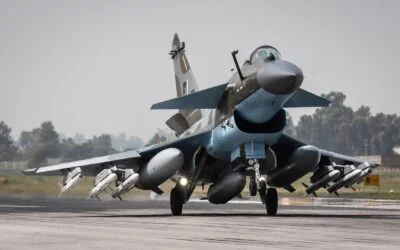
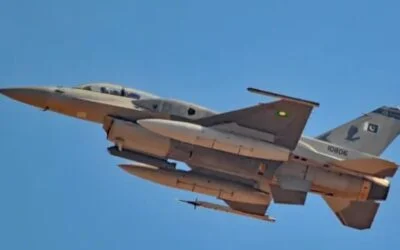
Together, these initiatives serve Islamabad’s broader goals of its strategic and soft-power goals. By participating in international peace forums and hosting multinational drills, Pakistan is presented as a responsible security provider and leader of the Muslim world. Such military diplomacy is complementary to Pakistan’s fundamental principles, the defense of sovereignty and support of fellow Muslims, while assuring Pakistan that its voice is heard in the planning of desired regional outcomes. Participation in these exercises also has practical benefits: joint exercises ensure Pakistan’s preparedness as its military is exposed to advanced Western and Gulf tactics. For the Air Force, flying beside U.S., UK, and Saudi jets in these exercises is a demonstration of the operational reach and capability of Air Force squadrons.
Domestically, it serves as a means of strengthening national prestige and luring foreign investments into the defence industry. Indeed, such defense ties have often come with economic commitments: Pakistani leaders have solicited investments and loans from the Gulf countries tied to these security pacts. Analysts say CDF FM Asim Munir’s vision of Pakistan as a “resilient fortress of the Muslim world”, reflecting General Musharraf’s “citadel of Islam”, informs this outreach. In sum, Pakistan’s armed forces are converting security cooperation into real influence: their global engagements become a tool for improving deterrence, achieving economic linkages, and projecting Pakistan’s stature within the larger Muslim community.