NSC as Pakistan’s Central Security Forum
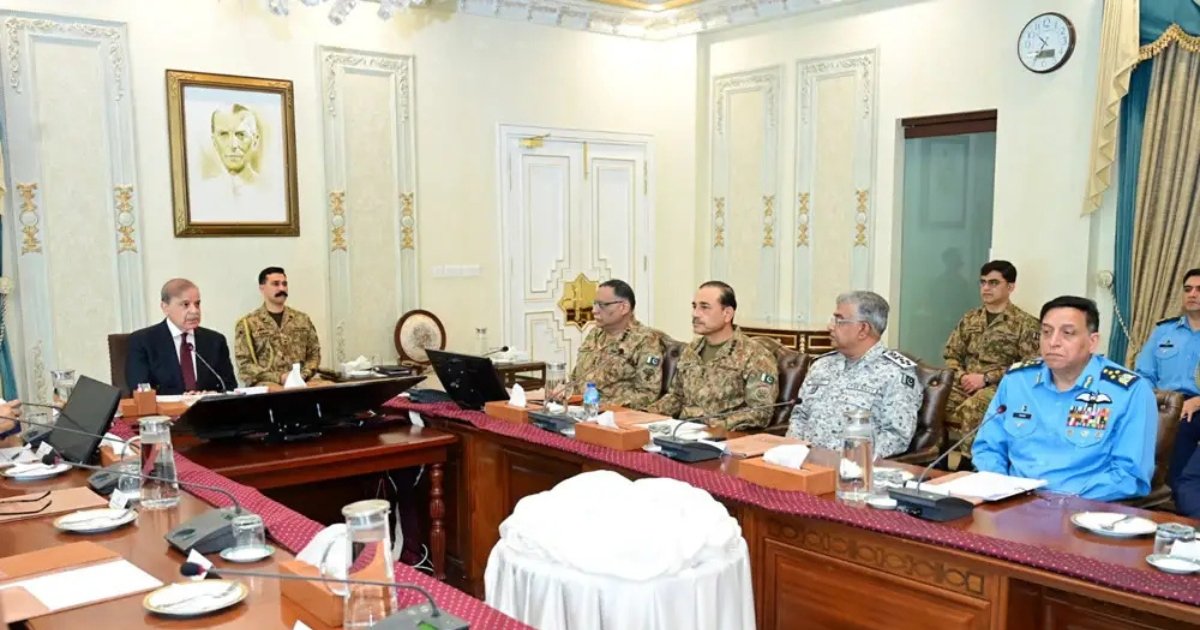
The National Security Council (NSC) serves as a coordinating body in Pakistan’s defense planning. Chaired by the Prime Minister, the NSC includes civilian leaders and military chiefs to set strategy and oversee security policies. Official government releases state clearly that the NSC is the highest forum for defense and security decision-making. Recent press releases from the NSC Secretariat and the Prime Minister’s Office indicate that the body meets regularly during crises and influences Pakistan’s military posture. For instance, in June 2025, Prime Minister Shehbaz Sharif chaired a meeting of the National Security Committee to assess regional developments. Such meetings highlight the NSC’s role in shaping defense policy and ensuring that government and military actions are aligned.
Key points from the National Security Committee (NSC) meeting, convened under the chairmanship of Prime Minister Muhammad Shehbaz Sharif. pic.twitter.com/dzjuAyVStw
— Government of Pakistan (@GovtofPakistan) May 7, 2025
The decisions of the NSC directly impact Pakistan’s defense structure. It reviews and approves major actions such as defense budgets, troop deployments, and strategic plans. For example, the NSC held a meeting led by the Prime Minister to address the serious situation following an unprecedented cross-border strike in India in May 2025. The statement from this meeting affirmed the military’s right to act in accordance with international law and praised the Armed Forces for defending Pakistan’s sovereignty. This suggests that whenever significant security issues arise, the NSC convenes to influence government responses and determine actions.
Shaping Crisis Responses and Long-Term Security Strategy
Beyond crisis management, the NSC operates through its Secretariat to develop long-term strategies. The primary secretariat is the National Security Division (NSD), which prepares policy papers and coordinates activities across ministries. Although NSD communications are less visible, statements from the NSC offer insights into this process. The NSC’s scope extends beyond military responses to also include diplomatic, economic, and developmental tools. In essence, the NSC is the hub of Pakistan’s integrated defense architecture, overseeing not only military actions but also coordinating foreign policy, intelligence, and development objectives.
You May Like To Read: Army Rocket Force Command: Pakistan’s New Strategic Tool
The NSC’s influence reaches into the command structure of defense itself. Documents indicate that service chiefs and intelligence directors brief the NSC meetings. During high-profile meetings, military and intelligence leaders brief the NSC on threats, implying that the NSC is directly involved in monitoring information and scrutinizing military plans and interests. While full details remain confidential, press reports suggest that Pakistan’s defense forces view the NSC as the entity where resource allocation occurs. The NSC must endorse significant actions, whether purchasing new weapons or launching nationwide operations. As a result, the National Security Committee plays a key role in shaping the modernization of Pakistan’s military by providing top-level approval and guidance.
Evolving Security Architecture Under Civilian Leadership
Over the past few years, the NSC framework has evolved. Official sources state that the NSC was restructured in 2013 and has since been supplemented by bodies like the Defense Committee of the Cabinet (DCC). These institutions, all under the NSC/NSD umbrella, generate strategic guidance and review defense initiatives. Government communications through the NSD and NSC regularly emphasize coordination, indicating deliberate restructuring. Following constitutional changes, the government announced that a new National Strategic Command for nuclear forces, whose commander will be appointed by the Prime Minister, will be established, demonstrating NSC oversight. Although specific details are confidential, official news sources and press releases confirm these broad changes. Overall, Pakistan’s defense architecture is now explicitly linked to civilian leadership via the NSC, as evidenced by official announcements and budgetary committees operating under NSC policy.
Practically, this means that day-to-day command is increasingly aligned with NSC policies. The NSD/NSC Secretariat works across ministries to draft defense budgets and military plans, ensuring priorities are aligned. Similarly, the NSC plays a key role in any military agreements or international defense conferences Pakistan engages in. For instance, a recent NSC meeting clearly supported Pakistan’s active involvement with regional partners to promote peace. These statements show how the NSC connects military readiness with diplomatic efforts. The bottom line is that official government communications recognize the NSC as the central hub of Pakistan’s new defense architecture. It is where civilian and military interests converge and where strategic decisions are made. One NSC release states that policies and operations will be part of a comprehensive strategy to eliminate terrorism, an overarching plan developed at the NSC level.
Conclusion
The National Security Council of Pakistan has become the master command of the country’s national defense policy. Official press releases and statements emphasize that the NSC, led by the Prime Minister, now oversees all critical defense decisions. The NSC assists the government in projecting a single front by bringing the military, intelligence, and civilian agencies closer together. Precisely, the new defense architecture of Pakistan revolves around the NSC, an aspect that is reflected even in the communications and press releases made by the government concerning national security.
Check out our latest video: