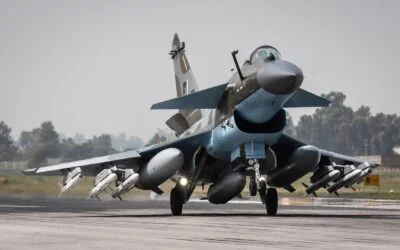
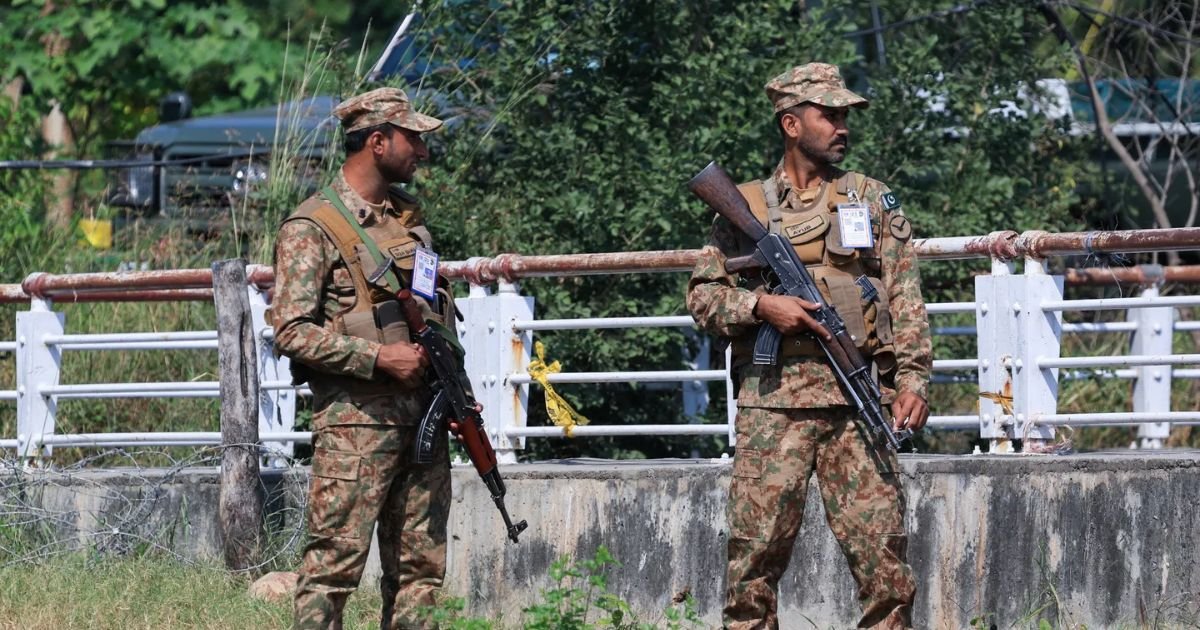
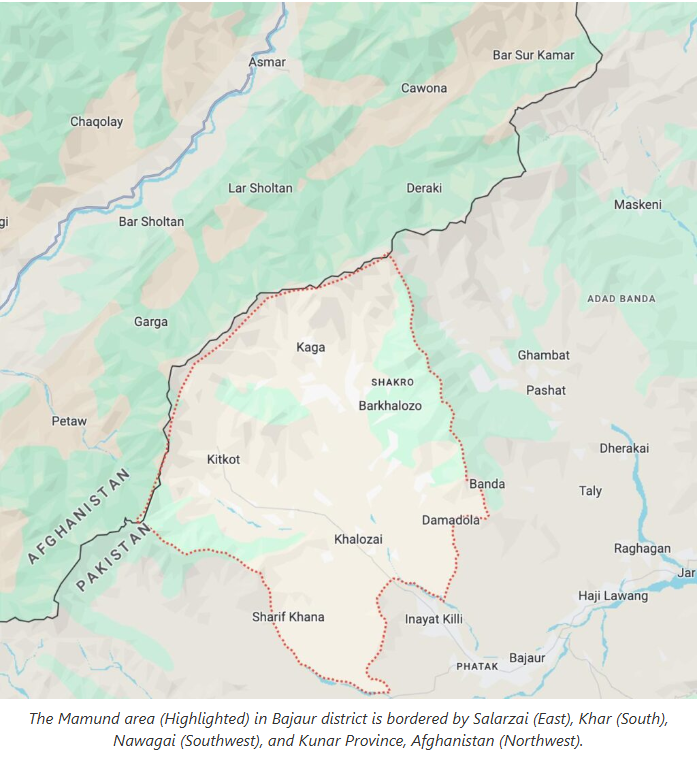
Operation Sarbakaf, an ongoing military operation, started on July 29, 2025, in Bajaur District, Khyber Pakhtunkhwa. It is a counterterrorism initiative by the Pakistan Army against the rejuvenated FAK and ISKP militants. The goal is to stabilize the Afghan border. The assault is led by the army infantry, artillery, and helicopter gunships with the support of the Frontier Corps and local police. The push occurred after a wave of violence. The assistant commissioner of Bajaur was killed in a roadside bomb on July 2, 2025. ANP leader, Maulana Khan Zeb, was also assassinated on July 10, 2025. These attacks have ensured that clearing militant hideouts in Mamund Tehsil is an immediate priority.
Source: South Asia Times
Launch and Implementation
Section 144 of the Code of Criminal Procedure allowed district authorities to impose a three-day curfew in 16 Lowi Mamund villages on July 29, 2025. Immediately, strikes were made on militant positions. The XI Corps of the Pakistan Army led the attack, with the support of the Frontier Corps KPK and local police. Helicopter gunships and artillery were used to strike known hideouts in Lowi Mamund. It was an operation that was planned with the assistance of intelligence units and local elders. Discussions via a Jirga did not succeed in relocating militants, and the assault was briefly halted on July 30. On August 11-12, the operation was renewed with increased force, the troops striking strongholds in Lowi and War Mamund tehsils.
The Pakistan Army has launched Operation Sarbakaf in Bajaur, but what is happening in the region, and how are locals responding to it? Let’s break it down.
Watch the full video: https://t.co/RhbgxpsEkq#tcmnews pic.twitter.com/9l1il0FArn
— The Centrum Media (@thecentrummedia) September 18, 2025
Prior to the launch of “Operation Sarbakaf” in Bajaur, public announcements were made through mosque loudspeakers across various areas, instructing residents to remain indoors.
The announcements urged locals to fully cooperate with security forces and avoid unnecessary movement.… pic.twitter.com/WyJJrfo08P
— Eagle Eye (@zarrar_11PK) July 29, 2025
Progress and Results
By the middle of September 2025, the authorities said that dozens of villages had been swept of militants, and life was gradually returning to normal. During the intelligence-led offensive in Bajaur, security sources claimed the death of at least 22 militants during the first two weeks of August alone. According to local press, approximately four militants were killed and approximately ten captured on the day of the launch in July. Officials have confirmed that 17 out of the 36 targeted regions are now terror-free.
Prior to the launch of “Operation Sarbakaf” in Bajaur, public announcements were made through mosque loudspeakers across various areas, instructing residents to remain indoors.
The announcements urged locals to fully cooperate with security forces and avoid unnecessary movement.… pic.twitter.com/WyJJrfo08P
— Eagle Eye (@zarrar_11PK) July 29, 2025
This paved the path to a mass repatriation of civilians. As of September 19, over 7,000 displaced families, estimated at 40,000 people, had already returned to cleared villages in Lowi and War Mamund. Another 27,000 families, about 178,000 individuals, will be returned when the remaining militant pockets are cleared. In the liberated territories, markets, mosques, and schools have been reopened, and people say life has gone back to normal. Pakistani troops have been able to regain territory step by step, and tens of thousands of people have been able to resume their daily lives.
The military officials emphasize that the operation is focused, and it is intended to hit militant hideouts only to minimize collateral damage. On September 13, ISPR reported that 22 terrorists were killed in an intelligence-based raid with no civilian casualties in the Bajaur region. The security forces also captured huge amounts of weapons and ammunition. Top military officials also confirm that most militants, under pressure, have fled to the Afghan border.
You May Like To Read: Counterterrorism Diplomacy in Central Asia: Exercise Dosti-II and Pakistan’s Strategic Role
Setbacks and Civilian Impact
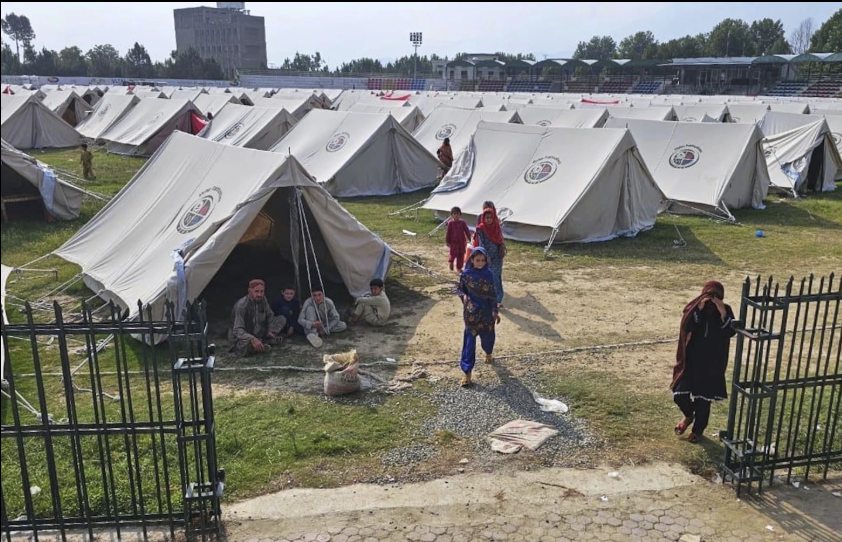
Operation Sarbakaf has carried a heavy human toll. Clashes forced approximately 100,000 residents to leave Mamund. The government established emergency shelters in over 85 schools and the Bajaur sports complex, and each displaced family was provided with Rs 50,000 as relief. Civilian losses did occur. On August 12, a stray mortar shell struck a home in Erab village, Lowi Mamund, killing a child and injuring others. These incidents led to protests, with the villagers insisting on investigations and curfews being lifted. The sudden road closures, lack of communication, and insufficient support of the IDPs were also criticized by local politicians, such as ANP members and JUI-F members.
Source: APP News
On the military front, the most intense conflicts have been restrained. On August 12, a Frontier Corps soldier was martyred and 19 more were wounded in an ambush, but there are no other major Pakistani casualties, according to officials. Officials emphasize the fact that the military has been restrained, and ISPR declares that the attacks were limited to hideouts to avoid casualties among civilians. By mid-September, curfews were already being lifted in various locations, and movement restrictions were also being lifted in cleared locations, clearly indicating that pressure is being relieved and normal governance is starting to resume.
Military Leadership and Execution
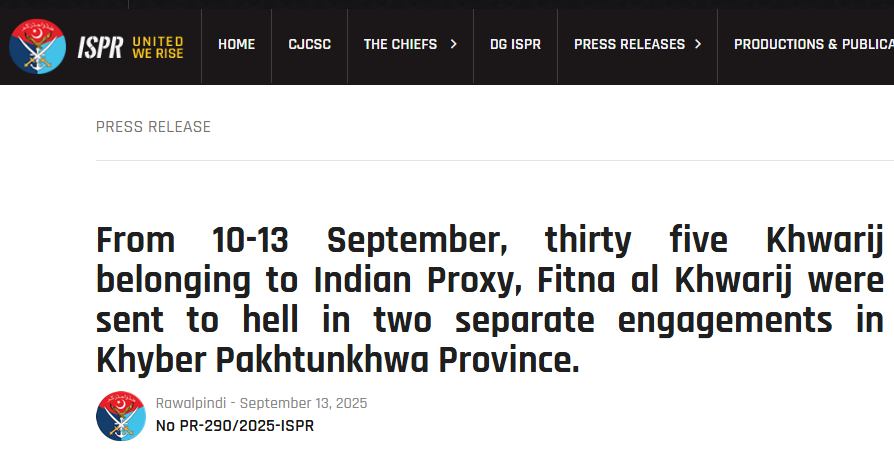
The Pakistan Army has been at the forefront of planning and implementation of Operation Sarbakaf. The joint offensive between the XI Corps, the Frontier Corps KPK North, and the district police was coordinated by the army command. The army and intelligence recommendations were used to issue curfew orders under Section 144 by the Deputy Commissioner. There was an evident warfighting approach as air assets and artillery were deployed on the first day. According to Business Recorder, operations were intelligence-led, such as on September 11, a raid in the general area of the Lal Qilla Maidan at a reported Khwarij hideout. According to ISPR, 35 militants were killed during the operation from 10 to 13 September. The army openly gave official reports of recovered weapons and killed militants, including the physical involvement of Afghan nationals, demonstrating top-level military control and an extremely centralized strategy.
Source: ISPR
Implications for Pakistan’s Security and Diplomacy
Operation Sarbakaf has strengthened the internal security of Pakistan. The clearing of Bajaur has deprived militants of a prime staging area and prevented the reconstruction of sanctuaries that enabled the militants to attack any part of Khyber Pakhtunkhwa and beyond. A clear-cut message is also delivered by the campaign to Afghanistan. ISPR has also called on the Taliban-led government in Kabul to prevent the use of its soil by FAK or ISKP fighters. Victory in Bajaur enhances the bargaining power of Islamabad in negotiations with Kabul, since apparent counterterror wins provide Pakistan with stronger leverage to insist on taking action against insurgency safe havens.
Regionally, an effective Sarbakaf would decrease extremist infiltration and reassure partners that Pakistan remains a credible frontline state in the fight against terrorism. At home, recapturing Bajaur and the return of displaced families restore confidence in the state within the former tribal territory. Overall, the successes of the operation, such as captured villages, killed militants, and returning civilians, show that Pakistan is committed to defining its boundaries and demonstrating stability, which enhances national security and regional diplomatic engagement.
You May Like To Read: A Strategic Turn: Pakistan-Saudi Mutual Defense Pact