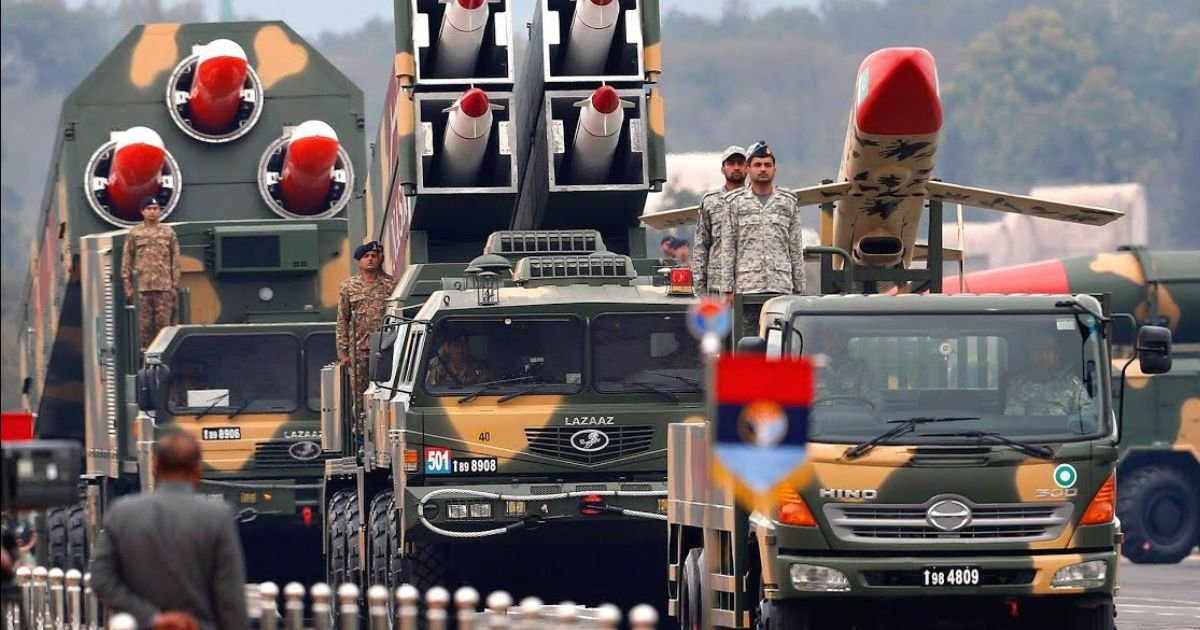
In mid-August 2025, Prime Minister Shehbaz Sharif announced the new Army Rocket Force Command (ARFC), which will bring the Pakistani forces into the realm of high-tech warfare. The speech followed a tense four-day India-Pakistan war in May 2025, in which the two nations fired drone and missile attacks. Sharif declared the ARFC to be armed with modern technology and capable of hitting the enemy at every front, another step in increasing the conventional combat strength of Pakistan. Islamabad presents the Rocket Force as a force multiplier, not redundant bureaucracy, that seals the loopholes revealed in the recent clashes.
Pakistan just announced the creation of a new ‘Army Rocket Force Command.’
This isn’t just about bigger rockets. It’s a fundamental shift in South Asian military doctrine that could change the rules of the next conflict. Here’s why it matters. 🧵#Pakistan #ARFC #Military pic.twitter.com/kprmllj8w8
— Quwa (@QuwaGroup) August 14, 2025
Modernizing Pakistan’s Missile Arsenal
Pakistan has developed a highly intricate layered missile arsenal to support its deterrence. Its traditional weapons range from short-range rockets to long-range ballistic and cruise missiles. Most important are tactical ballistic missiles such as Hatf-IX Nasr (70 km), Hatf-II Abdali (180-300 km), and Hatf-III Ghaznavi missiles (290 km), and long-range carriers such as Hatf-V Ghauri and Hatf-VI Shaheen. Pakistan also has precision cruise missiles (Hatf-VII Babur, Hatf-VIII Ra’ad) and guided rocket artillery (the Fatah MLRS family). As an example, in September 2025, the Army successfully test-fired the Fatah-4 ground-launched cruise missile (range of 750km), an entirely indigenous system that, able to evade air defenses by terrain-hugging, is capable of hitting its mark with high accuracy. These weapons allow Pakistan to penetrate far into enemy territory.
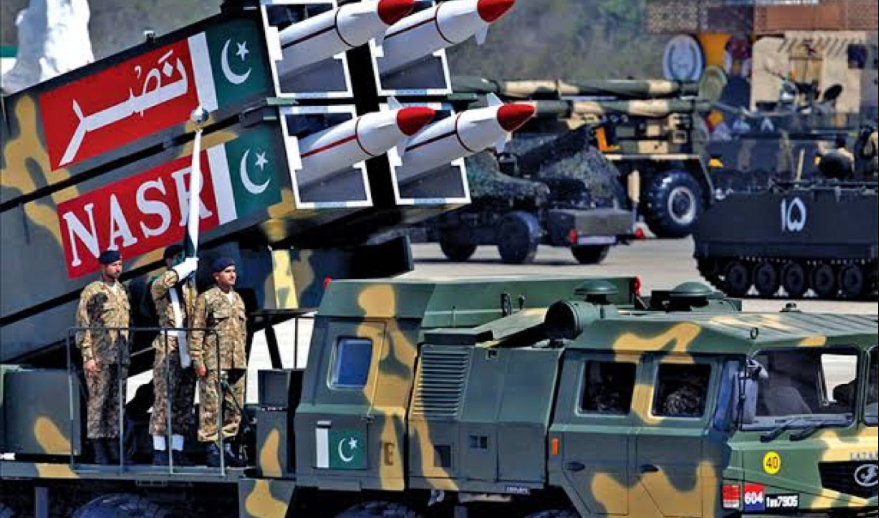
Source: Scientia Magazine
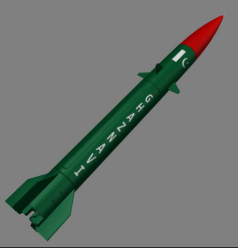
Source: Turbosquid
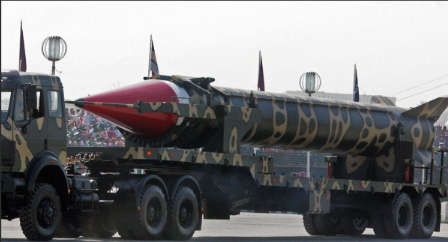
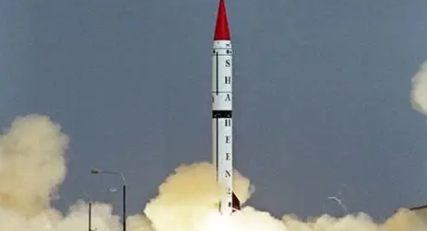
These assets are consolidated by the ARFC into a single command. In the past, conventional rockets of Pakistan were deployed in artillery units or under dual coverage by nuclear troops; currently, they are all under one operational command. All Army rocket/missile units will be planned, trained, and sustained together by the new command. Pakistan, in a way, integrates, modernizes, and supercharges its missile force structure. Through the standardization of doctrine and logistics offered by ARFC, the military can achieve efficiencies and have its rockets be survivable and deployable as a unified system.
Strengthening Conventional Deterrence
ARFC provides a powerful component to the deterrence of Pakistan. It bridges some of the intermediate gap left by recent standoffs. ARFC is specifically tasked with conventional rockets and missiles; nuclear weapons are within the Strategic Plans Division and National Command Authority. Practically, this implies that Islamabad can legitimize a retaliatory strike against aggression but continue to wage war below the nuclear deterrence limit.
There are several tangible advantages:
- Centralized Command: All the Army rocket and missile units are under one ARFC commander. This simplifies the planning, procurement, and training. The development of doctrine and targeting processes can occur collaboratively as opposed to service silos.
- Precision Strike Options: ARFC fields developed state-of-the-art guided missiles such as Fatah MLRS and Babur cruise missile. These provide Pakistan with an accurate strike deep into enemy rear locations, beyond the effective range of unguided guns. Even low-flying terrain-hugging missiles are now capable of targeting high-value targets.
- More Rapid Response: ARFC reduces the command-and-control loop in times of crisis. Its headquarters receives intelligence immediately (airborne radars, UAV feeds, etc.) and is able to launch rockets with speed. This quick decision-making process is vital when speed-of-light weapons have entered the battlefield. Pakistan itself observed that the input of surveillance makes the response time shorter and the escalation more measured.
- Nuclear De-confliction: Pakistan clearly distinguishes conventional fires under ARFC by ensuring they are not confused with its nuclear deterrent. A Pakistani official made it clear that Pakistan would only deploy nuclear weapons at its preferred threshold, absorbing lower-level conflict with ARFC strikes. This firebreak role, in fact, minimizes nuclear risk. In case India attacks a conventional military target, now Pakistan can retaliate in the same manner without the outbreak of a nuclear duel. These changes together enhance the full-spectrum deterrence of Pakistan. ARFC provides the army with new means of punishing aggression in a quick and accurate manner. It acts to reassure the leadership and people of Pakistan that there is conventional firepower behind the nuclear umbrella.
Jointness and Military Reforms
ARFC launch is accompanied by sweeping defense changes in favor of improved joint operations. In November 2025, Pakistan enacted constitutional amendments introducing a Chief of Defense Forces (CDF) in addition to the Army Chief. The former position of Chairman Joint Chiefs was eliminated, to reduce red tape, and all service strategic commands (nuclear, missile, etc.) will be consolidated under one National Strategic Command. Within this context, the rocket force of the Army has become similar to the submarine-based deterrent of the Navy and the strategic assets of the Air Force. ARFC will have a three-star general in command, which highlights its strategic significance.
These reforms acknowledge the fact that wars in the 21st century are transcending conventional service boundaries. There should be coordination of drones, cyber-weapons, and long-range fires across domains. ARFC enhances such jointness: as an example, its command will be connected to national C4ISR networks, to coordinate rocket barrage with air and naval actions. Pakistan is likely to combine ARFC targeting in the future with its integrated air defense (Akashteer) and satellite reconnaissance to provide full-spectrum situational awareness. The age of isolated battlespace is being replaced; ARFC formalizes the leadership of the Army in multi-domain strike warfare.
You May Like To Read: 27th Amendment and Restructuring of the Military Command
Regional Balance and Comparison
The ARFC assists in rebalancing the deterrent of Pakistan vis-à-vis India. The Strategic Forces Command (SFC) of India (established in 2003) is the center of all nuclear delivery systems. Nevertheless, the SFC of India has long only been involved with strategic (nuclear) missiles and dual-capable aircraft; the Indian Army continues to fire conventional rockets using normal corps. The ARFC of Pakistan is conceptually related to an Integrated Rocket Force, which Indian defense planners saw as conventional.
The ARFC, in comparison with the SFC in India, is conventional. In contrast to the all-encompassing PLA Rocket Force of China (that deals with both nukes and rockets), the ARFC of Pakistan is focused on non-nuclear weapons (just as the planned IRF of India would be). This specialization is beneficial to Pakistan: it replicates the nuclear command structure of India, but it also has an effective conventional striking capability. ARFC, in practical terms, reduces the traditional firepower advantage of India. ARFC also implies that Pakistan can now retaliate with high-speed rockets, even if the symmetry is restored.
Pakistani sources emphasize that ARFC is designed to retaliate against India conventionally, and this will provide Islamabad with another milestone to enhance its capabilities against conventional warfare. ARFC makes sure that any future conflict can quickly escalate on the conventional axis alone, hopefully preventing actual battles.
Strategic Assessment
The Army Rocket Force Command is the real strategic tool rather than an empty office. It is a calculated response to contemporary warfighting and new lessons on the battlefield. ARFC concentrates the precision strike capabilities of Pakistan into a lean, agile formation, enhancing coordination of firepower across domains. It also assists in de-escalating crises: enemies understand that Pakistan can retaliate conventionally, increasing their expenses, and that no nuclear threshold would be breached.
In the future, ARFC will promote collaborative integration. During war games and exercises (such as the recently held Hammer Strike drills), Pakistan has also started to network-link rockets with air and drone resources. As it grows, it will improve its maneuvering against integrated missile barrages, undertake trilateral exercises with allies, and streamline its inventory (such as developing new precision rockets and hypersonic missiles).
The new commands will always be questioned by critics, but the current security situation in Pakistan justifies ARFC. It can be used to complement the full-spectrum deterrence policy of Pakistan by providing decision-makers with more precise instruments. Above all, ARFC is the message to friends and adversaries that conventional deterrence is here to remain.
You May Like To Read: Maritime Resolve: Pakistan Navy’s NAVAREA IX Drills Signal Readiness Amid Overlapping NOTAMs