By engaging in regular bilateral exercises with friendly naval forces, the Pakistani Navy has been expanding its presence quietly in the Arabian Sea. This trend has been highlighted by recent high-profile exercises with Turkey, Oman, Saudi Arabia, the UAE, and even the United States. Such war games strengthen Pakistan’s maritime security, develop bilateral naval cooperation, and send a strong deterrent message on a strategic waterway. According to officials, these combined exercises refine tactics and strengthen Pakistan’s leadership in the Arabian Sea. The Navy’s modernization, new submarines, missile corvettes, and anti-ship missiles, also contribute to this outreach. The increased drills and upgrades are intended to secure its sea lines of communication, project power, and enhance regional stability.
Maritime Security Cooperation and Friendly Drills
In 2024-25, Pakistan held historic bilateral drills with friendly naval partners. Pakistan and the Turkish navies held the first bilateral amphibious exercise in August 2025 in Karachi. The week-long exercise was declared a milestone by the Navy, solidifying maritime cooperation and interoperability between the two friendly navies. The drill involved live firing, urban-combat operations, and landings in coastal areas, indicating deep-rooted defense collaboration and a mutual commitment to peace in the region.
PN & Turkish Navy successfully concluded 1st Bilateral Amphibious Ex significant milestone in strengthening maritime collab & interoperability b/w two friendly navies. Ex featured comprehensive range of training activities. 1/3 pic.twitter.com/t2iIme4byB
— DGPR (Navy) (@dgprPaknavy) August 6, 2025
Likewise, a Royal Navy of Oman flotilla (Al Rasikh and Al Shinas) also attended Pakistan’s 12th Thamar Al Tayyib (TAT) exercise in Karachi in late 2025. According to Dawn, TAT-2025 is expected to enhance maritime security collaboration and advance traditional friendships between Pakistan and Oman. The exercises provided mutual learning, increased interoperability, and professional development. Each month, high-ranking officials from the two navies visited and shared tactics at sea. Such Gulf drills highlight intimate navy-to-navy relationships and create a network of collective protection in the Arabian Sea.
Royal Navy of Oman (RNO) flotilla, comprising ROYAL NAVY OF OMAN VESSEL AL RASIKH and AL SHINAS, visited Karachi to participate in the 12th edition of Bilateral Exercise THAMAR AL TAYYIB (TAT) 2025. pic.twitter.com/LIRw6W40Xi
— APP (@appcsocialmedia) December 6, 2025
Other friendly exercises are also notable. Two Pakistan Navy vessels (PNS Shamsheer and Haibat) also attended an exercise of the UAE Navy in September 2024. The visits and meetings were about discussing professional issues of mutual interest and bilateral naval cooperation.
🇦🇪🇵🇰Pakistan Navy Ships SHAMSHEER and HAIBAT visited port Mina Zayid Abu Dhabi UAE, to participate in Ex NASL AL BAHR. Upon arrival, Pakistan Navy Ships were received by Senior Officials of UAE Navy and Defence Attaché of Pakistan.
Mission Commander along with Commanding… pic.twitter.com/njPKgouPQg
— Global Defense Insight (@Defense_Talks) September 8, 2024
Pakistan hosted Saudi Arabia in early 2025 in the Exercise Naseem al-Bahr XV, a live-fire maritime drill. The two navies engaged in anti-surface, anti-submarine, and intricate maneuvers and ended with a missile-firing demonstration. The official release indicated that the exercise was a chance to enhance bilateral cooperation, interoperability, and a sense of joint commitment to provide maritime security. All these exercises increase preparedness and confidence between allied navies.
Pak-Saudi Bilateral Naval Ex Naseem Al Bahr-XIV & Deraa Al Sahil commenced. Aim of Exercise is to enhance strategic relations & cooperation btw two Navies & Special Ops Forces. The Maritime drills include range of naval ops covering traditional & non-traditional warfare domains. pic.twitter.com/n876cxYmsA
— DGPR (Navy) (@dgprPaknavy) September 9, 2023
Notably, Pakistan also maintained close relations with traditional allies. In September 2024, PNS Shamsheer and HMS Lancaster were involved in coordinated patrol exercises in the Arabian Sea. In May 2024, the three-day Inspirational Union 2024 drill with the US Navy at Karachi was devoted to counter-terrorism and security. The drill increased maritime security and stability in the area and improved the relationship and collaboration between the two Navies, highlighting a strong military partnership.
@PakistanNavy‘s ZULFIQUAR (F-22P) Class guided missile frigate, PNS SHAMSHEER (FFG-252), and @RoyalNavy‘s Type 23 Frigate, HMS LANCASTER (F229), conducted a Passing Exercise (PASSEX) in the Arabian Sea while participating in Combined Task Force (CTF) 150 operations. pic.twitter.com/Ix9PsEdgvk
— Defence Insider (@defence_insider) September 18, 2024
#ISPR
Bilateral exercise “Inspired Union 2024” between the #Pakistan Navy and the United States (US) Navy was held in KarachiThe three-day exercise witnessed various units participate including the US Marines Corps, Coast Guards, Diving, Legal, Naval Construction Forces, Civil… pic.twitter.com/DD9M0ehbfY
— Pakistan Armed Forces News 🇵🇰 (@PakistanFauj) May 2, 2024
All drills not only serve tactical purposes but also send a message. Through social media, the DGPR office in the Pakistan Navy remarked that joint exercises were a manifestation of deep-rooted defense relationships and that Pakistan was committed to regional peace. Effectively, Pakistan is demonstrating that it can work with various partners, thus projecting influence and reassuring friends about open sea lanes.
Modernization Fuels Pakistan’s Deterrence
In addition to exercises, Pakistan has been updating its fleet to the fullest extent. In late 2025, the military media (ISPR) announced the commissioning of the fourth Hangor-class submarine in China, calling it a major step in the procurement of eight modernized diesel-electric attack submarines. According to ISPR, these new submarines (with air-independent propulsion) will play a crucial role in regional peace and stability, as they will be able to strike targets at long distances. That is a definite upgrade in underwater deterrence in the Arabian Sea.
Fourth PN Hangor class submarine GHAZI launched at Wuchang Shipbuilding Industry Ltd, Wuhan, China. Event marked significant milestone where all 4 submarines under construction in China are now undergoing rigorous sea trials & final stages of being handed over to Pakistan. 1/2 pic.twitter.com/tHPVWr9fpl
— DGPR (Navy) (@dgprPaknavy) December 17, 2025
The second leap came when Pakistan commissioned the second MILGEM-class corvette (PNS Khaibar) in Turkey (December 2025). These vessels are among the most sophisticated surface combatants of the Pakistan Navy, equipped with modern weapons and sensors. President Erdogan himself noted that the induction of the MILGEM corvettes would radically increase the operational and maritime security of the Pakistan Navy. In fact, PNS Babar (the first corvette) was commissioned in Sept 2024, and two additional ones are being built at Pakistani yards. The fleet has been equipped with networked targeting and beyond-horizon firepower capabilities.
Commissioning ceremony of the 2nd PN MILGEM class ship PNS KHAIBAR was held at Istanbul Naval Shipyard, Türkiye. President of Türkiye Recep Tayyip Erdoğan graced the ceremony as Chief Guest, while CNS Adm Naveed Ashraf also attended the ceremony. 1/2 pic.twitter.com/nnpRRYI1VD
— DGPR (Navy) (@dgprPaknavy) December 21, 2025
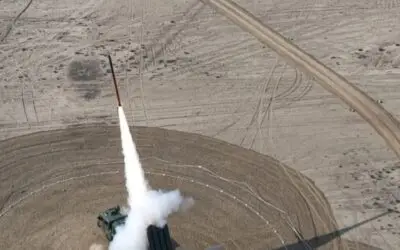
Possibly the most significant indication was Pakistan’s 2025 test of an indigenous anti-ship ballistic missile on a naval platform. The ship-launched anti-ship ballistic missile featured advanced guidance and maneuvering and struck targets with precision. The military celebrated the successful launch, saying it demonstrated technological capability and the unrelenting efforts of the Pakistan Navy to protect national interests. Together with new corvettes and submarines, these developments indicate a plausible deterrence. All these steps create a list of vital upgrades:
- Introduction of four Hangor-class submarines (four more are to be produced locally) with sophisticated sensors.
- Ordering of Babur-class (MILGEM) corvettes PNS Babar and Khaibar, armed with long-range missiles.
- Efforts to test indigenous anti-ship missiles and ship-launched ballistic missiles have been successful.
- Improved maritime surveillance aircraft and radars (e.g., new P-3C Orions) – enhancing surveillance of the Arabian Sea.
These capabilities strengthen Pakistan’s image of self-reliance and preparedness. They also reassure partners: a strong Pakistan Navy can assume more significant roles in joint exercises and regional security without depending on other countries.
Leadership in the Arabian Sea and Regional Stability
All these drill schedules and fleet upgrades in Pakistan indicate its ambitions to dominate the North Arabian Sea. A climax was hosting the AMAN-25 exercise (Feb 2025), which included 60 countries. AMAN symbolizes the Pakistan Navy’s work to foster peace and cooperation in the region, with the motto Together for Peace. The first AMAN Dialogue summit was held alongside it, where naval chiefs met to discuss maritime security. According to Rear Admiral Abdul Munib, AMAN represents Pakistan’s commitment and robust dedication to creating a stable region and secure, safe seas.
Pakistan’s strategy is twofold: to strengthen navy-to-navy relations secretly by conducting bilateral exercises and to publicly enhance its fleet. This has several strategic objectives. First, it intimidates potential opponents by demonstrating preparedness, an aspect reinforced by live-fire drills and missile tests. Second, it protects sea lanes that are significant to commerce and the China-Pakistan Economic Corridor trade, which appeases allies who depend on open waters. Third, it builds Pakistan’s regional credibility. Every new drill or ship, as one analysis observes, increases the costs and uncertainties of any effort to coerce Pakistan at sea.
Pakistan also sends a political signal of trusted collaboration to Gulf allies and extra-regional navies by publicizing these exercises and new equipment. For example, when Saudi Arabia, Oman, and the UAE are frequent participants, it indicates a sphere of influence in which Islamabad is exerting its influence. Local naval commanders regularly tweet about their joint exercises, and the national media highlight the fact that Pakistan maintains a strong military relationship with the involved nations.
Conclusion
Pakistan Navy exercises with friendly forces have doubled in number in a very short period of time in the recent past, and each of them has been cementing skills and alliances. These Pakistan Navy drills, from Karachi to the Arabian Sea, are not just regular training. They develop a calculated approach to naval outreach. Pakistan has a growing presence at sea, coupled with modernized submarines, ships, and missiles. The outcome is increased influence in the Arabian Sea: increased deterrence, improved maritime security, and a stabilizing regional force. By strengthening collaboration and preparedness, Pakistan demonstrates that it can project its power and protect the important waters within its close seas. This way, it strengthens its dominance in the region and helps build a stable maritime area in South Asia.
Check out our latest video: