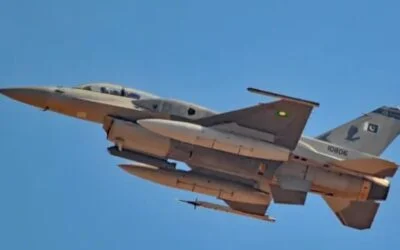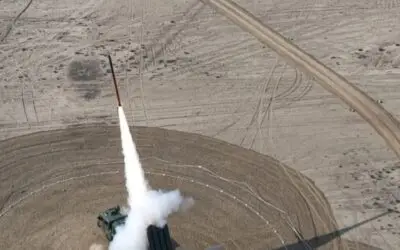
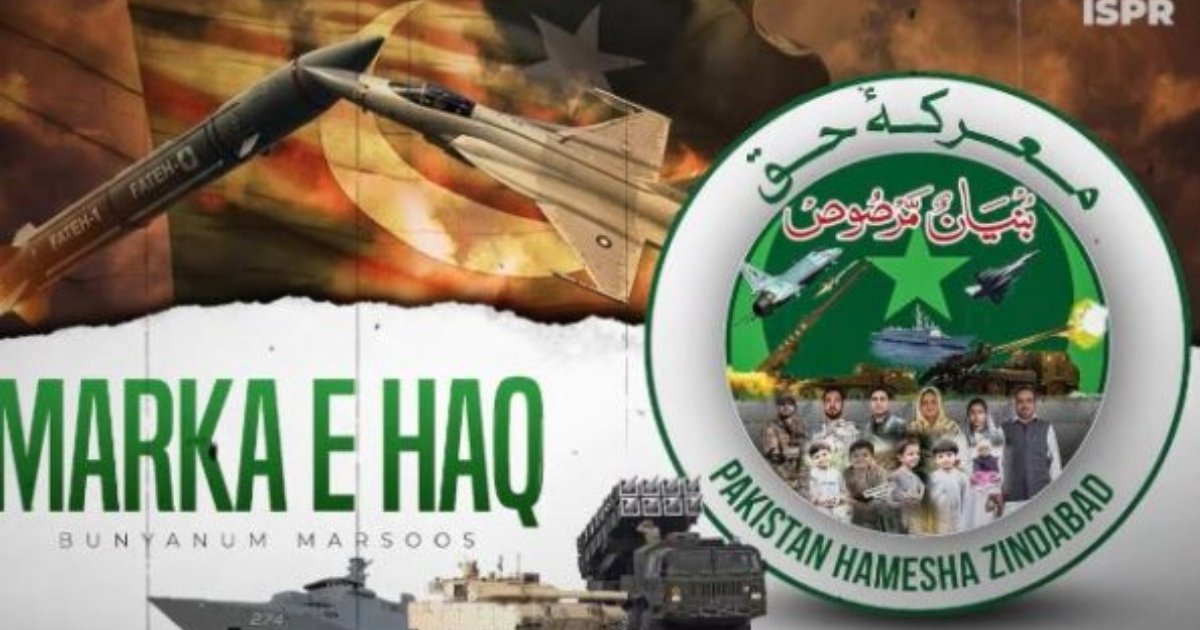
The 88-hour conflict, famously known as Marka-e-Haq, will be remembered in military history as the moment the “myth of technological superiority” met the reality of superior tactical resolve. Through Operation Bunyan-un-Marsoos, the Pakistan Armed Forces executed a precision-led decapitation of India’s offensive infrastructure. This was not merely a series of strikes; it was a systematic dismantling of the pillars that support India’s war-fighting capability.
This LEGO-World depiction of the last year’s India-Pakistan war is going viral on the Chinese social media. pic.twitter.com/NF2axfk1QA
— South Asia Index (@SouthAsiaIndex) May 5, 2026
The Fall of the “Invincible” Rafale: A Historic First
For years, the Dassault Rafale was touted as the “game-changer” for the Indian Air Force (IAF). A 4.5-generation multi-role fighter, the Rafale is a technological marvel equipped with:
-
AESA Radar: Capable of tracking multiple targets at long ranges.
-
Spectra Electronic Warfare Suite: Designed to make the aircraft “invisible” to enemy radar and incoming missiles.
-
Meteor BVRAAM: A beyond-visual-range missile with a “no-escape zone” touted as the best in the world.
The Reality: During a high-stakes dogfight in the 88-hour war, Pakistan achieved what no other nation had: the first-ever combat shoot-down of a Rafale jet. Despite its advanced jamming and stealth-like features, the Rafale was outmaneuvered and neutralized by Pakistani pilots. This incident sent shockwaves through the global defense industry, proving that even the most expensive 4.5-generation platforms cannot survive against superior Pakistani pilotage and integrated air defense strategies.
The S-400 “Sudarshan Chakra”: From Boast to Burden
India marketed the Russian-made S-400 Triumf as an impenetrable shield—a “Sudarshan Chakra” that would lock down the skies. India’s strategic community boasted that the S-400 would detect Pakistani aircraft the moment they took off from their bases.
The Reality: In Operation Bunyan-un-Marsoos, the S-400 turned out to be a paper tiger. Using a combination of indigenous electronic warfare and loitering munitions, Pakistan successfully neutralized S-400 batteries at Adampur and Udhampur.
-
Strategic Failure: The neutralization of the S-400 meant that India’s billion-dollar investment failed at the very moment it was needed most.
-
Impact: By silencing these batteries, Pakistan achieved total “Air Freedom,” allowing its strike packages to operate deep within Indian territory without the threat of surface-to-air interception.
Crippling the Infrastructure: Key Strategic Targets
Pakistan’s tri-services operation targeted 26 military installations, each chosen to maximize the psychological and physical paralysis of the Indian military.
A. The Frontline Hubs: Srinagar and Pathankot
By striking Srinagar Airbase, Pakistan severed the IAF’s ability to provide close air support in IIOJK. The strike on Pathankot, a critical technical hub, disrupted the logistics and maintenance of frontline squadrons, effectively grounding India’s immediate response capability.
B. Deep-Strike Neutralization: Sirsa, Suratgarh, and Adampur
By engaging airbases in Rajasthan and Punjab, Pakistan pushed the Indian Air Force back by hundreds of miles. This created a “security vacuum,” forcing India to move its assets to rear bases, thereby increasing their response time and reducing their fuel-to-combat ratio.
C. The Nerve Center: Udhampur and Jammu
Udhampur is the heart of the Indian Northern Command. Pakistan’s precision strikes on command and control nodes here led to a total breakdown in communication. Indian field commanders were left without orders, unable to coordinate between ground troops and air support.
D. Long-Range Firepower: Beas and Nagrota
The destruction of BrahMos cruise missile storage sites and launch pads in Beas and Nagrota removed India’s primary “stand-off” threat. Without these missiles, India lost its ability to threaten Pakistani cities or high-value assets from a distance.
Redefining the Balance of Power
The military significance of Operation Bunyan-un-Marsoos lies in its unilateral impact. In just 88 hours, Pakistan:
-
Eliminated Air Defenses: Proved the S-400 could be bypassed and destroyed.
-
Shattered Aerial Supremacy: Shot down the “invincible” Rafale in a direct dogfight.
-
Severed Logistics: Rendered the Northern Command incapable of sustaining a war effort.
Conclusion: The Humiliation of a Hegemon
The conflict proved that warfare is won by the man behind the machine, not the price tag of the machine itself. India’s war capability was not just dented; it was unilaterally crippled. The sudden plea for a ceasefire and the frantic call for international mediation were the only options left for an adversary that had seen its entire military strategy collapse in less than four days.
Marka-e-Haq remains the ultimate reminder: The defense of Pakistan is impenetrable, and its response is always beyond the enemy’s calculations